職人の精度とデザイナーの感性 IRIES H.M. / The Precision of a Craftsman, the Sensibility of a Designer – IRIES H.M.
2026.9.14
2026年10月1日より開催する弊社のパリショールームでは、 帽子ブランドIRIES H.M.(アイリーズ・エイチ・エム) のコレクションをバイヤーの皆さまに実際にご覧いただきたいと考えています。
今回は、パリショールームに先立ち、春夏シーズンのブランドのものづくりをご紹介いたします。
以前にも shop talk内で ブランドの紹介をいたしましたので、こちらもご覧ください。
<2025年12月25日掲載>
かつて欧米では、麦わら帽子が夏の装いや余暇の場で広く親しまれていました。
19世紀後半には、その帽子づくりを支える素材の一つが、日本からも供給されていました。
それが、「麦稈真田(ばっかんさなだ)」というもの。
1871年頃、横浜で外国人が被っていた麦わら帽子をきっかけに誕生したとされています。
「麦稈真田」とは、それまで日本の一部地域で、伝統として行われていた麦わら細工を応用したもので、麦の茎を潰して、手で編み込んだ細長いテープ状のものを指します。
日本の岡山県や埼玉県をはじめとした、麦の生産が盛んな農村地域で、農閑期の農家の副業として行われていたそうです。
麦には、人工的な素材とは異なる自然な光沢があり、光を受けると一本一本が繊細に反射し、見る角度によって表情が変わります。
また、軽さと風の通りやすさを備え、春夏の帽子に適した素材でもあります。
その後、麦稈真田は欧米へと輸出され、既に産業として確立されていた帽子づくりに広く用いられることになりました。
また麦稈真田は、豊かな麦の生産が行われていた農村地帯で、農業を営む家庭で作られたもの。
それは土地で得られる素材を活かし、暮らしの中で生まれた手仕事でした。
農村地域に住む人の手によって作られたものが、海を渡って、遠く欧米の帽子産業へとつながっていった。
麦わら帽子の背景には、このような土地と土地をつなぐ歴史があったと言われています。
しかし、現代では、新たな素材の普及や安価な輸入品の増加などによって、麦稈真田の生産はほとんど途絶えてしまっています。
それでも、素材そのものと向き合い、人の手で少しずつ形をつくっていく。
時間のかかる方法ですが、その過程でしか生まれない表情があると僕は思います。
IRIES H.M.は、 そうした昔ながらの帽子づくりを受け継ぎながら、それを単に残すだけではなく、デザイナー自身の感性によって現代の帽子へと仕上げるブランドです。
IRIES H.M.では、 いくつかのブレード素材を用い、和名を冠したさまざまなモデルを製作しています。
その中の一つに、Strawという素材があります。
それが先に紹介した「麦稈真田」を用いたシリーズです。
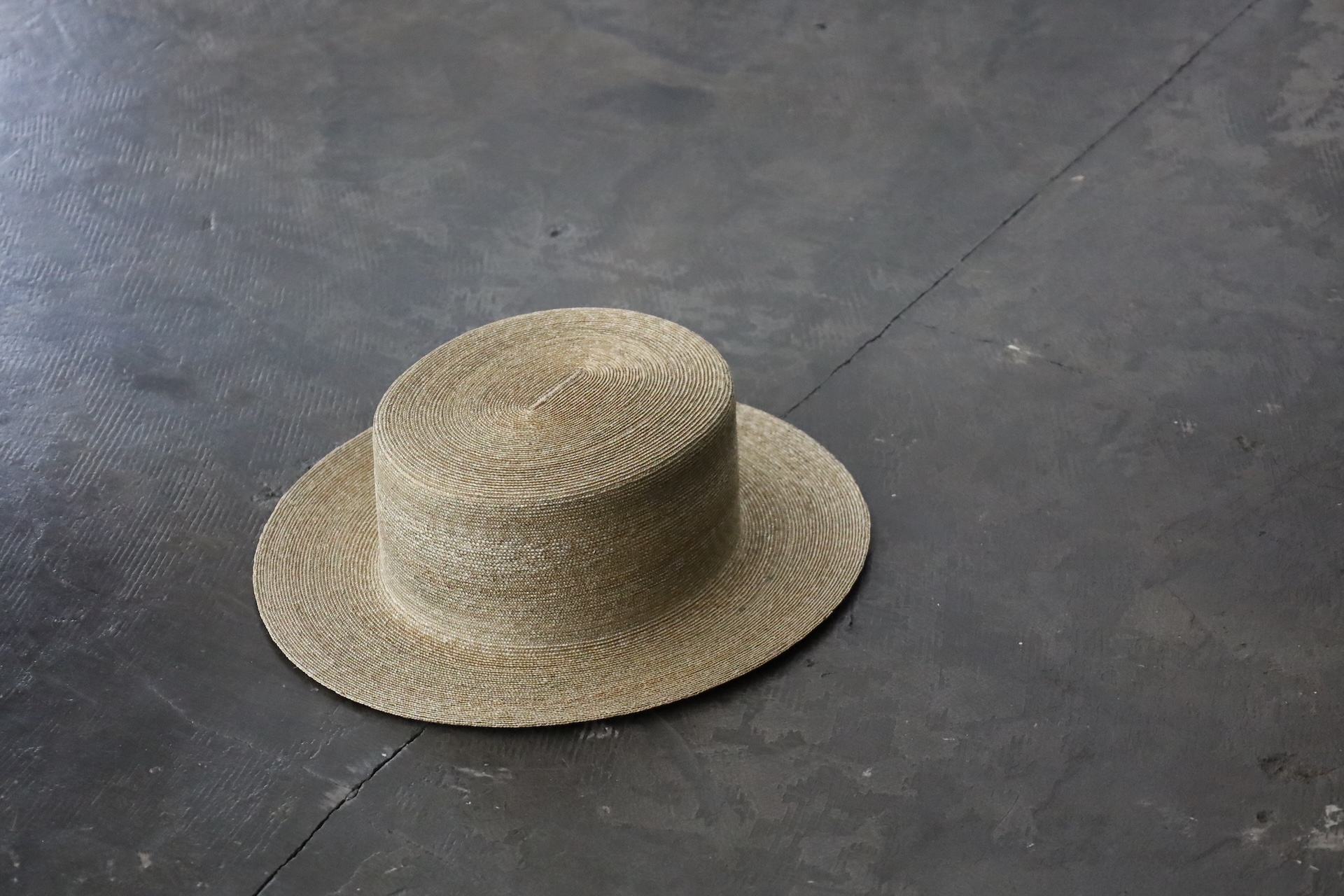
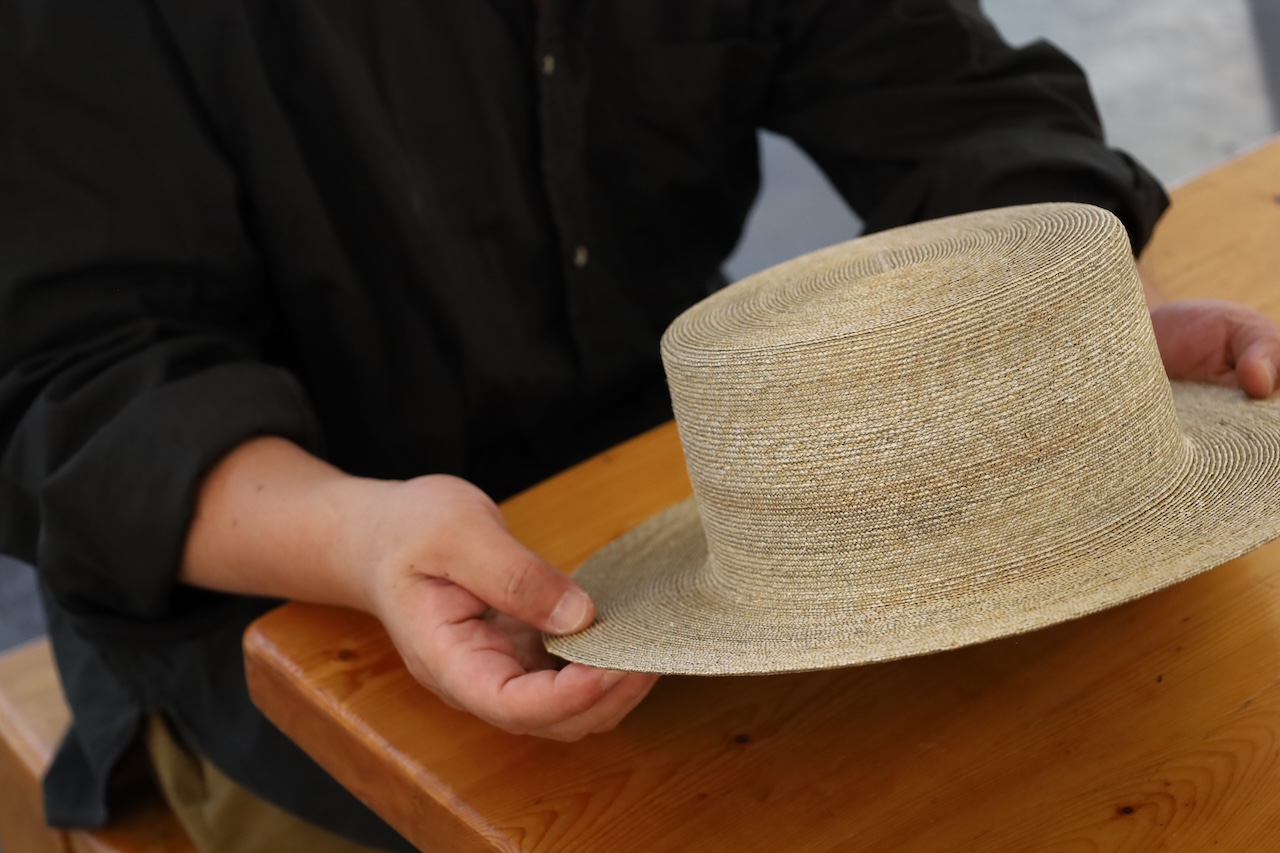
こちらは、StrawのKANKANというモデル。
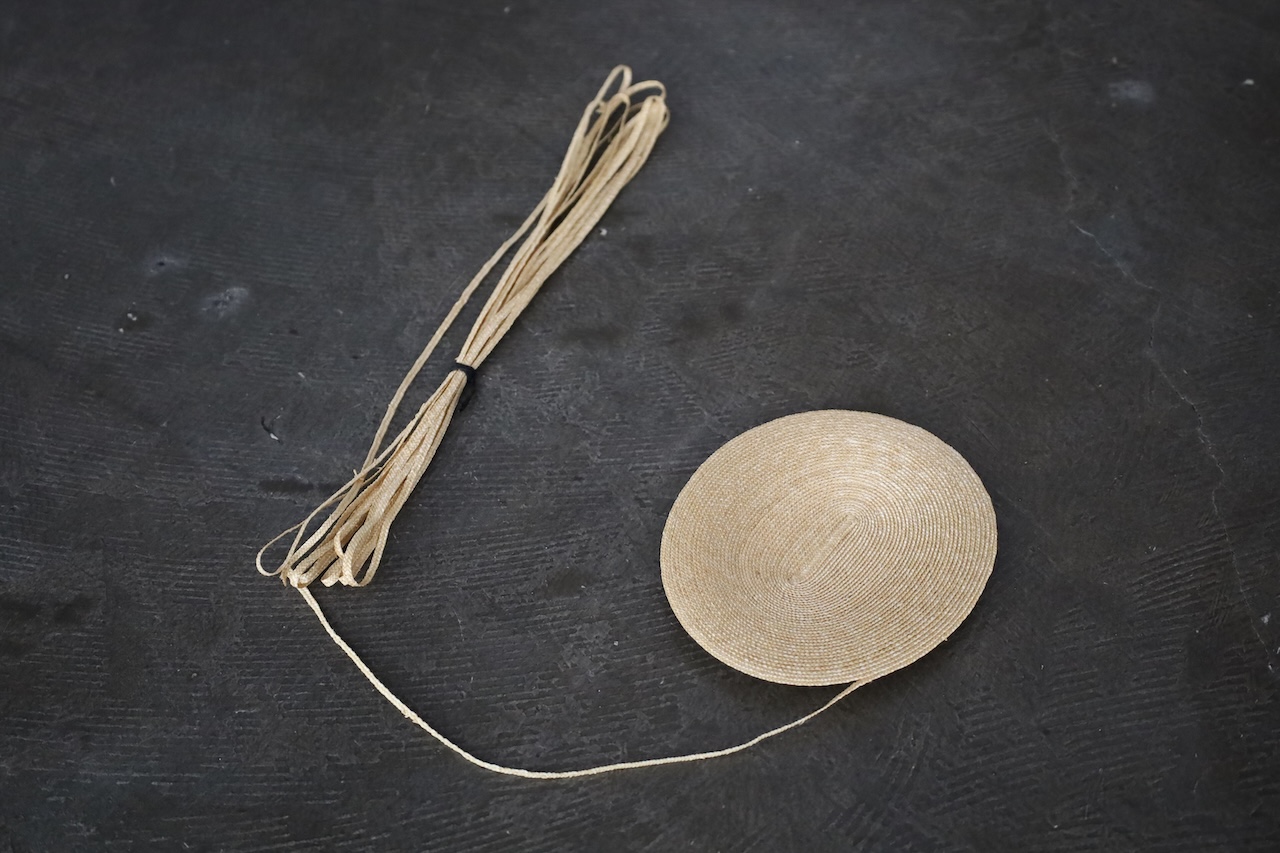
IRIES H.M.で使用するStrawは、 わずか3.5mmというきわめて細幅の手編みの麦稈真田。
デザイナーによると、この3.5mm幅のテープは、現在ではほとんど目にすることのない非常に貴重な規格だと言います。
それを頭の頂点からスタートし、円を描くように縫い進めていきます。
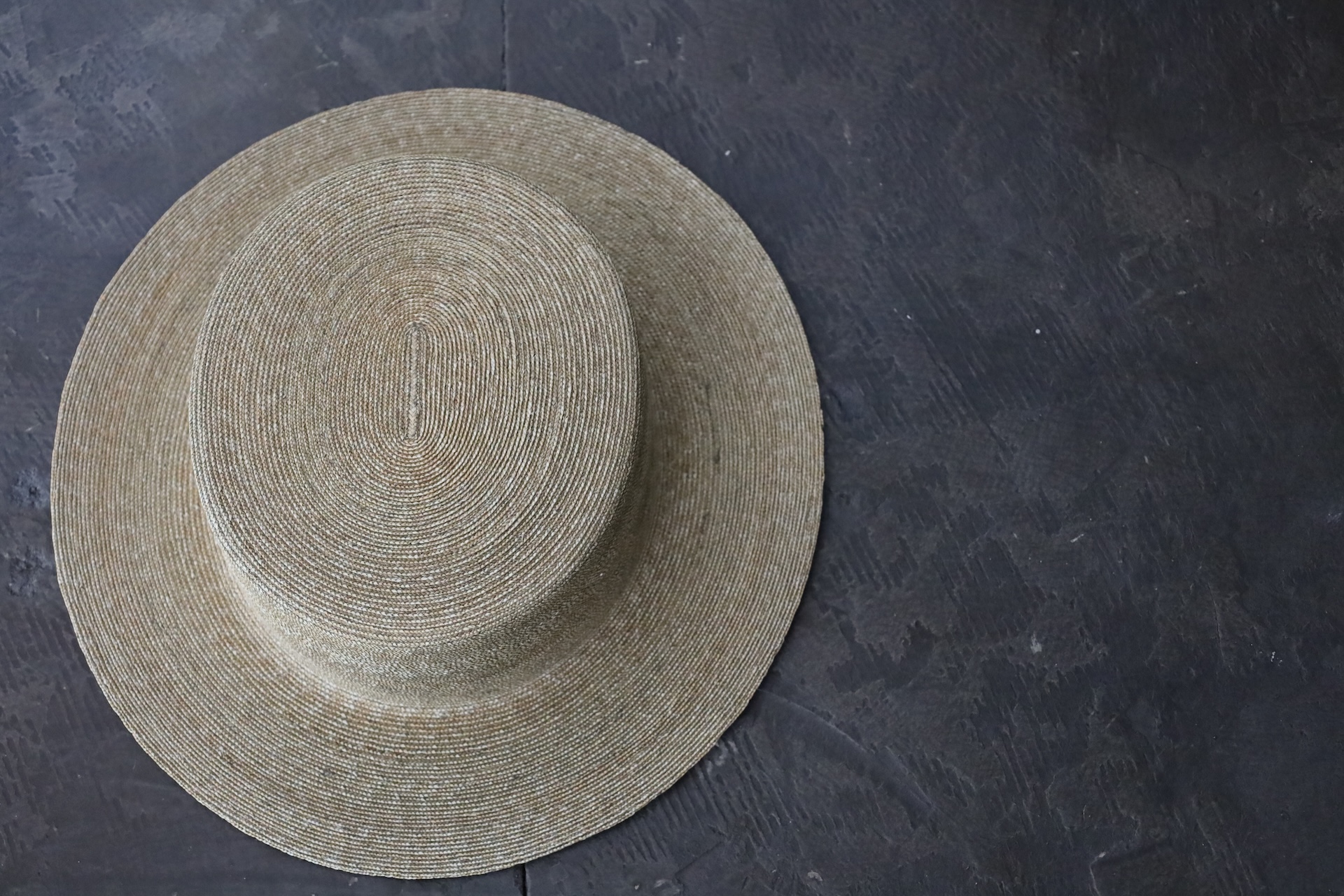
そもそも麦稈真田のように、細長く編まれたテープ状の素材を渦巻き状に縫い上げてつくる帽子は、「ブレードハット」と呼ばれます。
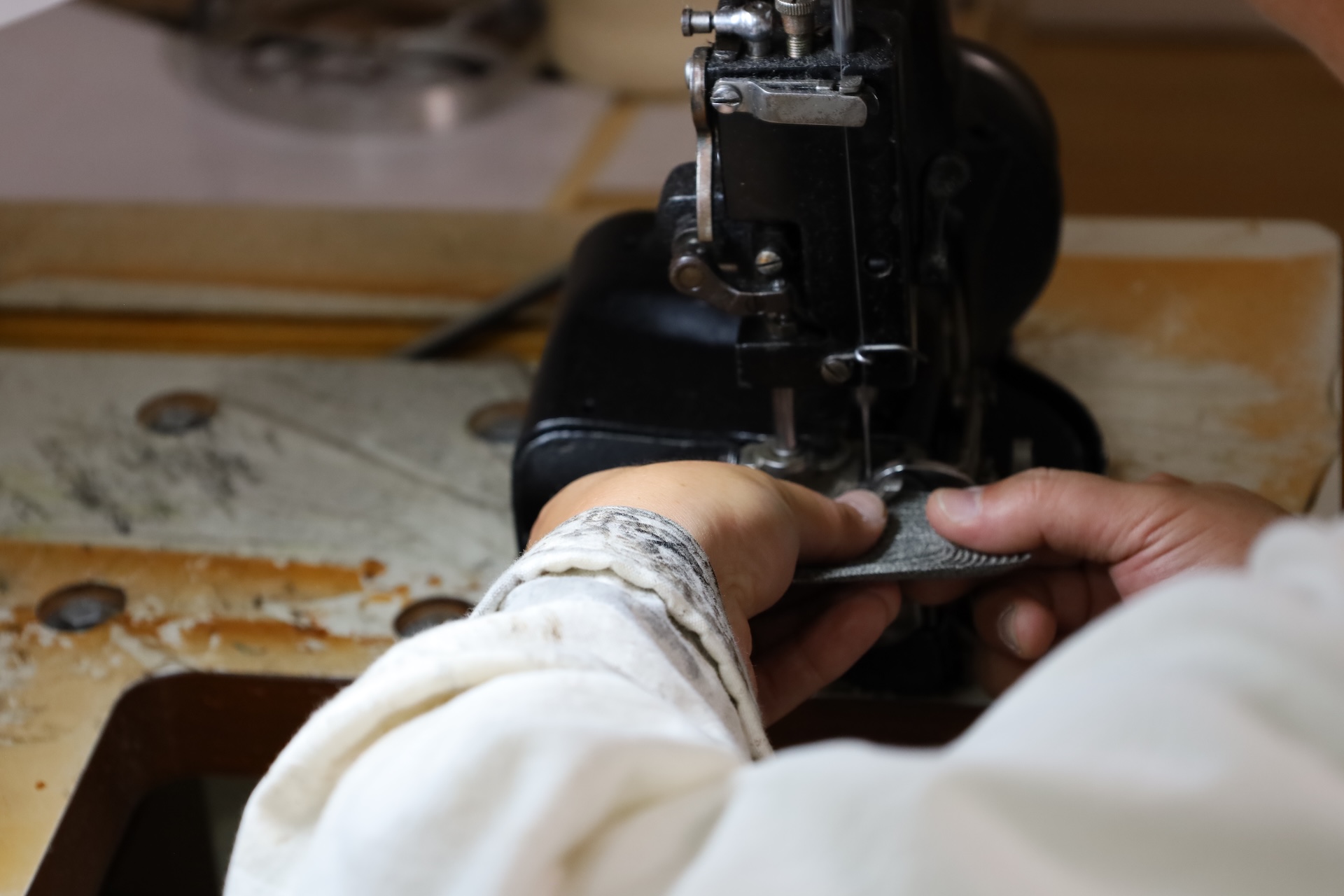
ブレードを手の加減を見ながら少しずつ縫い進め、まずは「帽体」と呼ばれる成型前の状態をつくります。
IRIES H.M.の 大きな特徴の一つとして挙げられるのが、 この「帽体」そのものを、ブランドのアトリエ内で製作していること。
多くの帽子が既に形になった帽体から製作を始める中、IRIES H.M.は その一歩前、 一本のブレードから帽子をつくり始めます。
3.5mmの麦稈真田を、頭頂部から一周、また一周と縫っていく。
円が少しずつ広がり、平面だった一本のテープが次第に頭を包む立体へと変わっていきます。
IRIES H.M.では、 デザイナーが培ってきた経験や技術をもとに、アトリエ内で帽体を製作することに重きを置いています。
また、そうすることによって最終仕上げまでを見通した中で、帽体を縫い上げることができるのです。
帽体をつくり、成型し、そして仕上げる。
一本のブレードの状態から、完成した帽子になるまで、その工程を一貫してアトリエ内で行うことも、 IRIES H.M.の大きな特徴です。
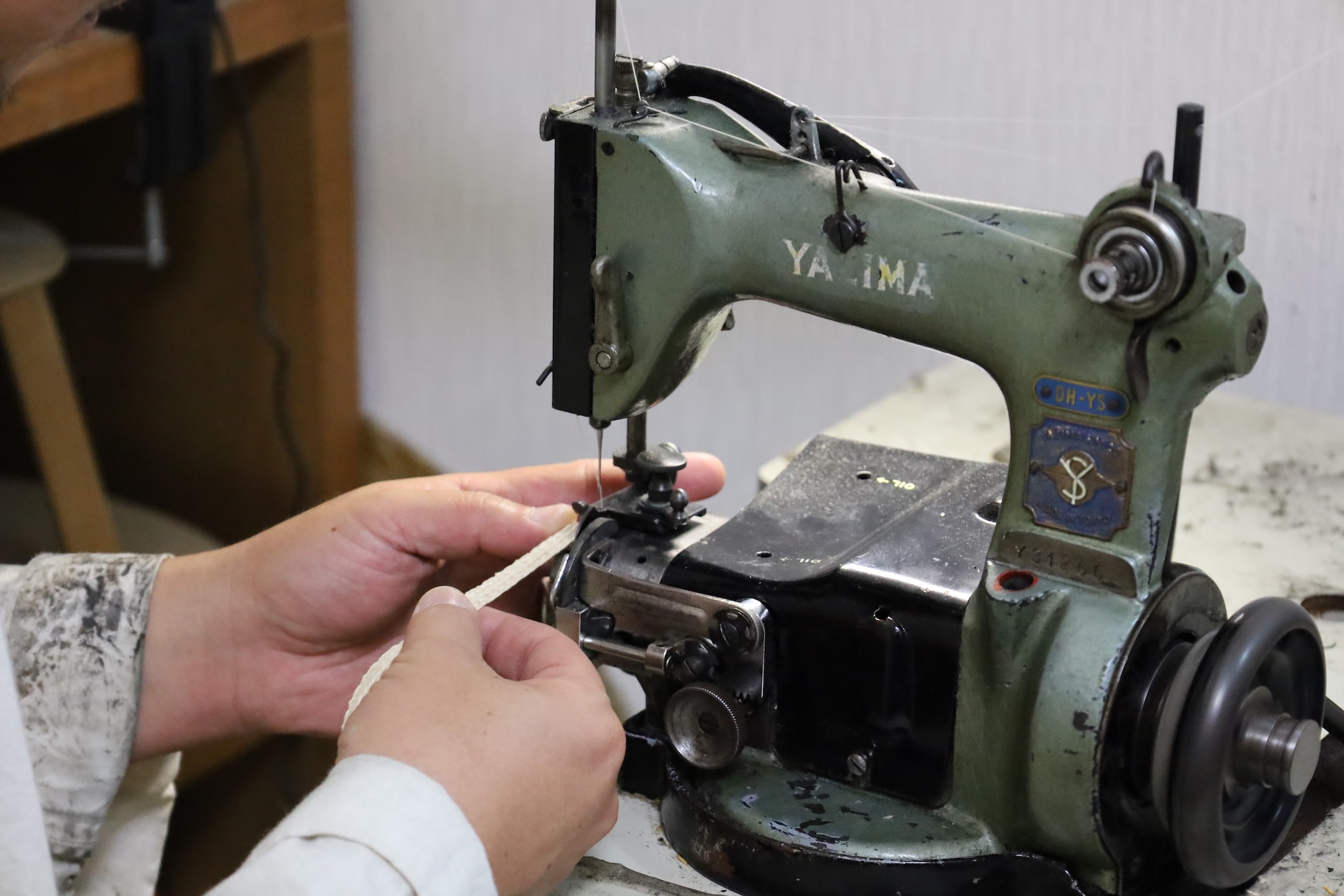
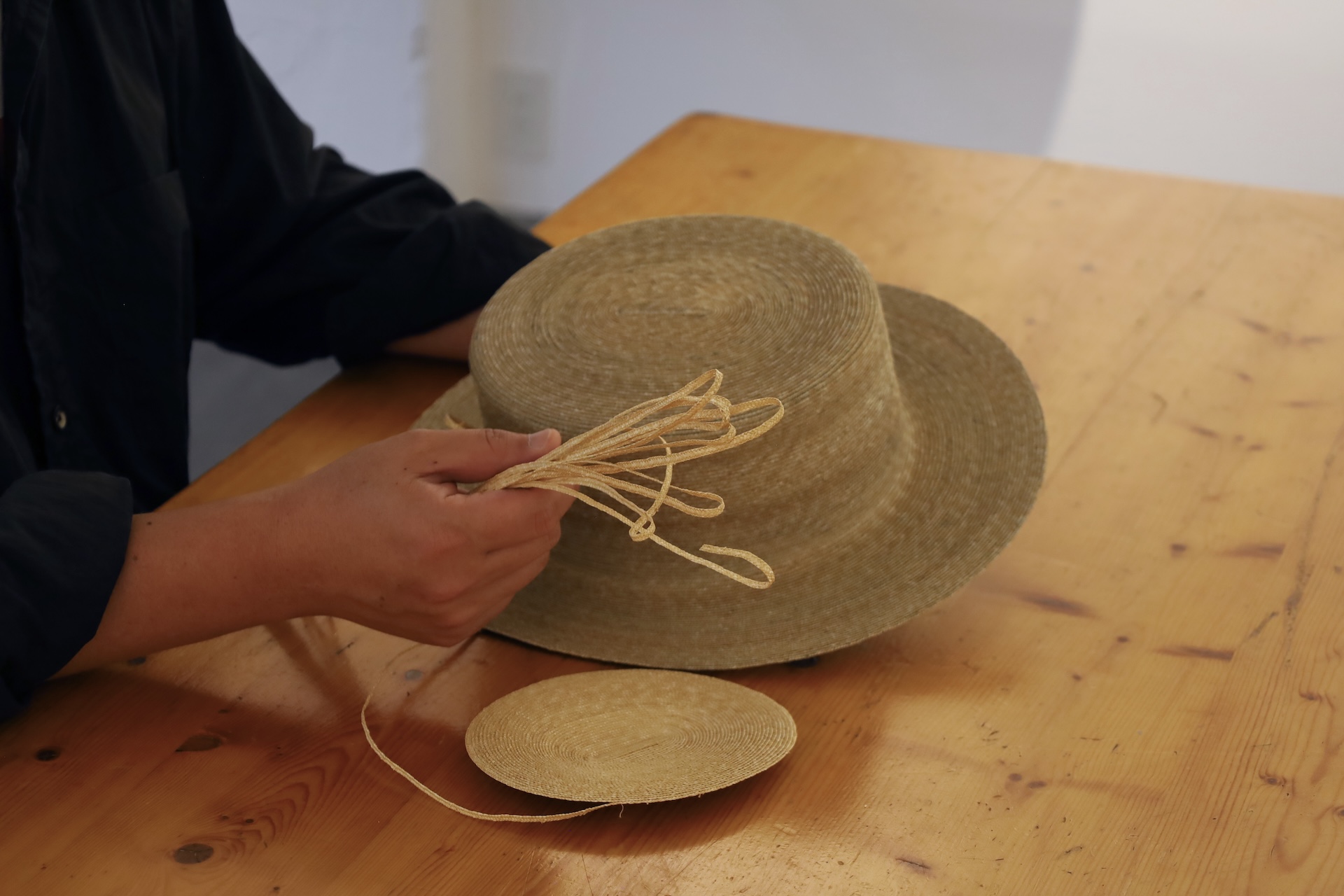
現在では、生産されていない古い帽子専用の環縫いミシンを用いて「帽体」を製作する様子。
帽体のすべてを同じように縫うのではなく、箇所に応じて指先の加減を変えることでシェイプをつくっていきます。
一本の細いテープを縫い続けていく以上、素材にも、縫い上がりにも僅かな個体差が生まれると言います。
そうした僅かな差を見極めながら、最終的には狙ったフォルムへと整えていきます。
最終仕上げまでを逆算しながら縫い進める。
そのことを、デザイナーは「細やかなレシピの世界」だと語っています。
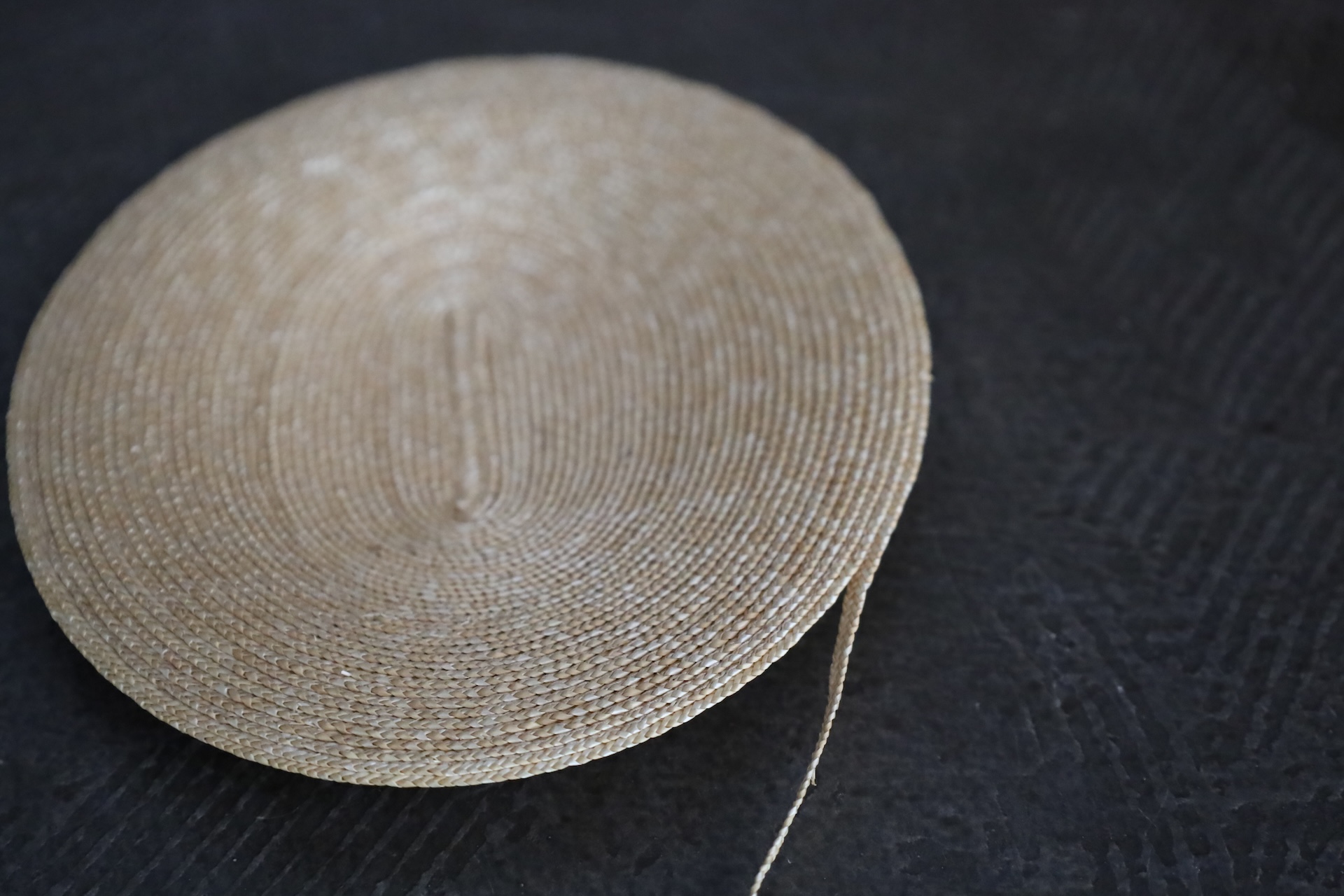
わずか3.5mmというきわめて細いテープが重なり合う。
これを前後左右で対称に、それも立体に縫い上げていくという工程が難易度の高さを感じさせます。
IRIES H.M.のものづくりの中でも、 3.5mmの麦稈真田を縫う際には、ミシンの針も糸も、ブランド内で最も細いものを選びます。
出来上がった帽体は、次に規格通りに仕上げるための成型へと進みます。
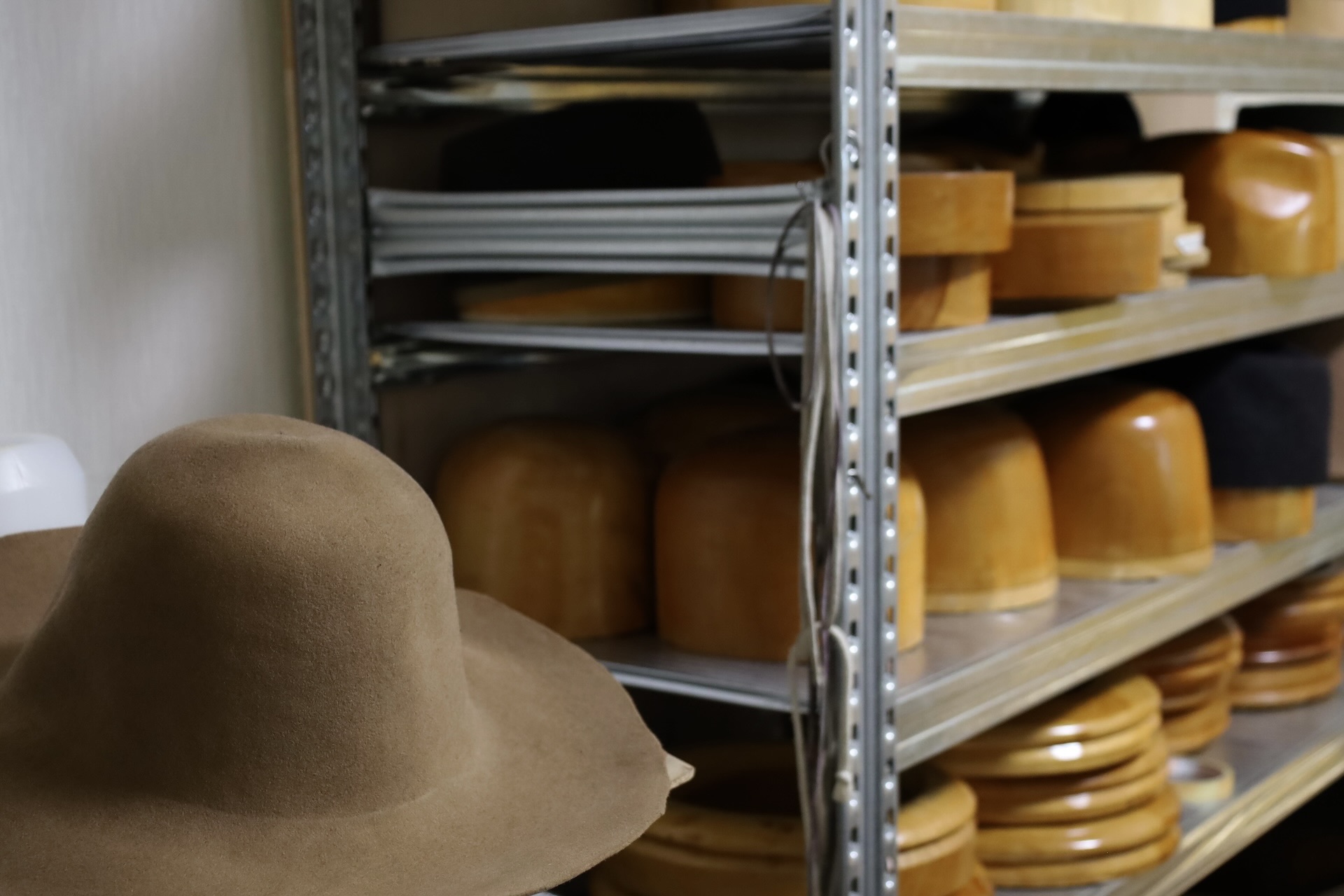
ブランドのアトリエには、数多くの木型が並びますが、そのどれもが頭の角度や丸み、縦と横の比率などがミリ単位で異なるもの。
繊細な差ですが、この違いが帽子の仕上がりに影響を与えます。
中でも、 IRIES H.M.で使用する木型は、 造形美と被り心地の両立を考えて製作したオリジナルのものです。
IRIES H.M.では、 コレクションのすべてに「トリートメント」という独自の仕上げを施します。
これは、デザイナーが20年にわたって帽子製作に携わってきた経験から導き出した仕上げ方法です。
帽子製作に本来必要な工程に着目し、素材に過度な負荷をかけることなく、その特徴を生かしながら立体感と陰影を引き出すために考えられた手法です。
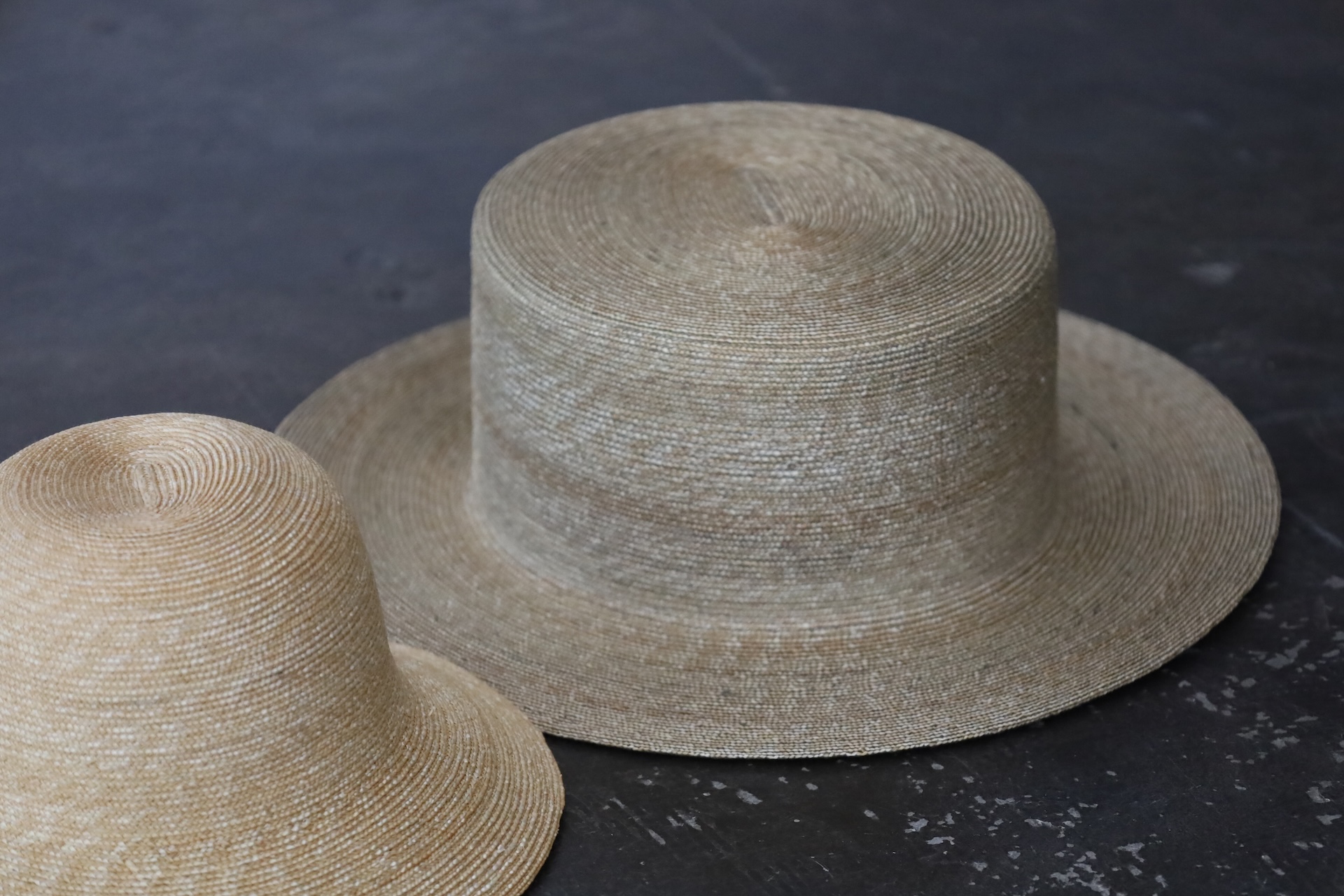
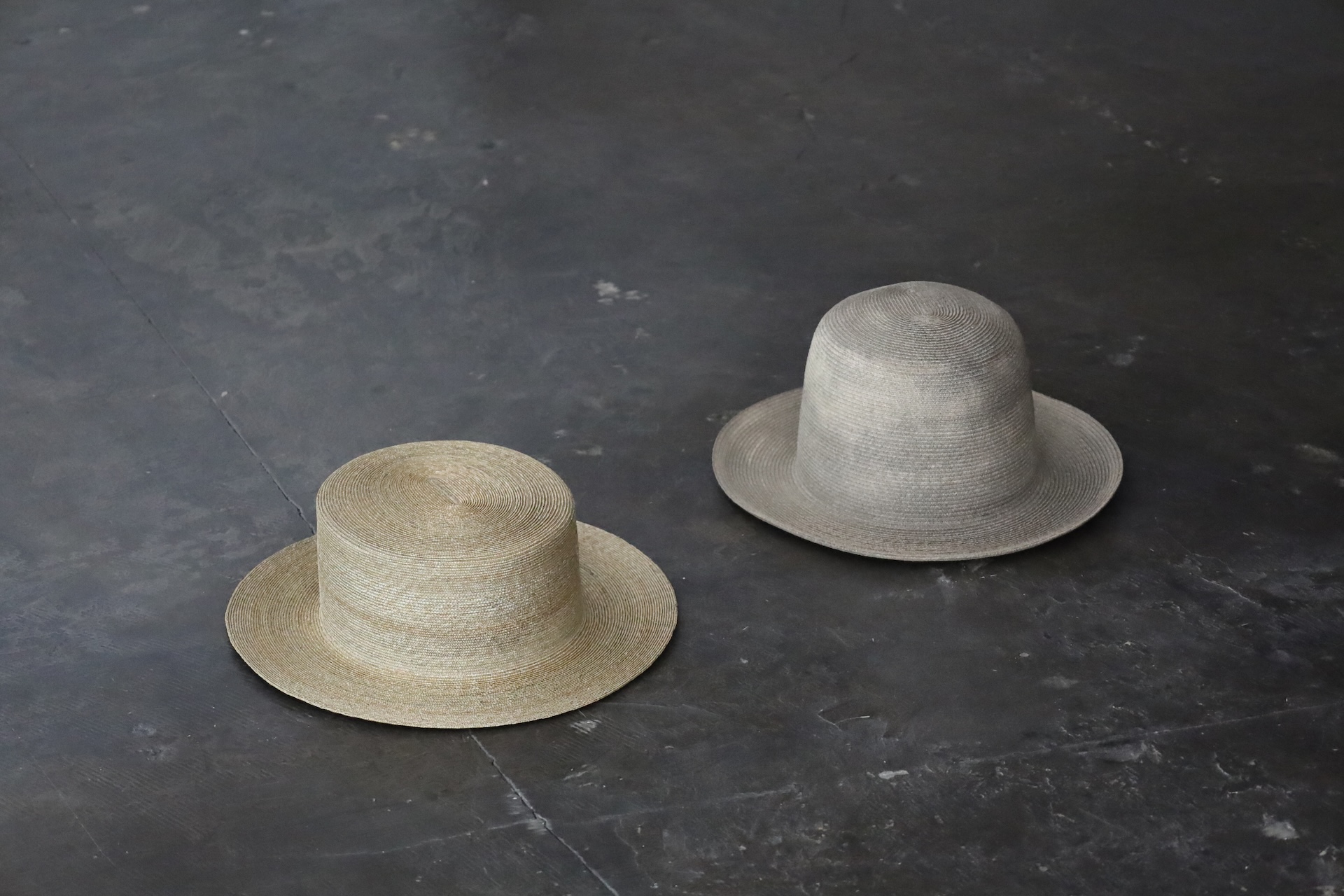
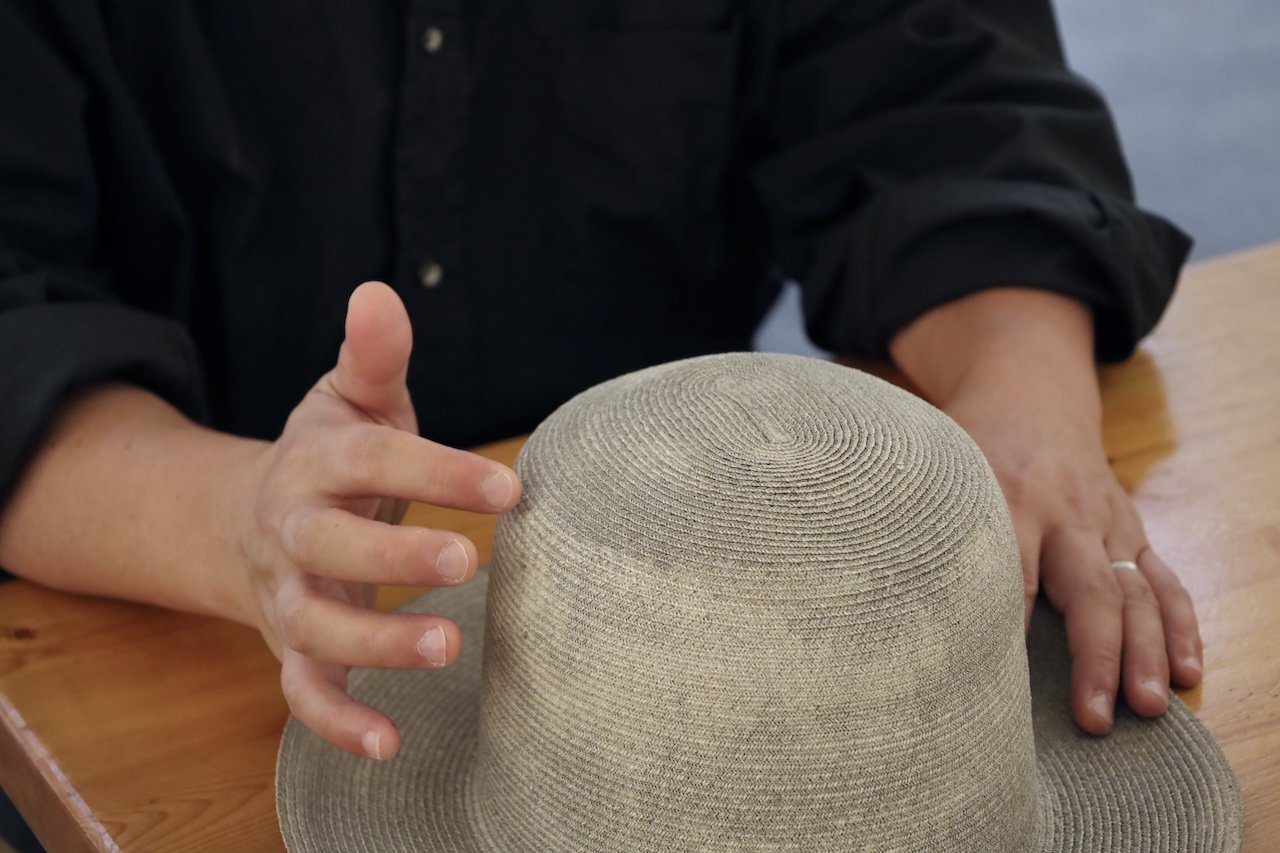
上の写真は、同じStrawの素材のトリートメント前と後のもの。
手前左はもともとの状態で、右奥がトリートメントを施したもの。
素材そのものを別のものへ変えるのではなく、本来持っている光沢や色の揺らぎを残したまま、陰影を深くしていく。
それは、完成した帽子にデザイナーがもう一度手を触れ、体温を与えていくような仕上げです。
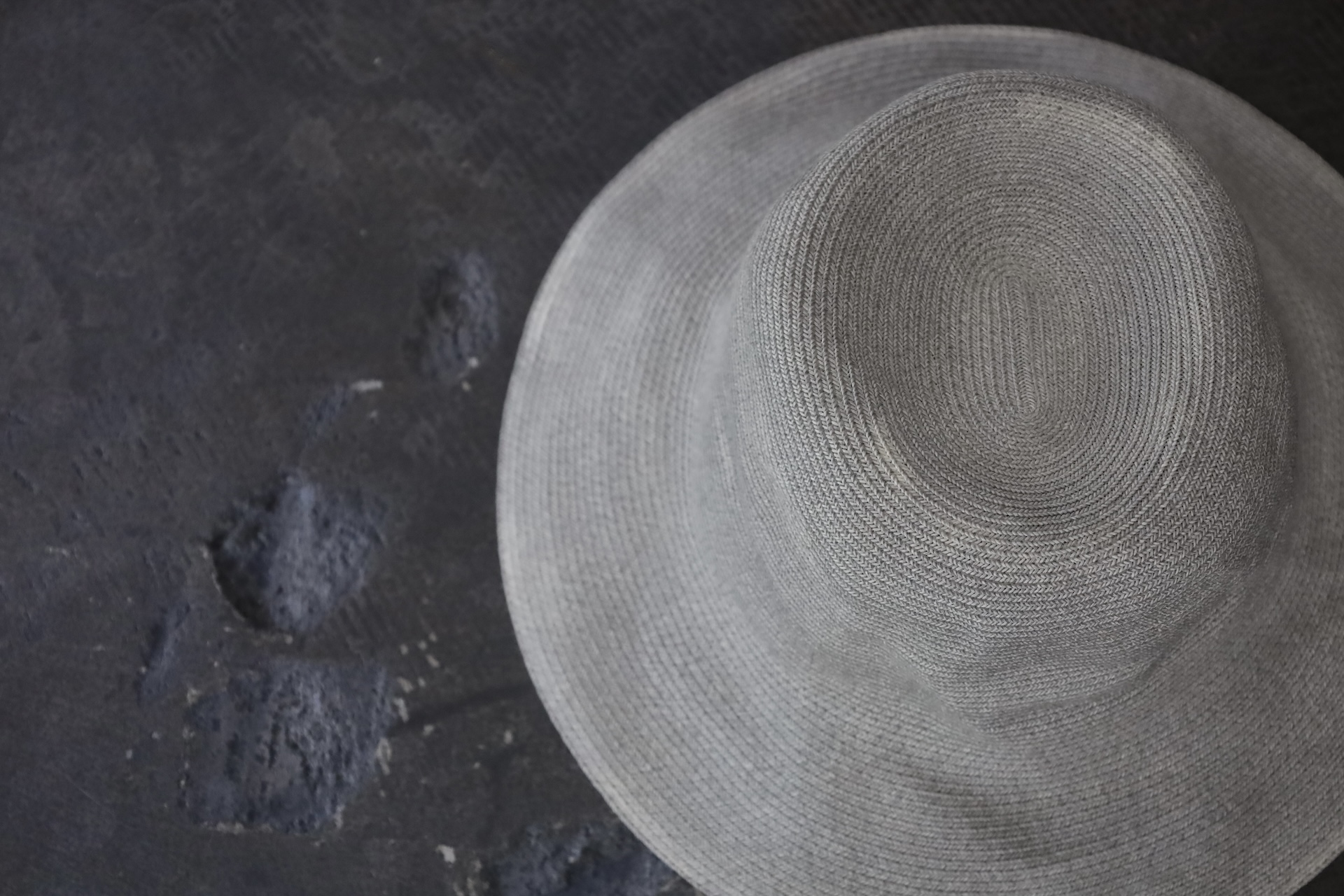
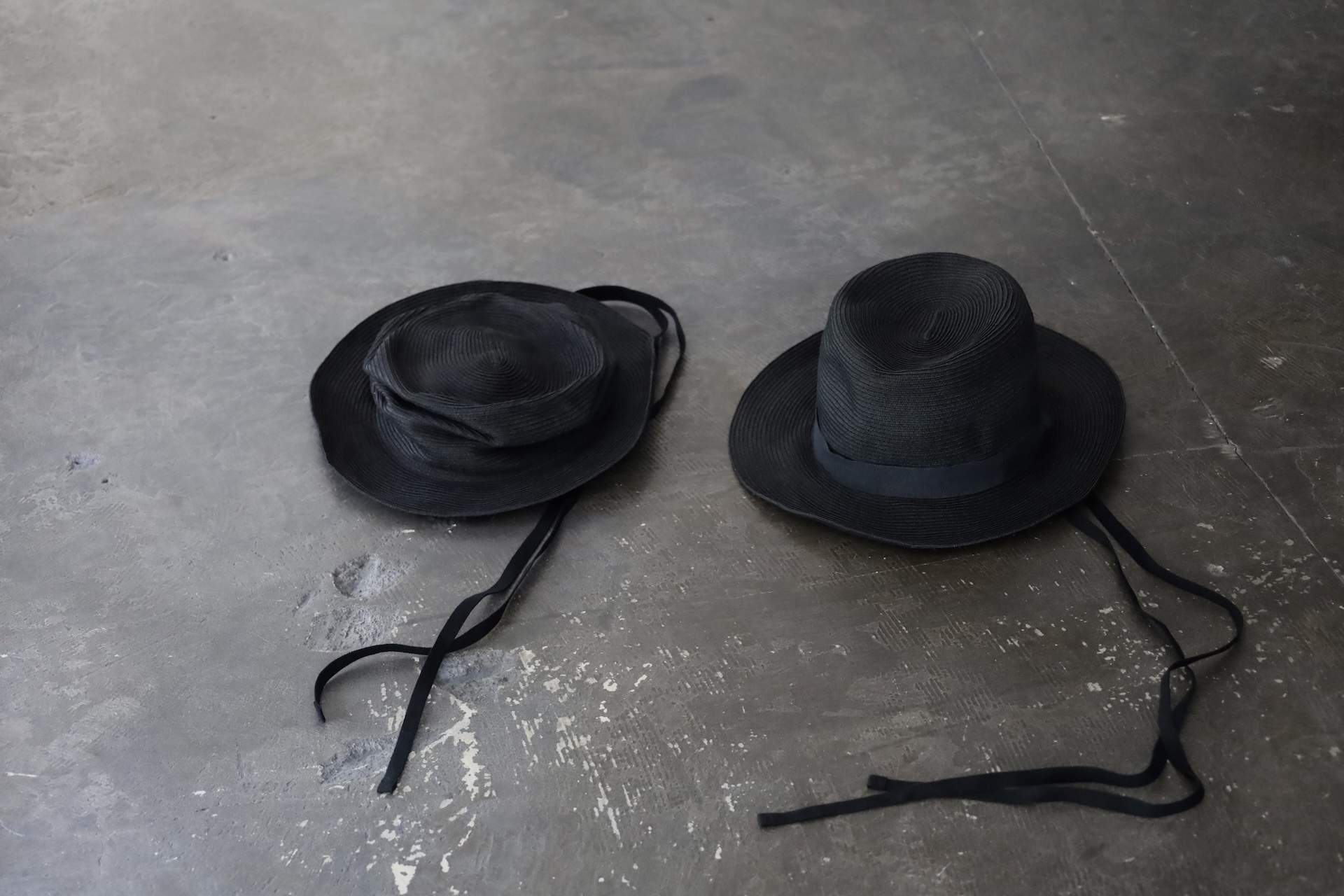
IRIES H.M.では、 このStraw以外にもさまざまなブレード素材が存在します。
素材によっては、トリートメントによる仕上げだけには留まりません。
洗いを加えるものもあれば、揉み込むものもあり、トリートメントだけで仕上げるものもあります。
それぞれの素材の特性を見極めながら、職人として形を整え、最後にデザイナーとして表情を与えていく。
精度と感性。
その二つが一つの帽子の中で共存していることが、 IRIES H.M.のものづくりです。
今回はStrawを中心に、コレクションの一部をご紹介しました。
10月のパリショールームでは、 IRIES H.M.が使用するブレード素材の フルラインナップをご覧いただけます。
素材の光沢や軽さ、細かなフォルム、そしてトリートメントによって生まれる陰影は、実際に手に取ることで初めて分かる部分もあります。
バイヤーの皆さまには、ぜひパリでIRIES H.M.の帽子を手に取って ご覧いただければと思います。
<IRIES H.M. Paris Showroom>
日程 : 2026年10月1日〜4日
会場 : Est Galerie, 76 rue Saint Maur, 75011 Paris
LE BERGER
shop talk & communications by Akihiko Fukuda
__________
The English translation is provided below:
At our Paris showroom, opening on October 1, 2026, we would like to invite buyers to experience the collection of the hat brand IRIES H.M. in person.
Ahead of the Paris showroom, we would like to introduce the craftsmanship behind the brand’s Spring/Summer collection.
We have previously featured IRIES H.M. in our Shop Talk series, so we also invite you to take a look at that article.
IRIES H.M. – Hat Craft Meets Design
In the past, straw hats were widely worn across Europe and North America as part of summer dress and for leisure.
By the latter half of the 19th century, one of the materials supporting this tradition of hat-making was also being supplied from Japan.
It was known as “Bakkan Sanada” (麦稈真田).
It is said to have originated around 1871, inspired by the straw hats worn by foreigners in Yokohama.
“Bakkan Sanada” developed from traditional straw craft techniques that had long existed in certain regions of Japan. Wheat stalks were flattened and then braided by hand into long, narrow strips.
It was produced as a source of supplementary income for farming families during the agricultural off-season, particularly in rural wheat-growing regions such as Okayama and Saitama.
Wheat straw has a natural lustre unlike that of man-made materials. When it catches the light, each strand reflects it delicately, creating subtle changes in appearance depending on the angle from which it is seen.
It is also light and breathable, making it particularly well suited to hats for the spring and summer seasons.
Bakkan Sanada was later exported to Europe and North America, where it came to be widely used within an already well-established hat-making industry.
At the same time, Bakkan Sanada was something made in farming households within rural regions where wheat was grown in abundance.
It was a form of handcraft born from everyday life, making use of materials found in the surrounding land.
Something made by hand in the Japanese countryside travelled across the sea and became connected to the hat-making industries of Europe and North America.
Behind the straw hat lies this kind of history—one that connected distant places through material and craft.
Today, however, the production of Bakkan Sanada has almost disappeared, as new materials have become widespread and lower-priced imported products have increased.
And yet, there is something that can only emerge from working directly with a material and shaping it slowly, little by little, by hand.
It is a time-consuming way of making things, but I believe it creates an expression that could not exist without that process.
IRIES H.M. carries forward these traditional hat-making techniques, not simply to preserve them, but to transform them into contemporary hats through the designer’s own sensibility.
At IRIES H.M., a range of models are created using different braided materials, with each model given a Japanese name.
One of these materials is called Straw.
This is the series made using Bakkan Sanada, introduced earlier.
This is the KANKAN model from the Straw series.
The Straw used by IRIES H.M. is made from hand-braided Bakkan Sanada measuring just 3.5 mm in width.
According to the designer, this 3.5 mm braid is an exceptionally rare specification that is almost never seen today.
Beginning at the crown, the braid is sewn in a continuous spiral, gradually building the shape of the hat.
Hats made by sewing long, narrow braided materials such as Bakkan Sanada into a continuous spiral are known as braid hats.
The braid is sewn little by little, with the maker constantly adjusting the tension and handling by hand, until it first takes the form of what is known as a hat body—the stage before the hat is shaped and blocked.
One of the defining characteristics of IRIES H.M. is that the brand makes these hat bodies itself, entirely within its own atelier.
While many hats begin with a hat body that has already been made, IRIES H.M. starts one step earlier—with a single length of braid.
The 3.5 mm Bakkan Sanada is sewn from the crown, one circle after another.
As the spiral gradually expands, what began as a flat strip slowly transforms into a three-dimensional form that will eventually wrap around the head.
At IRIES H.M., great importance is placed on making the hat bodies in-house, drawing on the experience and techniques the designer has developed over many years.
By doing so, each hat body can be sewn with the final shape and finish already in mind.
Making the hat body, shaping it, and then completing the final finish.
From a single length of braid to the finished hat, carrying out every stage of the process within the atelier is one of the defining characteristics of IRIES H.M.
Here, the hat body is being made using an old chain-stitch sewing machine designed specifically for hat-making—one that is no longer in production today.
The hat is not sewn with the same touch throughout. Instead, the maker subtly adjusts the pressure of the fingertips from one area to another, gradually shaping the form as the braid is sewn.
Because a single narrow strip is continuously sewn into shape, slight variations naturally emerge in both the material and the finished stitching.
By carefully reading these subtle differences, the maker gradually brings the hat toward the intended form.
Each stitch is made with the final finish already in mind.
The designer describes this process as “a world of delicate recipes.”
The exceptionally narrow 3.5 mm braid is layered over itself as it is sewn.
Building this into a three-dimensional form while keeping the front, back, left, and right in balance gives a sense of just how demanding the process is.
When sewing the 3.5 mm Bakkan Sanada, IRIES H.M. uses the finest needles and threads available within the atelier.
Once the hat body is complete, it moves on to the shaping process, where it is brought into its intended proportions.
The atelier is lined with numerous wooden hat blocks, each differing by just millimetres in the angle and roundness of the head, as well as in its vertical and horizontal proportions.
These differences may be subtle, but they have a direct effect on the final shape of the hat.
The wooden blocks used by IRIES H.M. are original designs, developed to balance sculptural beauty with comfort when worn.
Every piece in the IRIES H.M. collection is finished with the brand’s own process known as “Treatment.”
This finishing method was developed from the designer’s 20 years of experience in hat-making.
By focusing on processes that are fundamental to the making of a hat, the method is designed to bring out depth, dimension, and shadow while preserving the character of the material without placing excessive stress on it.
The photo above shows the same Straw material before and after Treatment.
The piece in the front left is in its original state, while the one at the back right has undergone the Treatment process.
Rather than transforming the material into something entirely different, the process deepens its shadows and tonal contrasts while preserving its natural lustre and subtle variations in colour.
It is as if the designer touches the finished hat once more, giving it a sense of warmth and human presence.
Beyond Straw, IRIES H.M. works with a wide variety of braided materials.
Depending on the material, the finishing process may go beyond Treatment alone.
Some are washed, some are worked by hand through rubbing and manipulation, while others are finished solely through the Treatment process.
By carefully understanding the characteristics of each material, the designer first shapes the hat with the precision of a craftsman, and then gives it expression through the sensibility of a designer.
Precision and sensibility.
It is the coexistence of these two qualities within a single hat that defines the making of IRIES H.M.
In this article, we have focused mainly on Straw and introduced just one part of the collection.
At our Paris showroom in October, you will be able to see the full range of braided materials used by IRIES H.M.
The natural lustre and lightness of the materials, the subtlety of each form, and the depth of shadow created through Treatment are qualities that can only truly be appreciated by holding the hats in your hands.
We hope buyers will take the opportunity to experience the hats of IRIES H.M. in person in Paris.
<IRIES H.M. Paris Showroom>
Dates: October 1–4, 2026
Venue: Est Galerie, 76 rue Saint Maur, 75011 Paris