日本の職人技と歩むブランド「山内」/ Yamauchi–A Brand that Walks with Japanese Craftsmanship
2025.12.23
今日は2026年秋冬コレクションより、弊社LE BERGERで新たに全世界のセールスエージェントを務める「山内」というブランドについてご紹介いたします。
山内は、「縫製そのものをデザインと捉える」日本のブランドです。
日本の丹念な伝統技術と現代的なパターンを掛け合わせた、端正でモードな洋服を製作しています。
これまで、日本国内でのみ展開してきたブランドですが、この度、1月には初めてパリでの展示会、2月には国内展示会を行います。

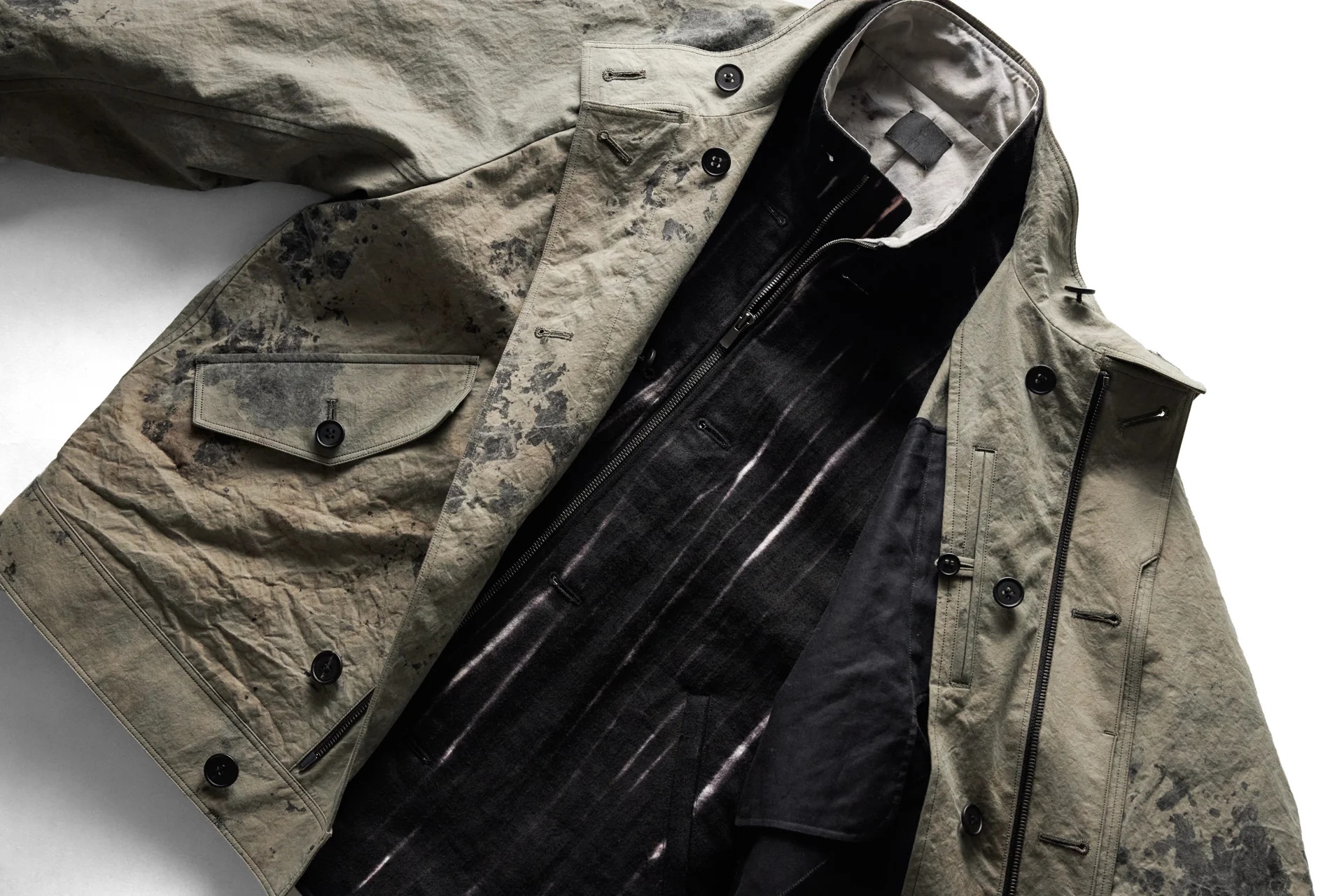
「日本人であるということ」ということをブランドの一つの思想に掲げ、丁寧で繊細な仕立て、一目見ただけでは気付きにくいような僅かな違い、日本人ならではの美的感覚があり、そこには美しく細やかな仕事が注がれています。
デザイナー自身が「洋服の縫製」に魅了され、追求を続けてきた技術者でもありますが、ブランドを支えるのは、一貫して頑なにモノづくりを続けてきた職人たちです。
これまで10年20年にわたって、縫製を続けてきた縫製職人。
日本が誇る伝統的な技法を今日まで続け、更に、それを活かして現代に新しいもの生み出そうとする工場など。
山内の周りには丹念に仕事を続けてきた職人たちがいます。
脈々と続く日本の職人たちを背景とし、そのつながりをまとめ「チーム山内」として、洋服を生産しているブランドです。
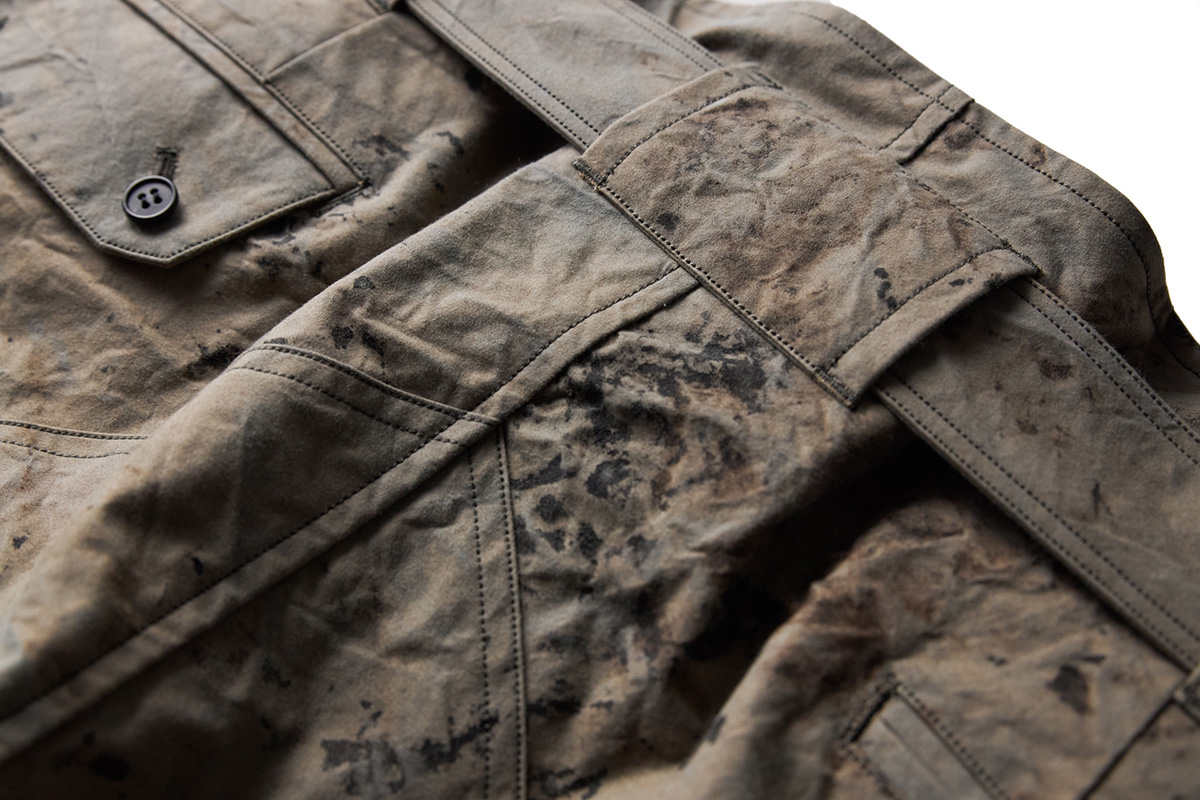
<縫製について>
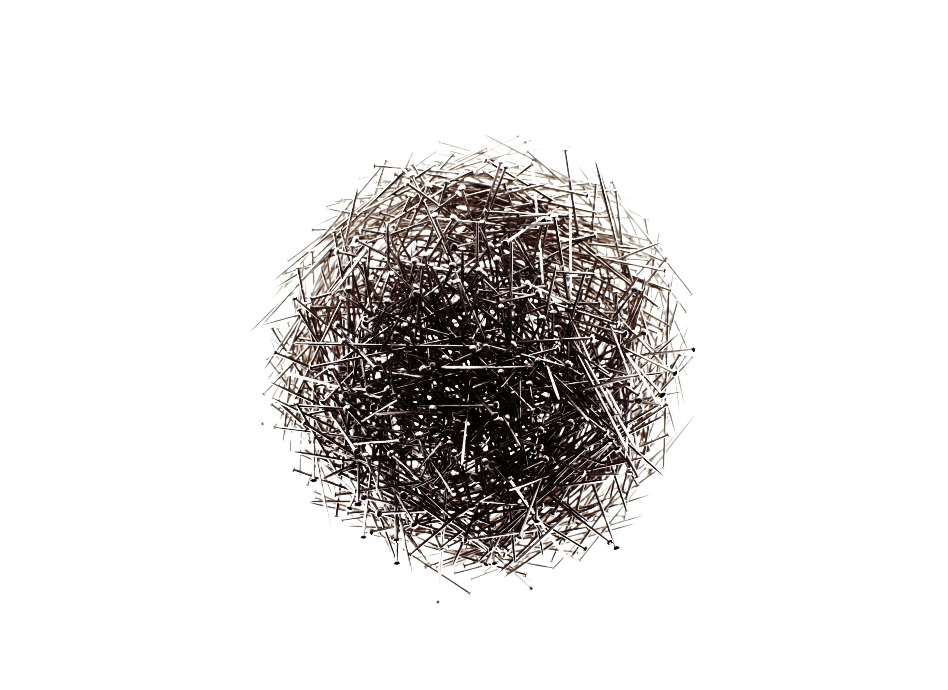
山内は、「縫製そのものをデザインと捉える」という考えでモノづくりをしています。
生地の魅力やパターンの良さを最終的に組み上げて、洋服として形づくるのは縫製です。
その縫製技術を高め、維持し続けることを重視しています。
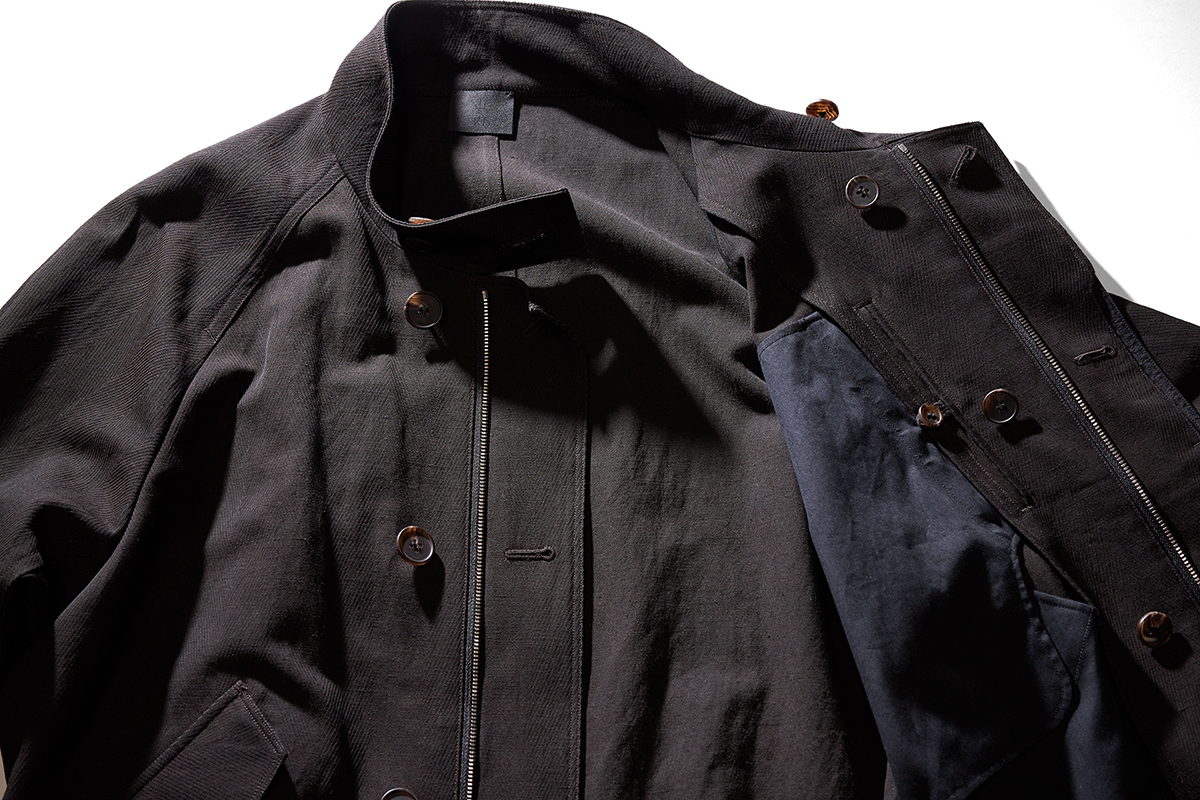
職人が一着一着縫い上げた洋服は、ハンドメイドでありながらも、非常に端正な表情をしています。
また、デザイナー自身が「縫製に魅了された」と語るように、「山内リブ」※1や「糸抜き」※2というディテールや、協業する縫製工場で行われる「インコードロック」※3という縫製技術も採用することもあり、縫製の仕上がりにより決まるデザインも山内の一つの特徴です。
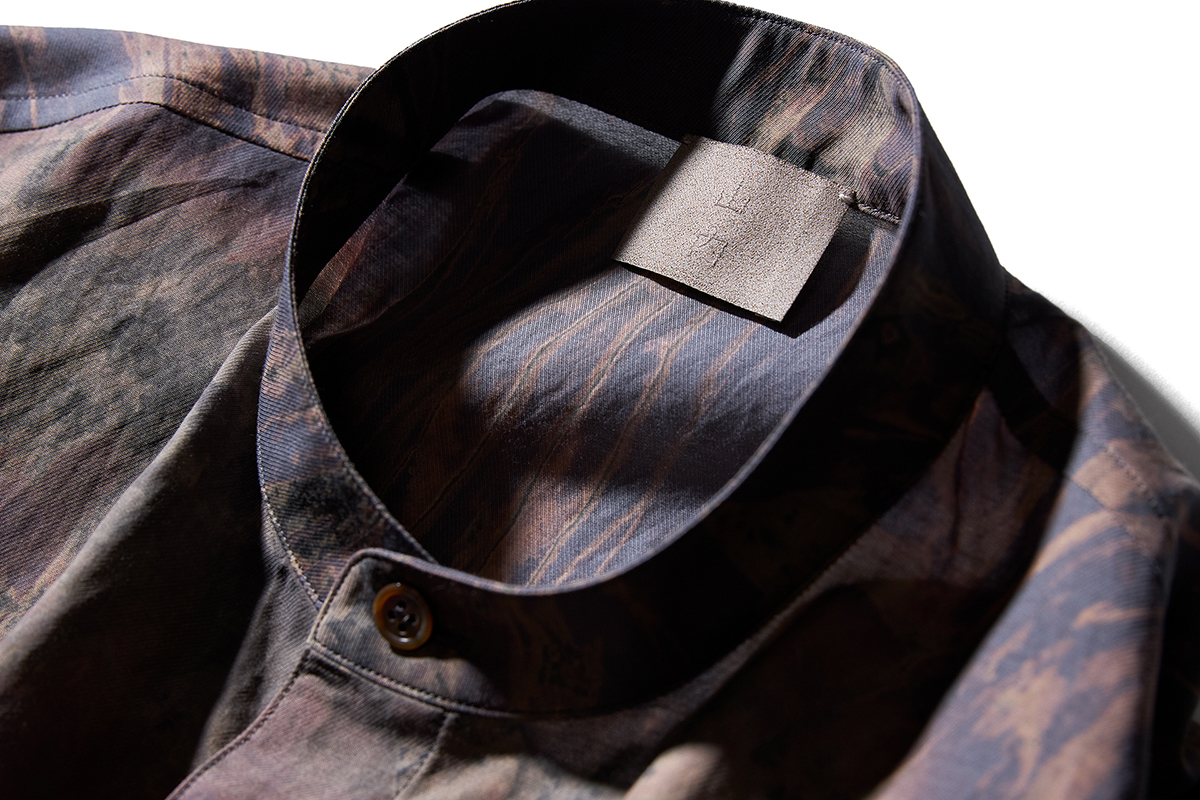
そのような縫製に重きを置いていることの一つの象徴として、「縫製者タグ」という洋服を縫った縫製者や縫製工場の名前が洋服の内側のタグに明記されています。
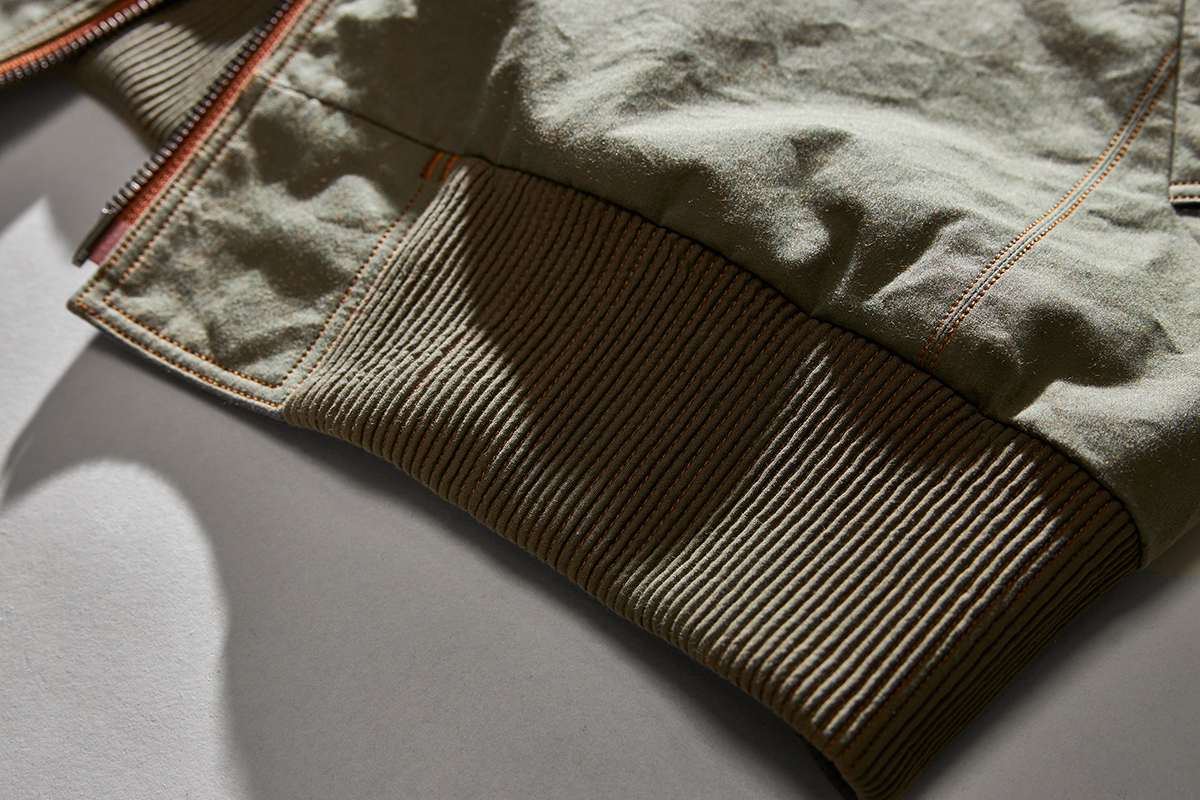
※1 山内リブ :
リブの上に生地を乗せ、リブにテンションを加えながら、生地に一本一本手作業でステッチをかけていく方法。
全て山内のアトリエで製作するリブは、布帛のアイテムとの相性、色目の統一感など、出来合のリブとは異なる。
かなりの時間を要する作業で、1着のリブを製作するのに数時間から数十時間かかる。
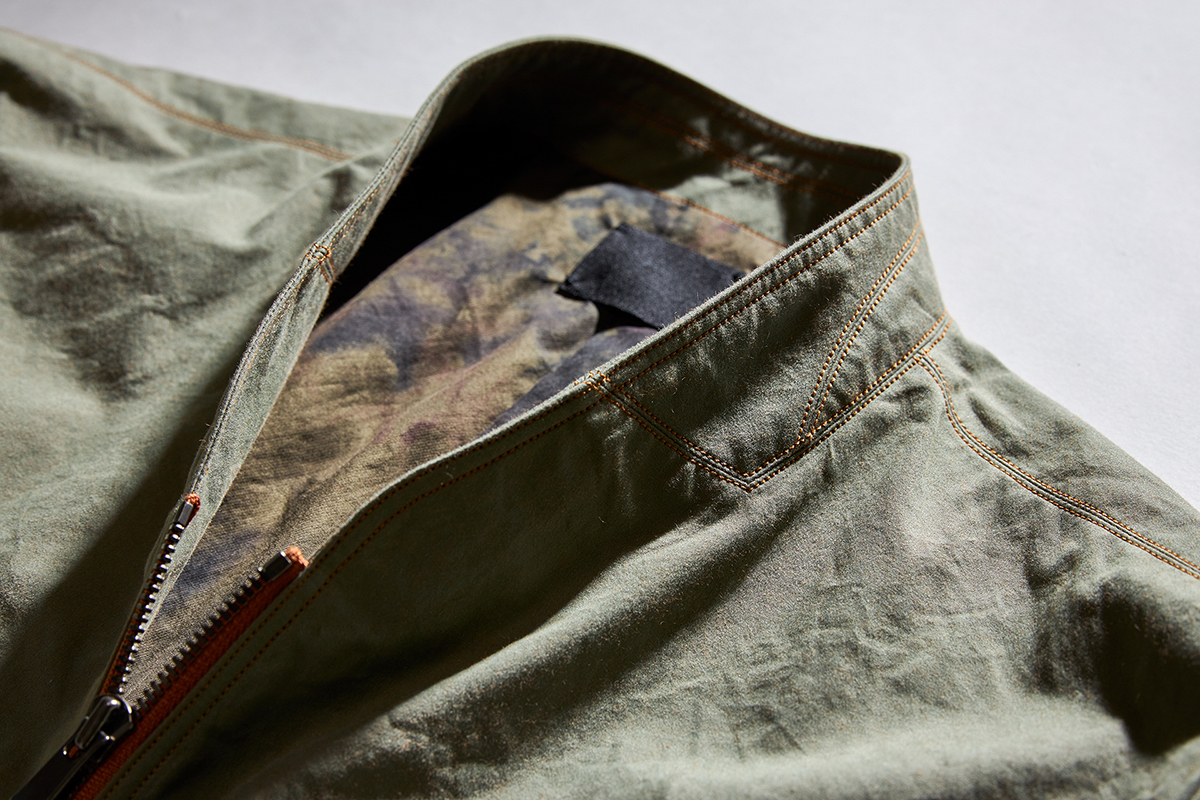
※2 糸抜き :
縫い始めや終わりの箇所の返し縫いをせず、裏側から糸を引っ張り、反対側からほつれないように手で結んで留めつける方法。ステッチが重なることがなく、デザインの邪魔をせず美しい見た目に仕上がる。
主に、アウターなど生地の厚みがあり、ステッチが表にたくさん現れるものに取り入れることがある。
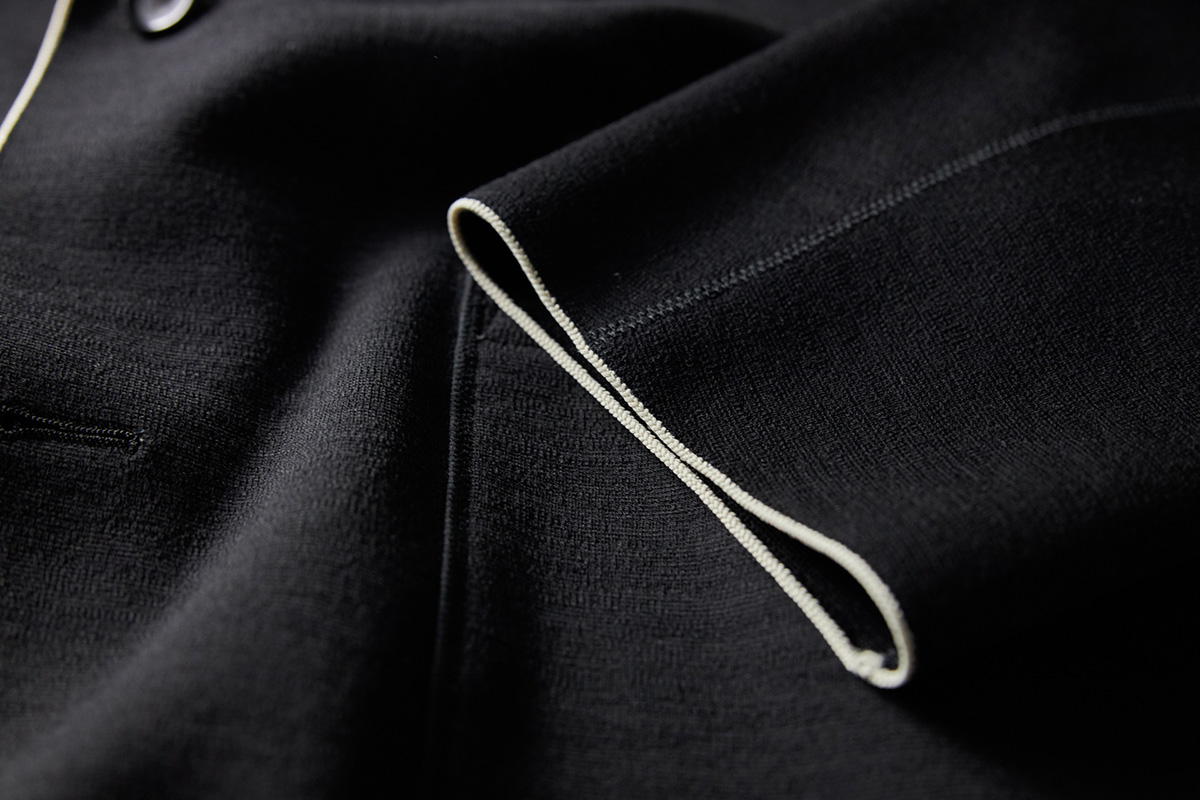
※3 インコードロック :
各パーツの端に細いコードを当て、振り幅の小さい千鳥ミシンでコードと身頃を縫い合わせていく始末の方法。特許技術を持つ工場で目の当たりにした時には、本当に感動し、デザイナー自身言葉を失ったそう。
今までにあったミシンで全く違う縫い方を考え、それが単に面白い始末の方法ではなく、理にかなった落とし所になり、その見栄えがとても美しいデザインにもなっている縫製方法。
技術革新による新たな機械によるものではなく、縫製方法をしっかりと踏まえた方のアイデアによる全く新しい縫い方。
<生地について>
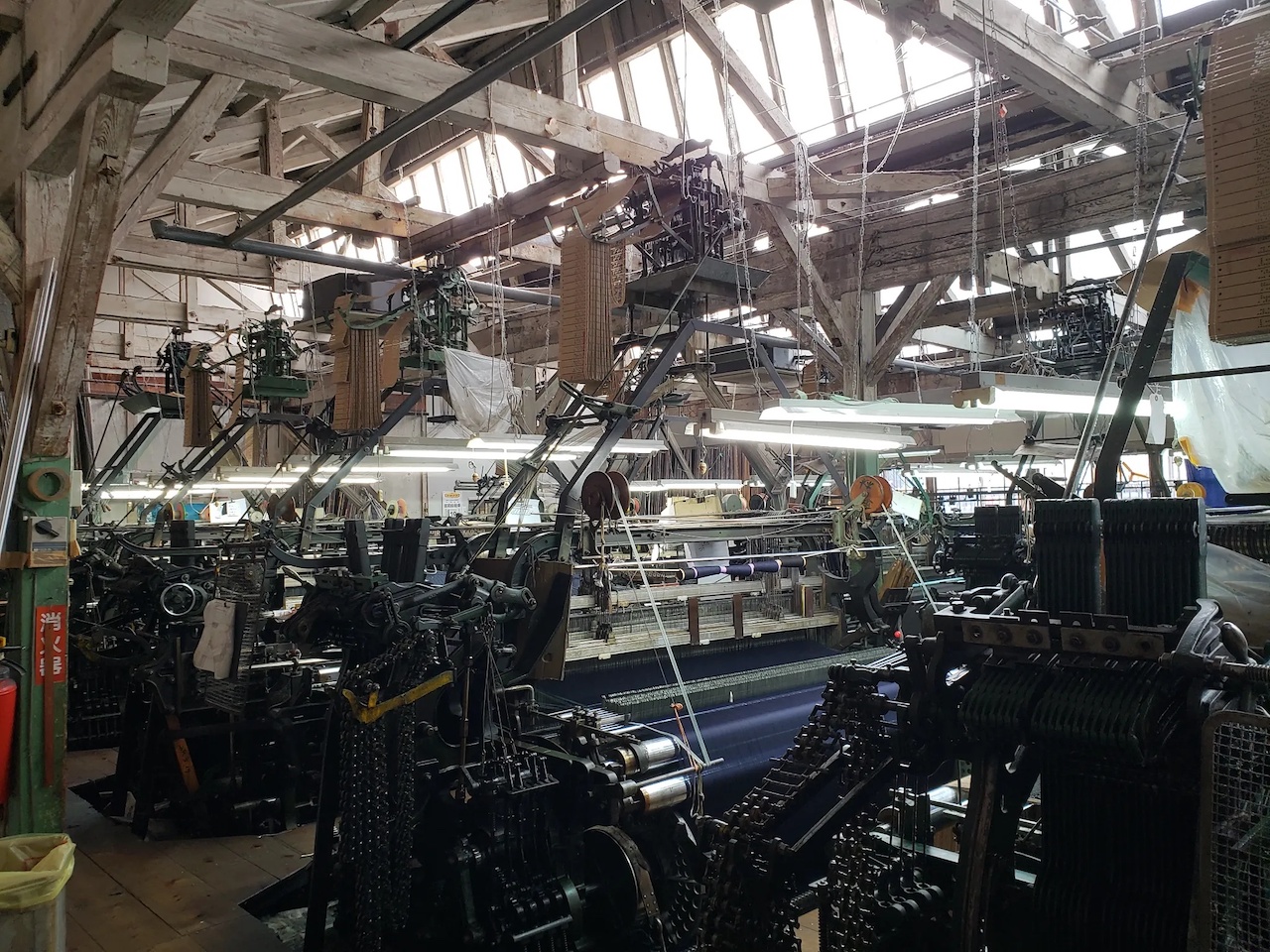
かつて日本の産地一帯には、たくさんの機屋が存在しました。
機屋には広い土地が必要となります。
それが1980年代に日本で不動産バブルが起き、多くの機屋が織物ではなく、不動産業態に移行し、次第にその数が減ってきました。
今では、その数は以前と比べて非常に限られたものとなっていますが、現在でも残っている工場さんは、一貫して技術を磨き続けてきた方々だと言います。
その中でも、山内が関わる機屋は、創業から110年以上続く、日本では最も古い最高級とされる毛織物屋さんや、世界でも最新鋭の織機や革新的な織機を用いて、特有の生地をつくる日本を代表する綿織物屋さんなど。
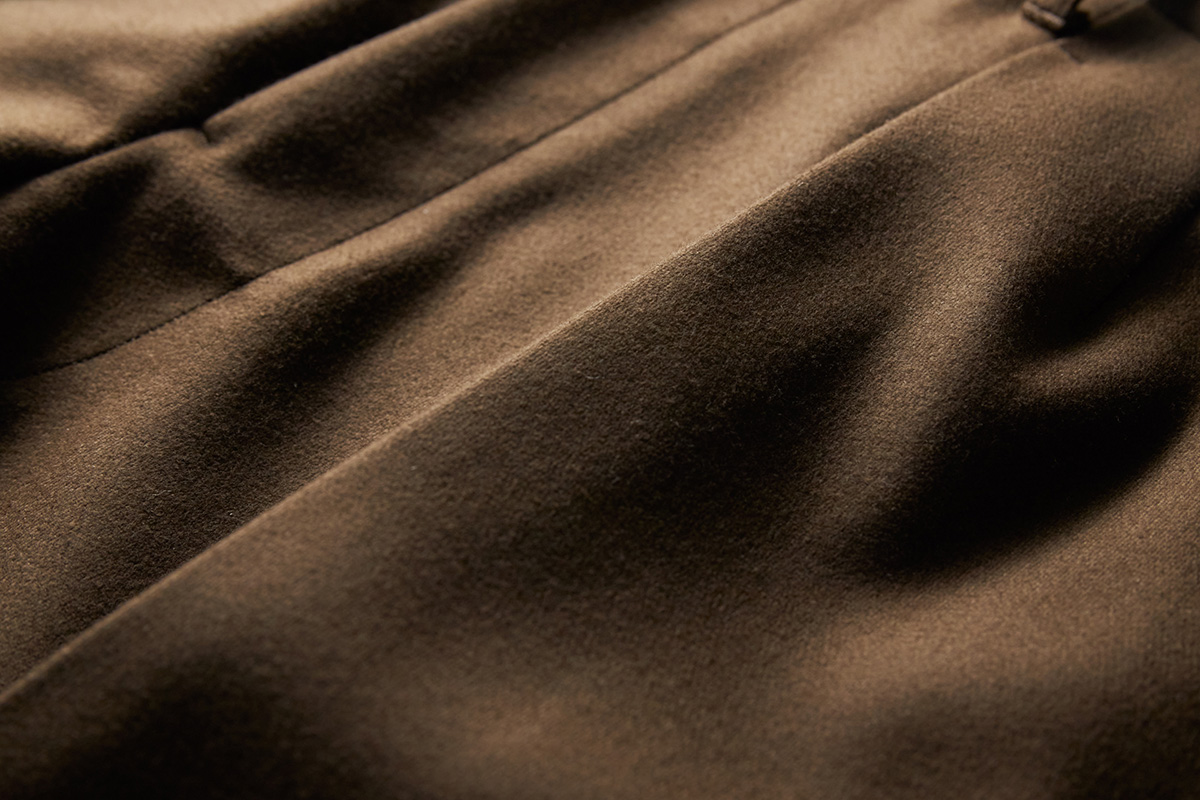
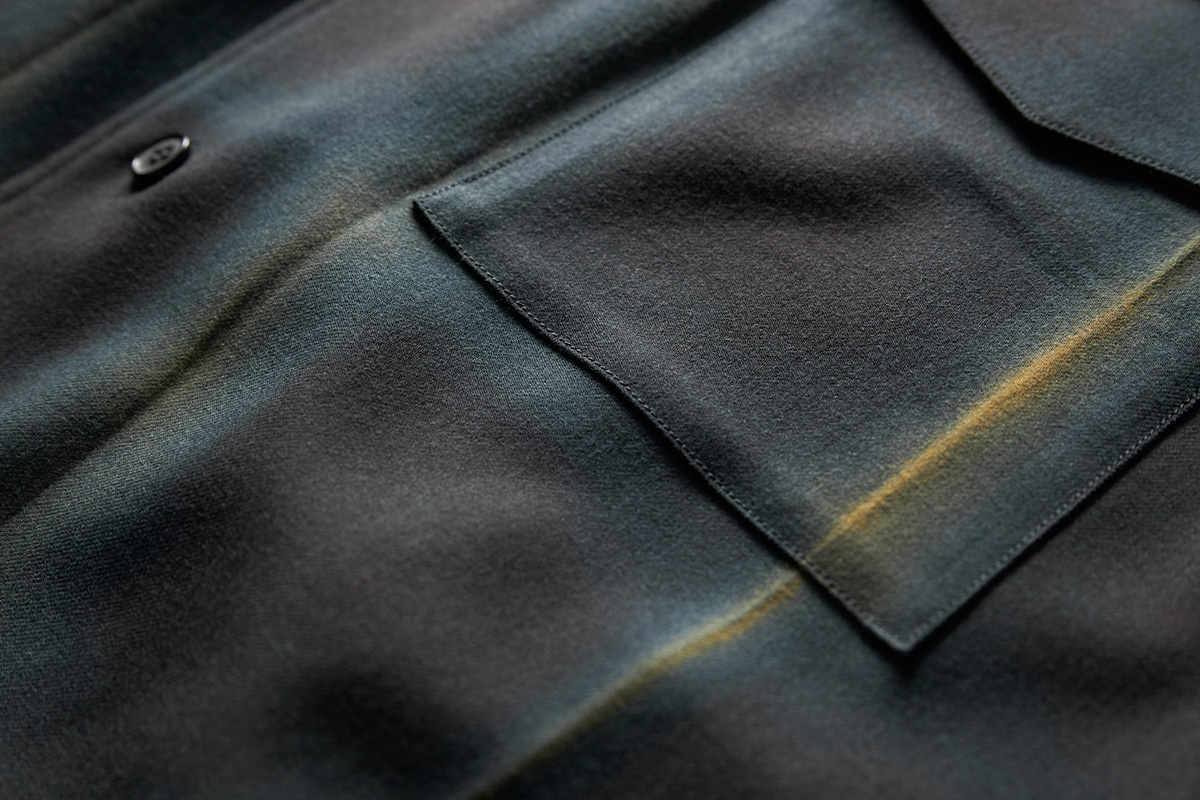
山内で使用される生地は、非常に表面が端正に整った美しいもの。
機屋さんとデザイナーとは、一緒に取り組んできた時間が長く、関係も深い方々ばかりです。
そのため、自社のどのような生地が山内にとって相応しいかを理解されていると言います。
山内で新たに生地を開発するだけではなく、新たにコレクションを企画する際、機屋からブランドに提案があることも頻繁にあるそうです。
そのようなお互いを理解した信頼関係から生まれる生地が山内では多く使用されています。
<染色加工について>
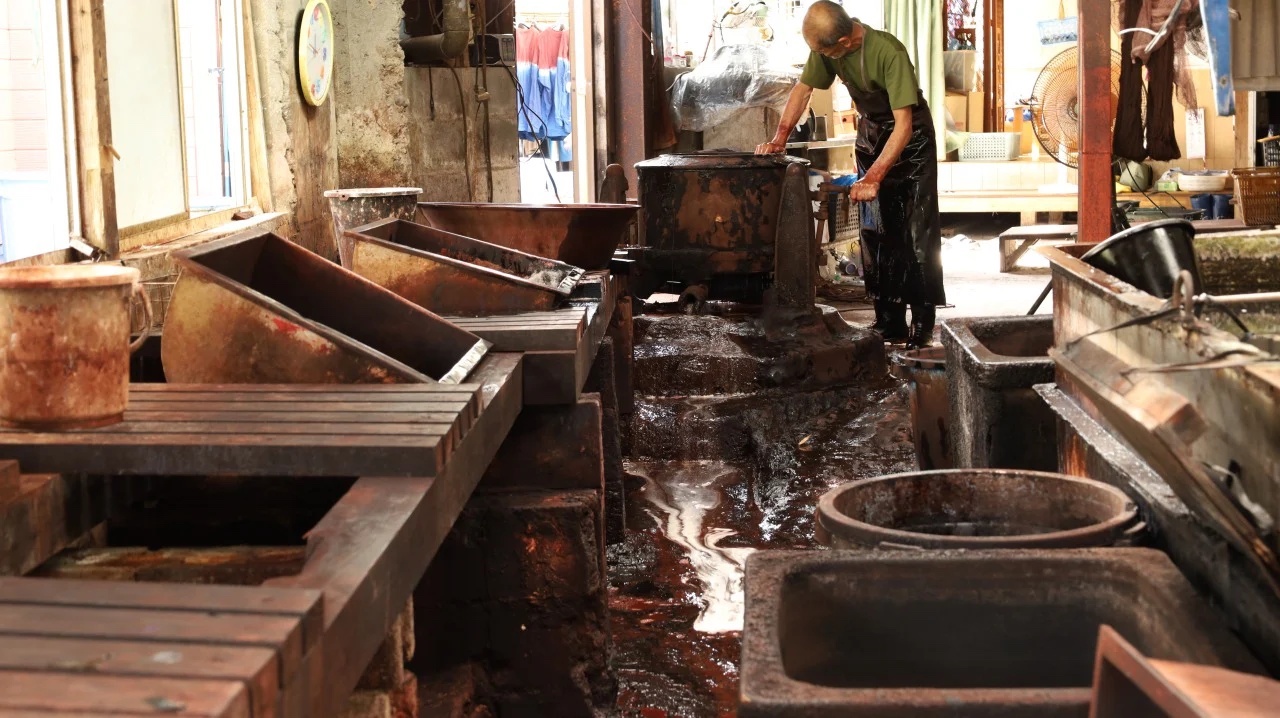
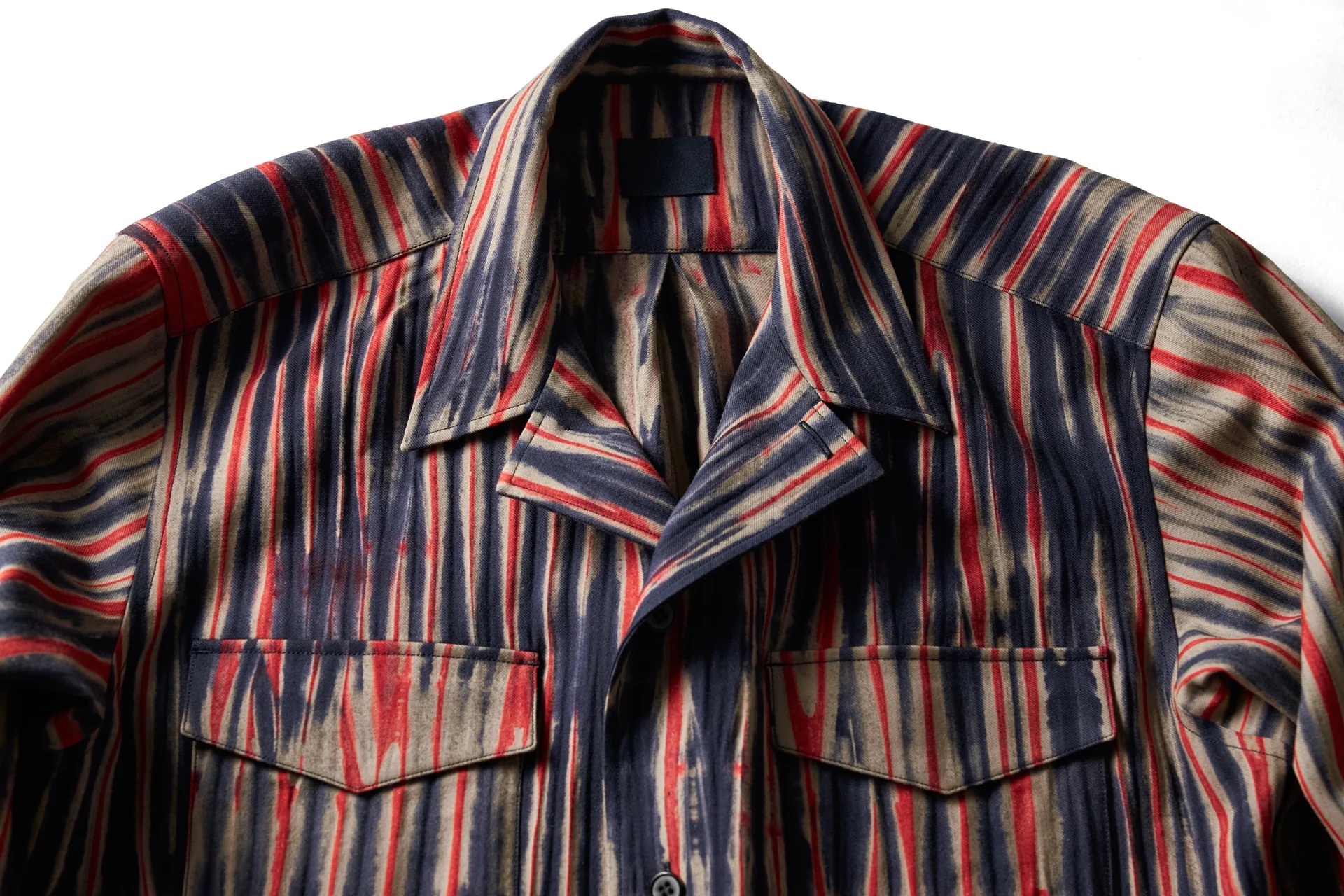
和服に用いられた日本の伝統的な染色技法。
古くからの手法を現代の洋服に応用している染工場での染色加工をしています。
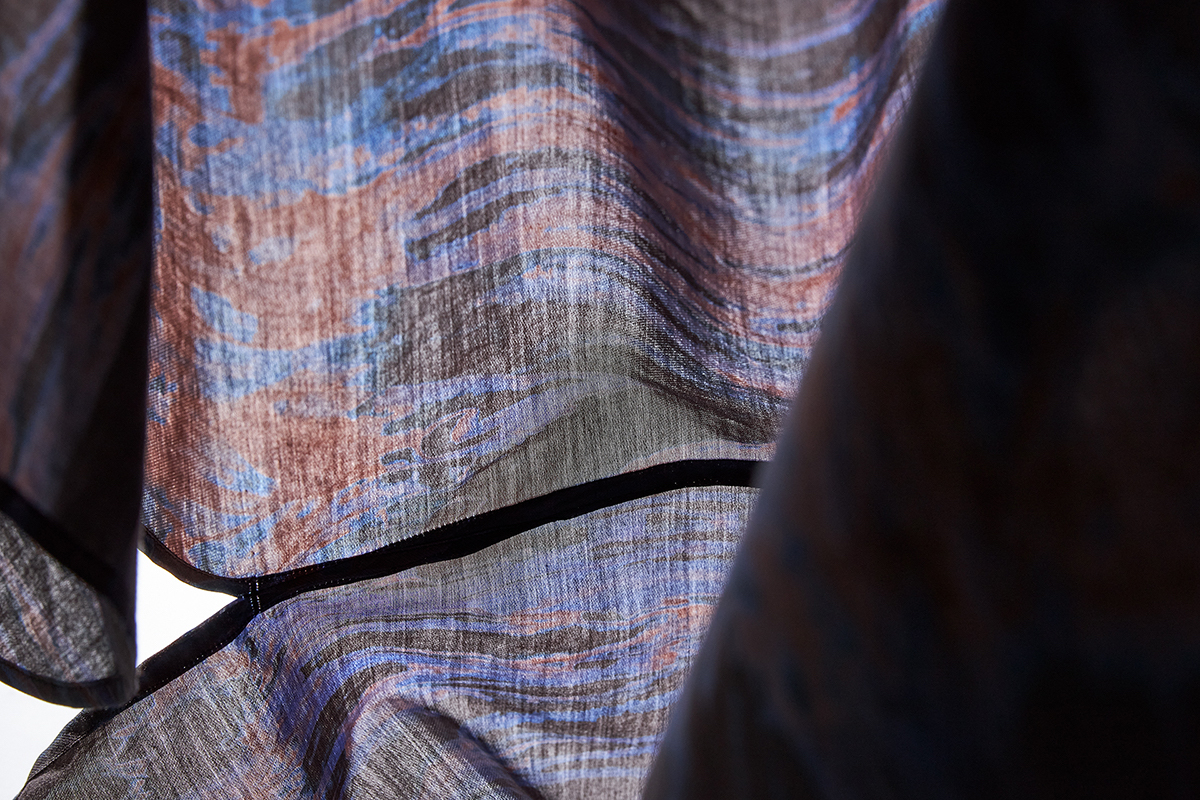
日本の奥行きある色合いの表現、伝統的な染色方法を継承してきた職人の手から生み出される深みのある色の揺らぎ。
鹿児島県奄美大島地域での泥染めや藍染め。
愛知県で受け継がれてきた有松絞りという伝統染色技法。
多くの場合、製品加工で施すそれらの染色も、ブランドの生産背景の強みと染色の奥深さを一層活かすため、一着分ずつ生地段階で染色し、注文服のように一着ずつ洋服に仕立てる流れも生産背景を確立しているブランドの最大の強みです。
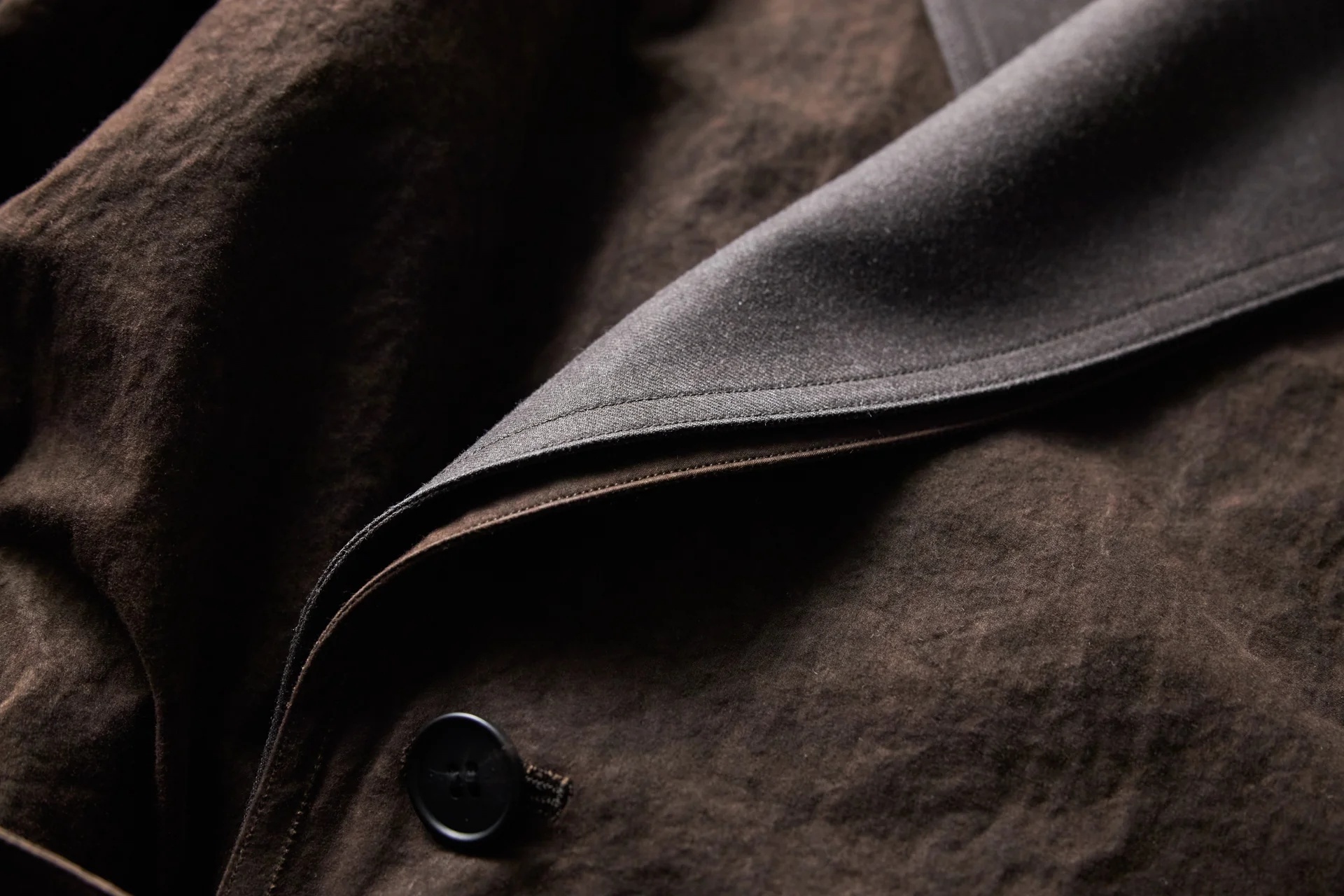
その流れを経て仕立てられた山内の洋服は、凜とした表情の中に、趣があり深みのあるメイドインジャパンの魅力があります。
<モノづくりのビジョン>
日本の誇る職人たちとモノづくりを続けている山内。
しかし、それは単に人の手の温もりが込められた洋服をつくることを目指しているのではありません。
「”技術を高める”という先にあるものは、まるで機械でつくり上げたかのように均一に見えるほど綺麗に仕上がり、その中に経験に基づく良い加減を加えること。」とデザイナーは言います。
そして、それをハンドメイド特有の少量生産ではなく、日本の職人たちが現代に残してきた技を世界に伝えていくため、将来に残していくために、目の行き届く範囲の適正な量を品質高く生産していき、日本のモノづくりの現場を残していくことを目指しています。
デザイナー自身は、「海外に素晴らしい技術はたくさん存在する。その中で、日本で洋服をつくるブランドが世界に伝えていけることは何か。」
「侘び寂び」や「礼節」といった日本の美学を、日本の伝統的な技法を用いた色のトーンや素材、またブランドの真骨頂である縫製テクニックを用い、ステッチの見せ方やディテールに落とし込み、一見した静けさの中に、内に秘めた力強さを放つ洋服として表現しています。
上記のようなモノづくりを行なうブランド、山内。
冒頭に記載の通り、2026年1月には初めてのパリでのショールーム、2月には東京展示会を開催する予定です。
詳細は以下の通りです。
<パリ ショールーム>
日程 : 2026年1月22日(木)〜1月26日(月)
会場 : 31 rue de Montmorency, 75003 Paris
<東京展示会>
日程 : 2026年2月17日(火)〜2月19日(木)
会場 : 〒153-0042 東京都目黒区青葉台1-30-10-3F Nakameguro Center
バイヤーの皆様にお会いでき、山内のコレクションをご覧いただけることを楽しみにしております。
LE BERGER
shop talk & communications by Akihiko Fukuda
__________
The English translation is provided below:
Today, we are pleased to introduce Yamauchi, a brand for which our company, LE BERGER, will newly serve as the global sales agent starting from the Autumn/Winter 2026 collection.
Yamauchi is a Japanese brand that regards the act of sewing itself as a form of design.
It creates refined, modern garments by combining Japan’s meticulous traditional techniques with contemporary pattern-making.
Until now, the brand has been available exclusively in Japan; however, it will hold its first exhibition in Paris this coming January, followed by a domestic exhibition in February.
Introduction
Yamauchi is designed by Akihiro Yamauchi, and is a Japanese brand that regards the very act of sewing itself as design.
It creates refined, modern garments by combining Japan’s meticulous traditional techniques with contemporary pattern-making.
For the past 17 years, the brand has been available exclusively within Japan.
One of its core philosophies is the idea of “what it means to be Japanese.”
Each piece is characterized by careful, delicate tailoring, subtle differences that may not be noticeable at first glance, and a distinctly Japanese sense of beauty—into which quietly precise craftsmanship is poured.
The designer himself is a technician who has been fascinated by garment sewing and has continued to pursue it.
At the same time, the true foundation of the brand lies in the artisans who have stubbornly and consistently devoted themselves to making things: sewing specialists who have continued their craft for ten or twenty years, and factories that have carried on Japan’s proud traditional techniques to this day while seeking to create something new for the present.
Yamauchi is surrounded by craftspeople who approach their work with great care.
Rooted in this unbroken lineage of Japanese artisans, the brand brings these connections together as “Team Yamauchi” to produce its clothing.
About Yamauchi’s Garment Construction
Yamauchi creates its garments based on the idea that “sewing itself is design.”
It is the sewing that ultimately brings together the appeal of the fabric and the strength of the pattern, giving them their final form as clothing.
The brand places great importance on continually elevating and preserving this sewing technique.
Each piece, carefully sewn by artisans one by one, is handmade yet possesses an exceptionally clean and composed expression.
As the designer himself says he has been “captivated by sewing,” Yamauchi sometimes incorporates details such as the **“Yamauchi rib”¹ and **“ito-nuki”², as well as sewing techniques like **“in-code lock”³ developed together with partner sewing factories. Designs whose character is determined precisely by how the sewing is finished are one of Yamauchi’s distinctive features.
As a symbolic expression of this focus on sewing, the name of the sewer or sewing factory is clearly written on an inner tag known as the “sewer’s tag.”
¹ Yamauchi rib:
A method in which fabric is laid over a rib, and while tension is applied to the rib, stitches are applied to the fabric by hand, one by one.
All ribs are produced in Yamauchi’s own atelier and differ from ready-made ribs in their compatibility with woven garments and in the unity of color.
It is an extremely time-consuming process, taking anywhere from several hours to several dozen hours to create the rib for a single garment.
² Ito-nuki:
A method in which backtacking is not used at the beginning and end of seams. Instead, the thread is pulled through to the wrong side and tied off by hand from the opposite side so that it does not unravel.
This prevents overlapping stitches, resulting in a clean appearance that does not interfere with the design.
It is mainly used for outerwear and other garments made from thicker fabrics where many stitches appear on the outside.
³ In-code lock:
A finishing method in which a thin cord is placed along the edge of each part and sewn together with the body using a narrow-width zigzag machine. When the designer first witnessed this patented technique at the factory that developed it, he was deeply moved and, by his own account, left speechless.
It completely rethinks how to use existing sewing machines, resulting not in a technique that is merely unusual, but in a highly rational solution whose appearance itself becomes a beautifully resolved design.
Rather than being born from a new machine created through technological innovation, it is an entirely new way of sewing conceived by someone with a profound understanding of sewing methods.
About Yamauchi’s Fabrics
In the past, there were many weaving mills throughout Japan’s textile-producing regions.
Because weaving mills require large plots of land, when the real estate bubble occurred in Japan in the 1980s, many of them shifted their business from weaving to real estate. As a result, the number of mills gradually declined.
Today, only a very limited number remain compared with the past, but it is said that the factories that still exist are those that have consistently continued to refine their skills.
Among them, the mills Yamauchi works with include a wool weaving mill that has been in operation for over 110 years and is regarded as one of the oldest and finest in Japan, as well as a leading cotton weaving mill that represents Japan, known for creating distinctive fabrics using some of the world’s most advanced and innovative looms.
The fabrics used by Yamauchi have an exceptionally clean, beautifully finished surface.
The weaving mills and the designer have been working together for many years, building deep relationships. Because of this, they understand which of their fabrics are most suitable for Yamauchi.
Not only does Yamauchi develop new fabrics together with these mills, but when a new collection is being planned, it is also common for the mills themselves to propose fabrics to the brand.
Many of the fabrics used by Yamauchi are born from this kind of mutual understanding and trust.
About Dyeing and Finishing
Traditional Japanese dyeing techniques originally used for kimono.
Yamauchi’s dyeing is carried out at dye houses that apply these age-old methods to contemporary clothing.
They express the profound, layered tones characteristic of Japan, with deep, subtle variations in color created by artisans who have inherited traditional dyeing methods.
This includes mud dyeing and indigo dyeing practiced in the Amami Oshima region of Kagoshima Prefecture, as well as Arimatsu Shibori, a traditional resist-dyeing technique that has been passed down in Aichi Prefecture.
In many cases, such dyeing would typically be applied as a garment-dye process at the product stage. However, in order to fully draw out the strengths of the brand’s production background and the depth of these dyeing techniques, Yamauchi has established a system in which the fabric is dyed one garment-length at a time, and then each piece is tailored like a made-to-order garment.
Clothing by Yamauchi, created through this process, carries the quiet dignity and deep character that embody the appeal of Made in Japan.
Vision of Craftsmanship
Yamauchi continues to create garments together with Japan’s most skilled artisans.
However, the brand does not simply aim to make clothes that carry the warmth of the human hand.
“The goal that lies beyond refining technique,” the designer says, “is to achieve a finish so beautiful and uniform that it could almost be mistaken for something made by machine, and then to add just the right touch of nuance that comes from experience.”
Rather than confining itself to the very small production volumes typically associated with handmade work, the brand seeks to produce at an appropriate scale—one that still allows every detail to be closely overseen—while maintaining high quality. In doing so, it aims to share the skills that Japanese artisans have preserved into the present with the wider world, to pass them on to the future, and to help sustain Japan’s manufacturing sites.
The designer himself reflects:
“There are many remarkable techniques overseas. Within that, what is it that a brand making clothes in Japan can communicate to the world?”
Yamauchi expresses Japanese aesthetics such as wabi-sabi and yūgen through the tones and materials created with traditional Japanese techniques, and through its signature sewing techniques—translated into the way stitches are shown and into the details. The result is clothing that appears quiet at first glance, yet emanates a powerful inner strength.
Yamauchi is a brand dedicated to the kind of craftsmanship described above.
As mentioned at the beginning, Yamauchi will hold its first showroom in Paris in January 2026, followed by an exhibition in Tokyo in February.
The details are as follows:
〈Paris Showroom〉
Dates: January 22 (Thu) – January 26 (Mon), 2026
Venue: 31 rue de Montmorency, 75003 Paris
〈Tokyo Exhibition〉
Dates: February 17 (Tue) – February 19 (Thu), 2026
Venue: Nakameguro Center 3F, 1-30-10 Aobadai, Meguro-ku, Tokyo 153-0042
We look forward to meeting buyers and having you discover Yamauchi’s collection.