
ROTTAPOETICAと菅谷鉄兵 / ROTTAPOETICA and Teppei Sugaya
2026.5.16
「息を呑むようなクラフト技術の上に成り立つエレガンス」
この言葉は、ROTTAPOETICA(ロッタポエティカ) のコレクション ”Philosophical Instruments” を目にしたときに感じたことです。
一見すると、ROTTAPOETICAのプロダクトはとても端正です。
過剰な装飾があるわけでもなく、声高に個性を主張してくるわけでもありません。
しかし、実際に手に取ってよく見ていくと、その表情の奥には、通常の工業的なプロセスでは成立しない構造や、考え抜かれた工夫が潜んでいます。
そのプロダクトは、物を見慣れた人ほど、どのような方法でつくられているのか想像できないはずです。
菅谷鉄兵さんは、洋服製作だけにとどまらず、より専門的な工程が必要となるレザーシューズ、さらにはバッグや革小物に至るまで、さまざまなものを自らの手で形にしてしまう職人です。
積み上げてきた経験と理論の上で、誰も思いつかなかったこと、あるいは思い描けても形にできなかったことを実現していきます。
そのような人物が自身のブランドとして生み出すファーストコレクションを、2026年6月に行うLe Berger Paris Showroom でバイヤーの皆様にご紹介いたします。
たとえば、縫い目が見えないレザーの構造。
たとえば、手の温度に反応し、触れた箇所だけが色を変えるパッケージ。
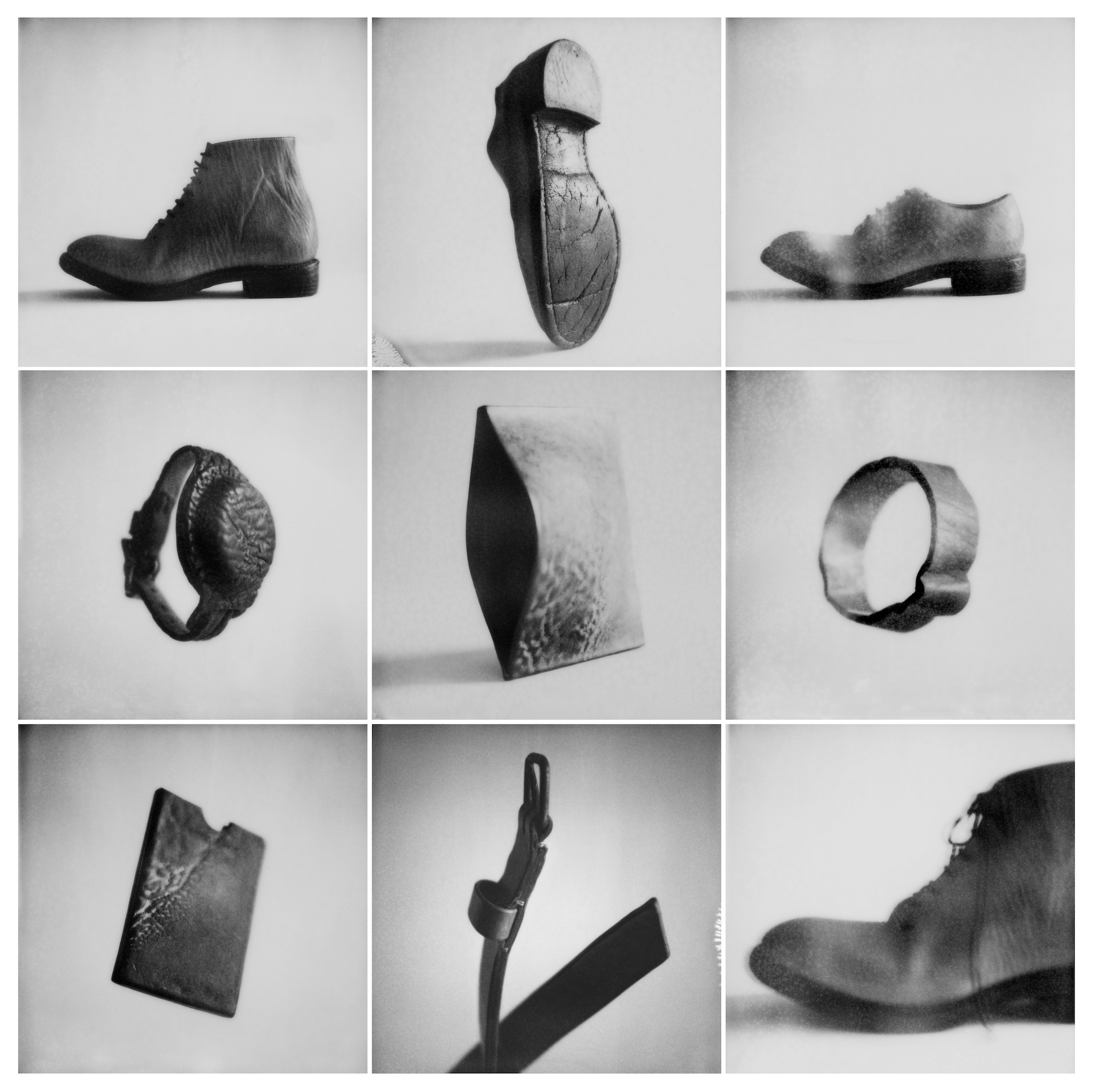
たとえば、通常であれば二枚の革で構成されるはずのアウトソールを、極厚の革一枚で成立させた特殊コードバンシューズ。
大きなコレクションではありません。
けれど、そこにはバリエーションの広さではなく、一つひとつに驚きの密度があります。
どれも、一目で派手さが伝わるものではありません。
むしろ最初は、匿名的でとても簡素に見え、場合によってはなんの変哲も無く、深く考えなければただの一般的なプロダクトにさえ見えるかもしれません。
その端正な佇まいのなかに、誰もやろうとしないことや、工業的な合理性から見れば不必要と思われることが、徹底して埋め込まれています。
ROTTAPOETICAには、そうした菅谷氏のクラフツマンとしての哲学が宿っています。
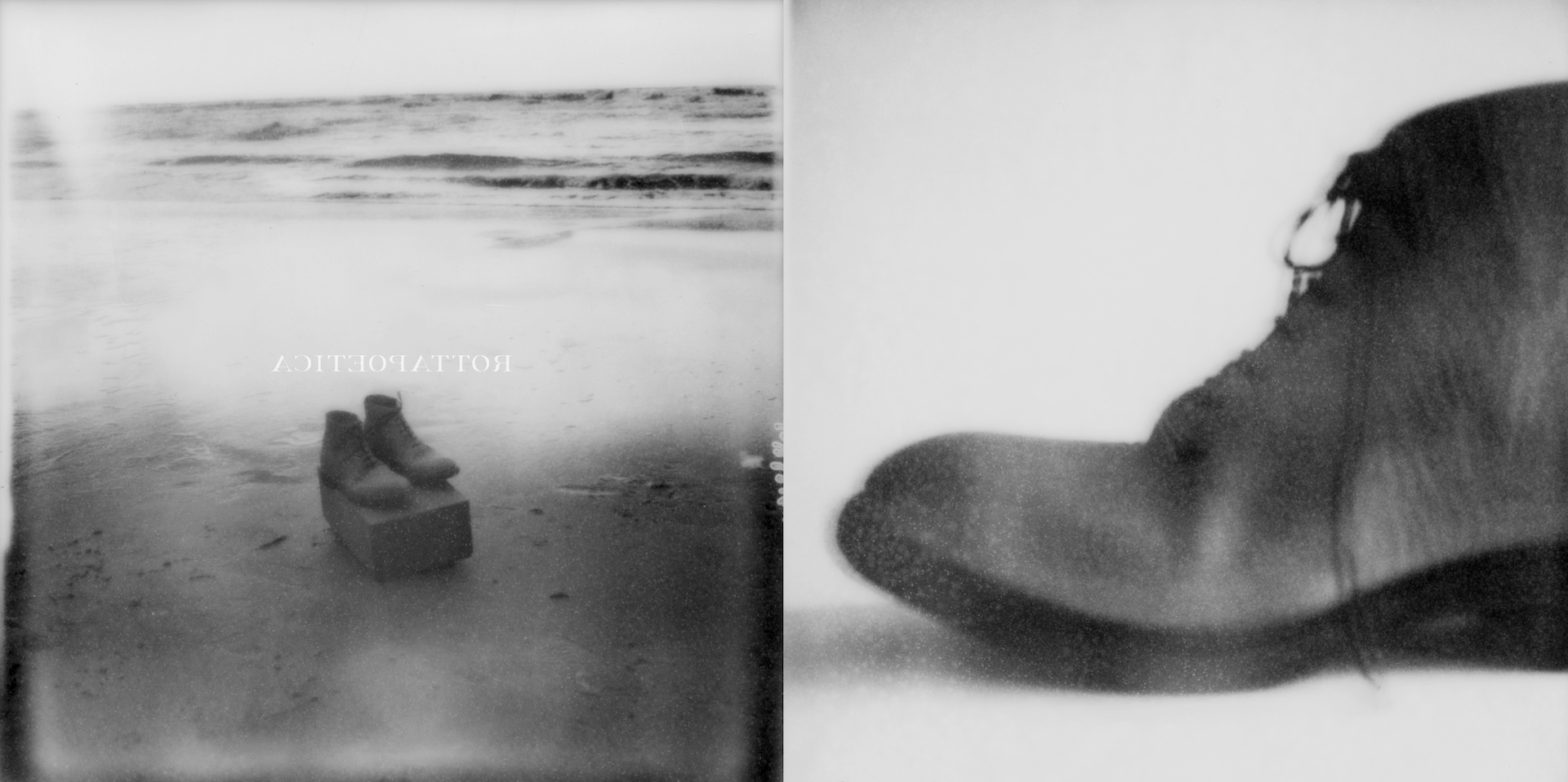
菅谷氏が大切にしているのは、装飾としてのデザインではありません。
根底にあるのは、機能から生まれるものこそがデザインであるという考え方です。
見た目のために奇抜なことをするのではなく、素材や構造を突き詰めていった先に、結果として他にはない表情が生まれる。
ROTTAPOETICAのプロダクトには、その感覚が通っています。
そうしたことから本人の手から作り出されるプロダクト・オブジェクトは、菅谷氏自身はファッションの文脈で使われる ”コレクション” という言葉や単純に ”プロダクト” とは呼ばず ”Philosophical Instruments” と呼びます。
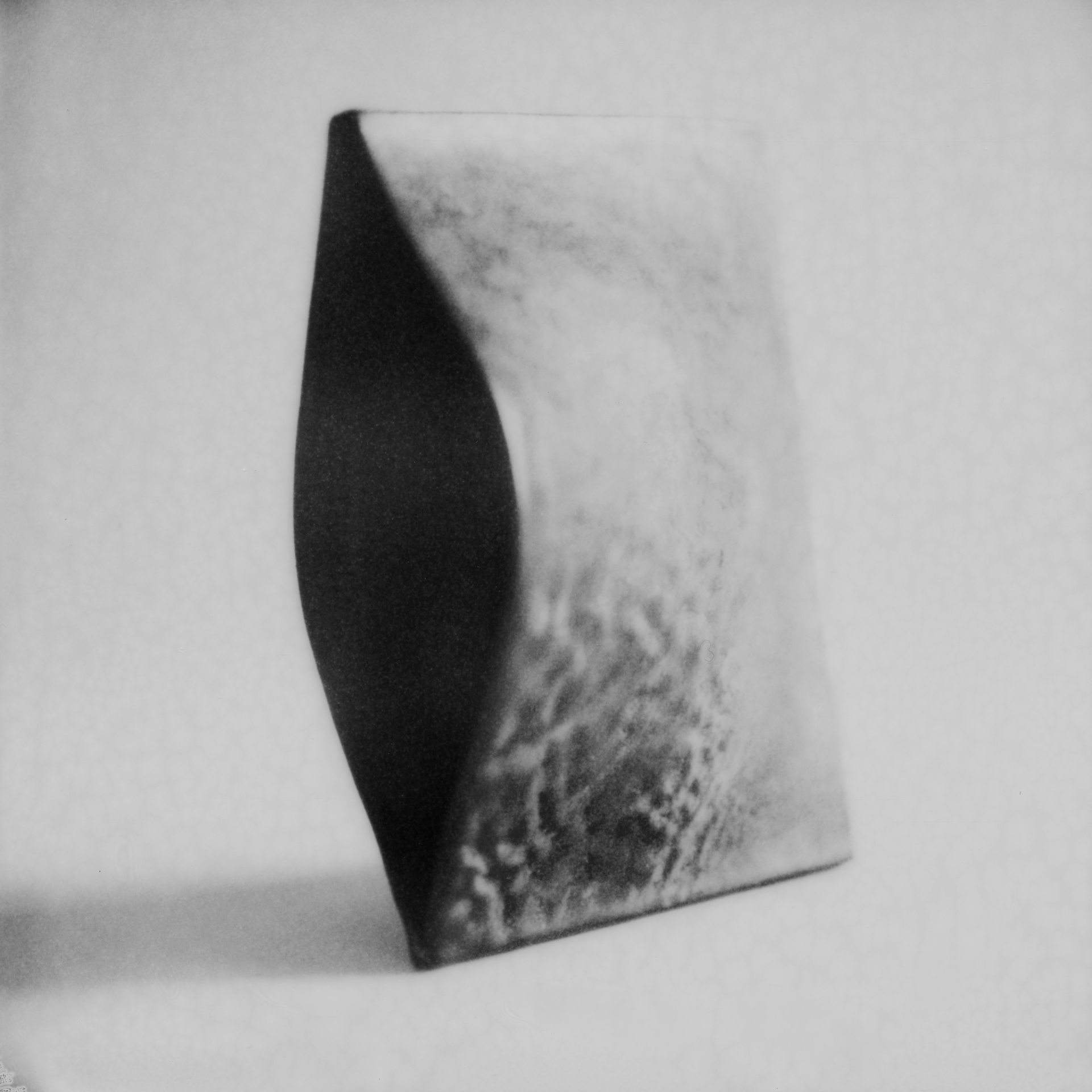
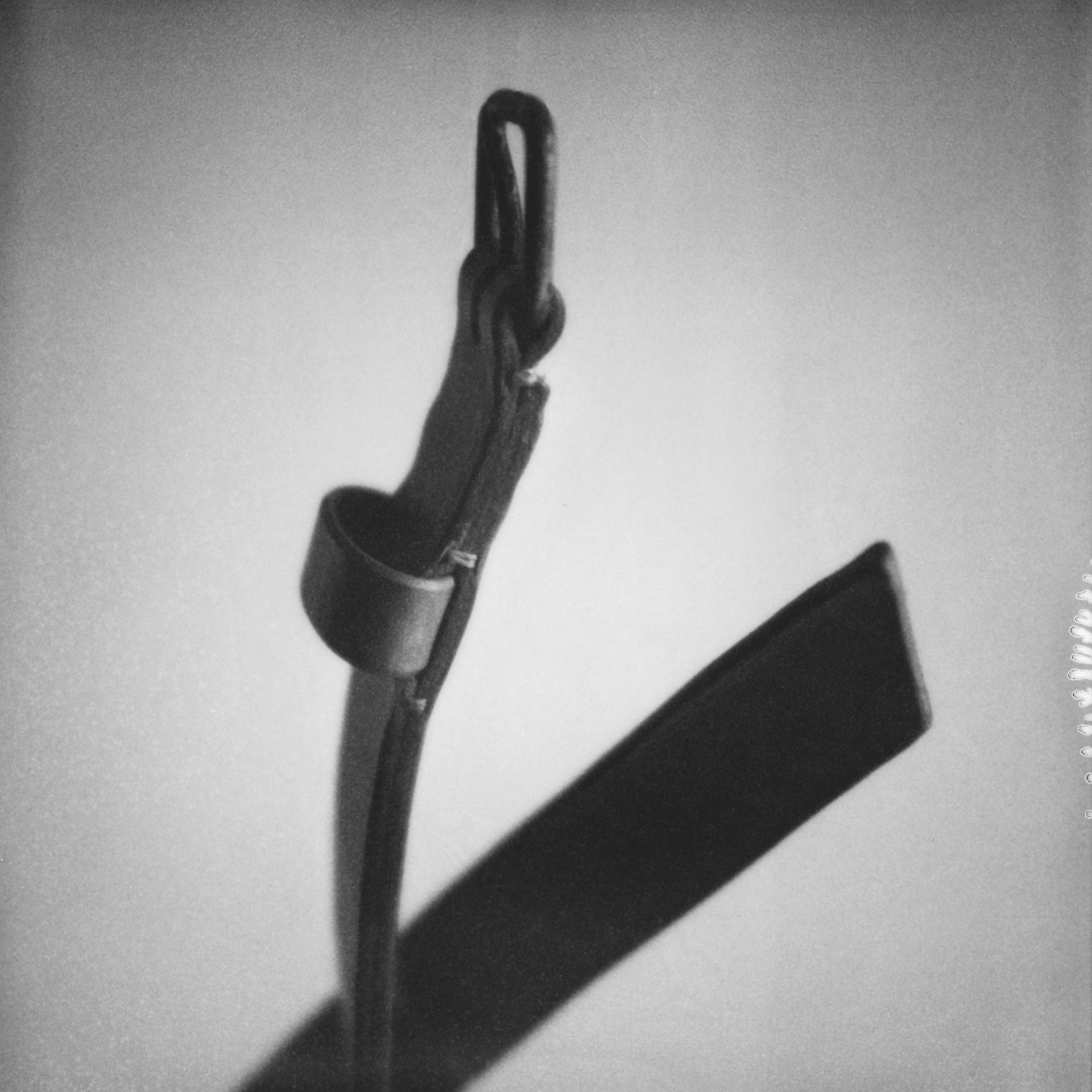
そのことがよく分かるのが、ブランドを象徴するレザーの構造です。
通常、レザーアイテムには縫い目が表に現れます。
しかしながらROTTAPOETICAでは、縫い目を革の内側に収めることで、外からは糸が見えないように構成されたものがあります。
それは、単に見た目をすっきりさせるためだけではありません。
糸が表に露出していなければ、使い続けるうちに摩耗して切れてしまうリスクも減ります。
つまりこの構造は、端正な見た目と耐久性の両方に関わっています。
しかも、その仕上がりは単にミニマルという言葉では片づけられません。
革によっては、縫い目そのものは見えないのに、糸が通った痕跡だけがかすかに残る。
それは、ごく小さな差異です。
けれど、その差異のなかに、ROTTAPOETICAの詩的な美意識が感じられます。
これはあくまでクラフツマンとしてのものづくりの追究であり、一つひとつのディテールの奥に技術が潜んでいます。
もちろん、こうした構造は既存の機械やミシン、一般的な工業プロセスのなかでは成立しない構造となり、すべて手縫いで仕上げられます。
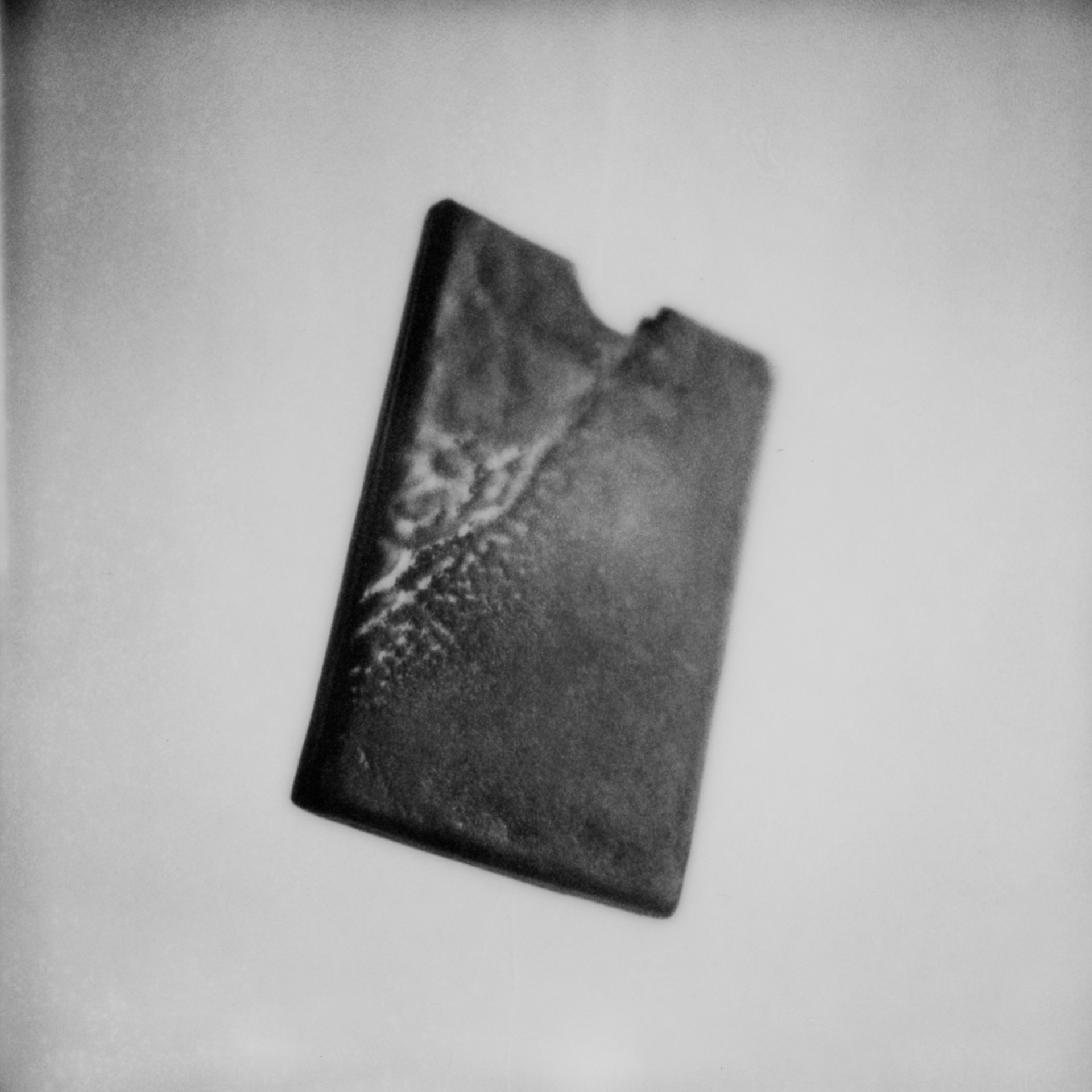
やりたいと思っても、通常のやり方ではつくれない。
だからこそ、手でやるしかないし、時間も労力もかかる。
ラグジュアリーブランドであっても容易には真似できない理由は、そこにあります。
菅谷氏は、工業的な生産の先にあるプロダクトに、どのような愛おしさが宿るのか、疑問を感じることがあると話します。
興味深いのは、菅谷氏がこうしたものづくりを、プロダクトだけで終わらせていないことです。
たとえばパッケージには、手で触れた部分だけが体温に反応して色を変える特殊な塗料が使われています。
箱を持つと、その痕跡が一時的に表面へ現れる。
あるいはシューバッグにも、同じように温度によって色が変化する仕様が施されています。
機能だけを考えれば、それは必要のないことかもしれません。
けれど、誰かが触れたことが、物の表面にかすかに現れる。
その現象には、単なる特殊加工とは別の詩的な感覚があります。
しかも、そのための加工を施してくれる工場はない。
だから、自分でやるしかない。
塗料自体も貴重で、施すにも非常に手がかかる。
それでもやるのは、菅谷氏にとってパッケージさえも大切なものづくりのひとつだからです。
このようなことがROTTAPOETICAで生み出すすべてを”Philosophical Instruments”と表現する所以です。
その姿勢は、さらに別のプロダクトにも表れています。
接ぎがなく、どこにも縫い目の存在しないチューブ状のレザーブレスレット。
通常、レザーは一枚のフラットな素材として扱われます。
けれど、菅谷氏は動物の皮膚がもともと立体であることを前提に、理論として成立し得るはずのことを、実際の素材へと導いています。
もちろん、理論上できることと、実際に作れることは同じではありません。
まして、その生産を引き受けてくれる職人がいるかどうかも別の話です。
普通であれば、「それはできない」で終わってしまう。
ROTTAPOETICAのものづくりは、その“できない”の先へ、地道に関係を築き、時間をかけ、試し続けるところから始まっているように見えます。
菅谷氏は、いろいろな工場へ行き、いろいろな職人に会い、実際に作られているものを見せてもらいながら、「これができるということは、この技術を使えばこういうこともできるのではないか」と問いかけるそうです。
返ってくるのは、「そんなことはやったことがない」「考えたこともない」という答えばかりです。
それでも、やってみてもらえませんかと話す。
もちろん形にならないものも多い。
けれど、その積み重ねの中からしか、通常では存在しないものは生まれません。
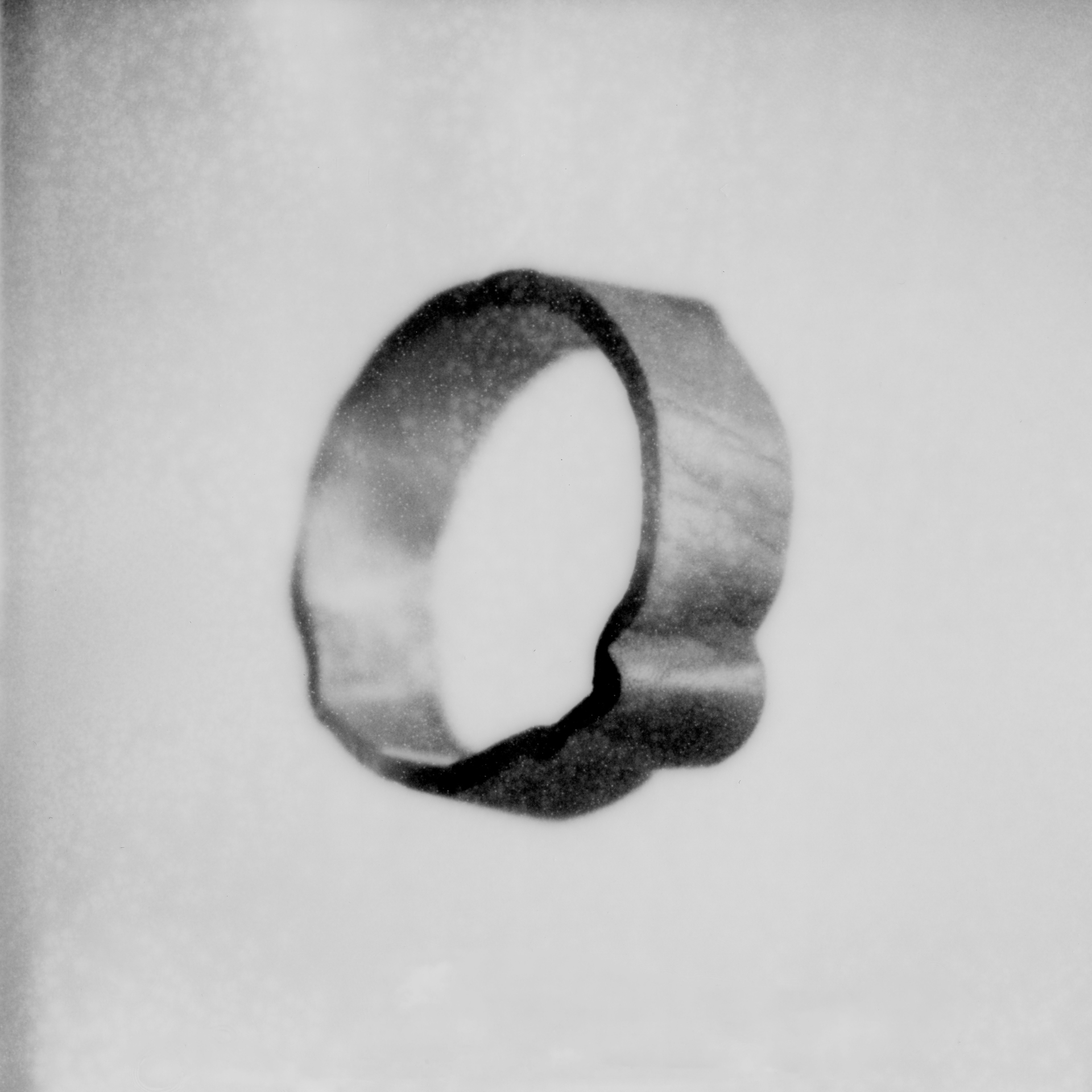
ROTTAPOETICAにまつわるすべてのものには、過剰なまでの時間と工程が費やされています。
この、“見ればすぐ分かる派手さ”ではなく、“分かる人が見れば異常だと分かる静かな異質さ”こそ、ROTTAPOETICAの大きな魅力です。
それは、まさに息を呑むようなクラフト技術の上に成り立つものです。
そうした菅谷氏のものづくりの精神は、自身が職人であることに根ざしています。
実際に自分の手を動かし、さまざまな工夫を凝らしながら、自分でつくることを前提とする。
できる限りのことは自分の手で行いながらも、自らが手で形にできるのだから、専門設備を用いればもっと良いものができるのではないか、というスタンスでものづくりを行います。
頭で想像しただけで他者に依頼するのではなく、実際に自らの手でつくり上げ、理論と実践のプロセスを可視化する。
だからこそ、専門的な職人にとって未知であり、難易度が高い方法であっても、実際の製作へと辿り着くことができるのです。
そうして生まれるのが、ROTTAPOETICAのレザーシューズです。
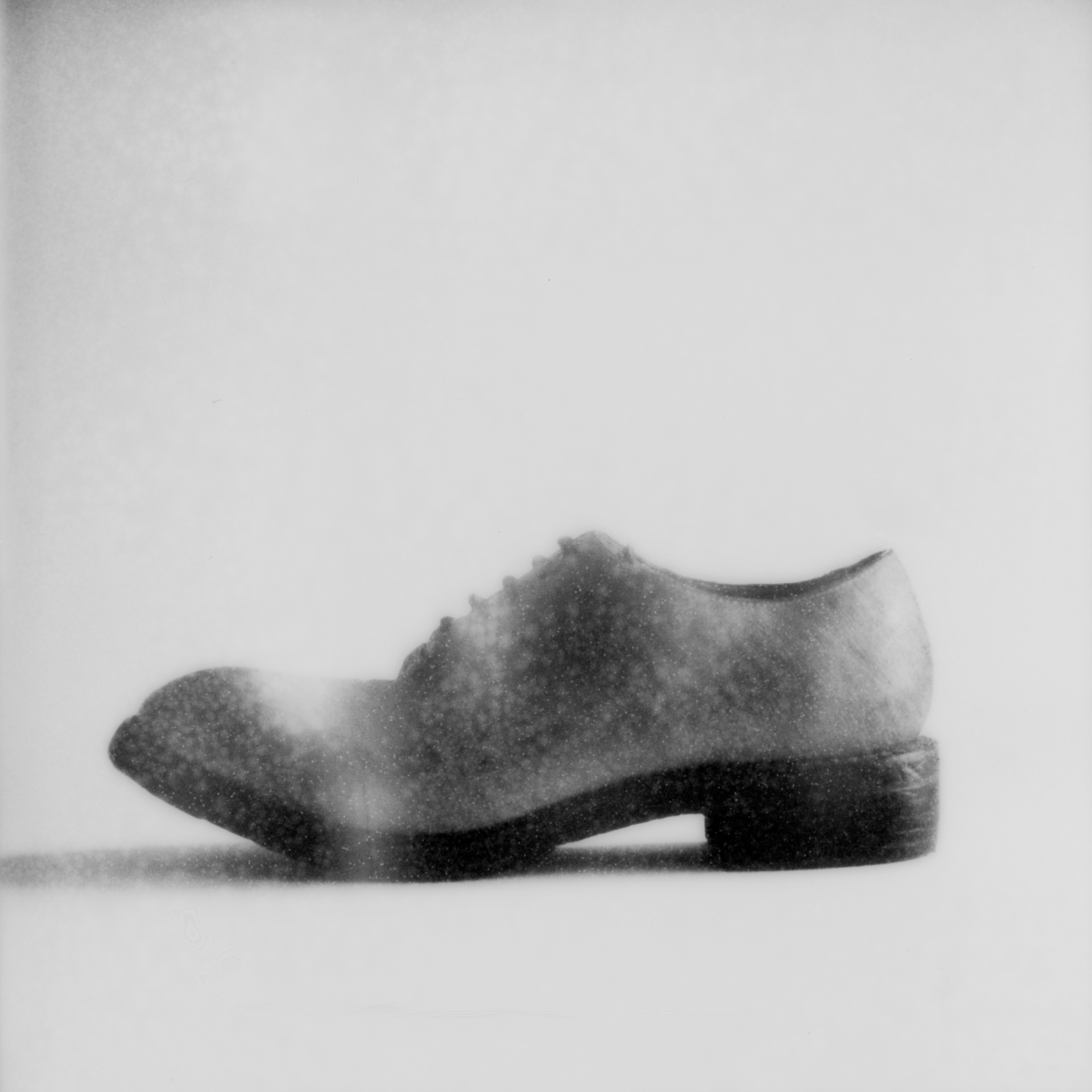
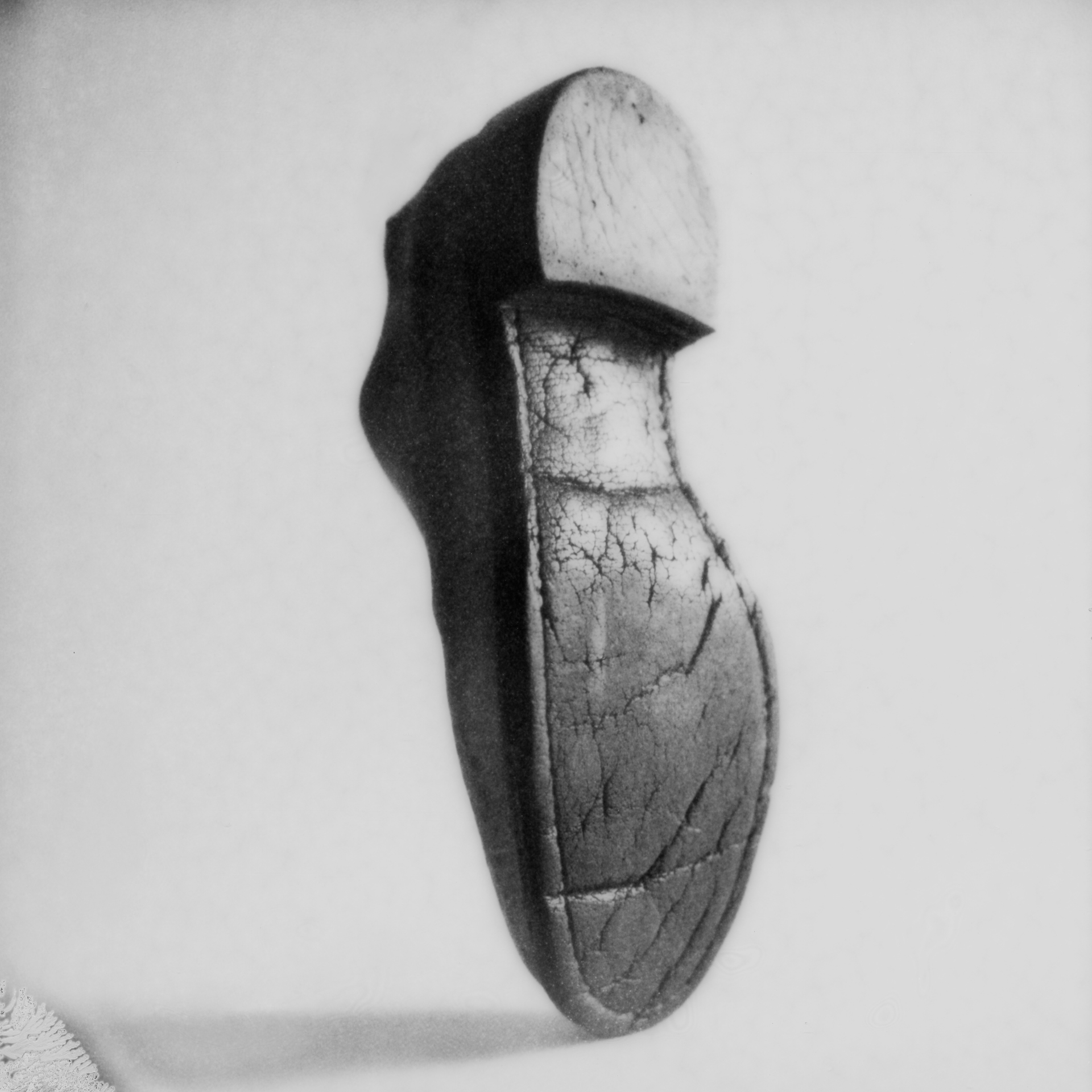
通常であれば、5.5mm前後の二枚の底革が張り合わされますが、ROTTAPOETICAではアウトソールに13mmの非常に厚みのある一枚革の底材を用います。
本来は、底材を張り合わせるために糊が使われることや、複数の底材を用いることで、革の屈曲に差が生じます。
それを一枚の底材のみで成立させることで糊も不要となり、革が素直に返り、しなやかな履き心地が生まれます。
さらにその底材も、革本来のテクスチャーを引き出すため、通常の底材のプロセスを施さず、一足ずつに固有の表情を持たせています。
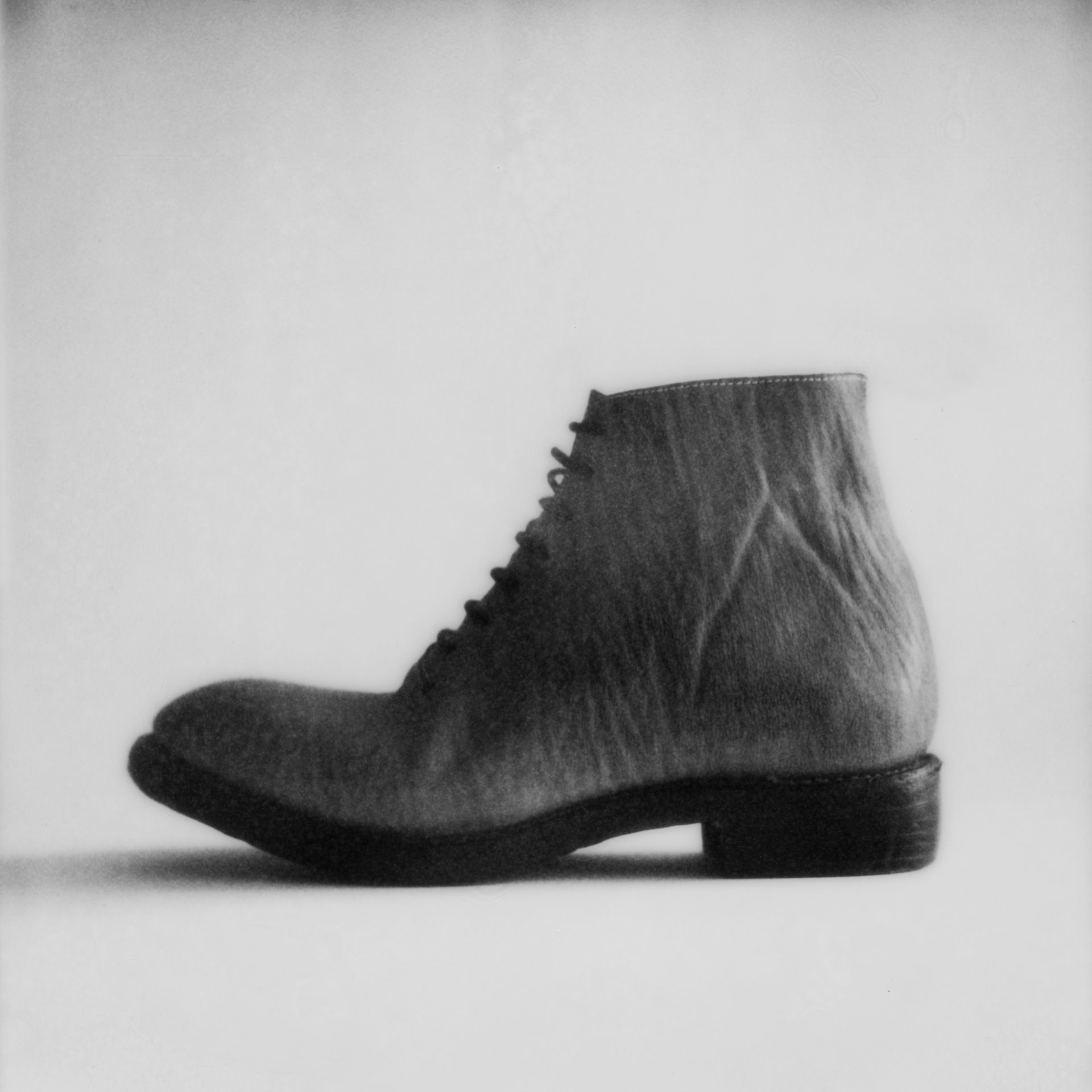
そしてアッパーは、カットを左右で同じ方向に施すことで、非対称に仕上げられていますが不自然な非対称性ではありません。
ごく自然な非対称性で構成されているのか、指摘されるまでそれが非対称な靴と気づかないほどです。
整った見た目でありながらも、静かに特異性を訴えかける。
過剰なデザインではなく、匿名的な装いでありながらも、靴そのものの構造やコードバン素材の魅力を最大限に引き出したレザーシューズです。
こうしたものづくりの背景には、菅谷氏自身の原体験があります。
父親が木工職人で、幼い頃、机を作ってほしいと頼んだときに返ってきたのは、「自分で設計図を描いたら作ってあげる」という言葉だったそうです。
そこで自分で設計図を描いたことが、ものづくりの入り口になったと振り返ります。
この話は象徴的です。
与えられたものをそのまま受け取るのではなく、自分で考え、自分で構造を描き、形へ近づいていくこと。
それは、今のROTTAPOETICAにそのまま続いているように思います。
また、菅谷氏は幼い頃から、みんなが持っているもの、みんなが着ているものを持ちたくない、着たくないという感覚が強かったといいます。
長い時間をかけて、「普通のものを、そのままでは受け取れない」という感覚を、自分の手で具体化してきた延長に、ROTTAPOETICAの特異さがあります。
ただし、それを単なる個人的なこだわりで終わらせていないのが菅谷氏の強さです。
文化服装学院からイギリス、オランダでの学びを経て、さらにイタリアやオランダでの実務も経験し、工業的なものづくりの構造やファッション業界の現実を知ったうえで、自分のブランドではそこから外れる方法を選び取っている。
ROTTAPOETICAの異質さは、業界の外側にいる人の憧れや反抗ではなく、内側を知った人が、誰も歩んでいない別の道を選ぶ意志から生まれています。
菅谷氏は、すでに世界中にものが溢れる中で、これ以上ものを作る必要はない、とも語ります。
その一方で、では何も作らなくてよいのかと思うと、そうではない。
ROTTAPOETICAは、ものづくりの本質に対して静かに声を上げるための実践でもあるのだと思います。
だからこそ、このブランドのプロダクトには、単なるクラフト礼賛ではない緊張感があります。
彼の言う”Philosophical Instruments” という事はこういうことなのでしょう。
手仕事を尊ぶだけではなく、通常のプロセスでは不可能とされることを、どうにか成立させようとする。
そしてその結果、物は装飾的に語ることなく、静かで端正な表情でありながら、特有の強さを湛えています。
見えないところで積み重ねられた思考と技術の末にだけ生まれる特有の佇まい。
縫い目の見えないレザー。
触れることで変化するパッケージ。
接ぎも縫いも存在しないブレスレット。
厚みがありながらも返りに優れ、アッパーが左右非対称に切り替えられたレザーシューズ。
それらはすべて、誰もがすぐに意味を理解できるような記号ではありません。
しかし、物を見てきた人にほど、確かな違和感として記憶に残るはずです。
そしてその違和感は、単なる奇抜さではなく、「本当にものをつくるとはどういうことか」と問いかけてくるようです。
世界にすでに物が溢れているとしても、それでもなお、つくるならどうするのか。
効率や合理性のなかで整理されるものではなく、長年自らの手でものづくりを続けてきた職人として、最後までやり切るべきことを形にする。
そのことを、言葉や空気感ではなく、物そのものによって伝えようとすること。
ROTTAPOETICAのものづくりの本質は、まさにそこにあります。
ROTTAPOETICAのプロダクトは、写真だけではその異質さが伝わりきりません。
実際に手に取り、裏側まで見て、構造を確かめたときにこそ、このブランドの魅力はより強く立ち上がってきます。
ロゴやタグ、レーベルなどではなく、どの角度から見てもROTTAPOETICAのものだとわかる唯一無二のものづくりを目指して菅谷氏が形にするブランドです。
6月に行う Le Berger Paris Showroom にて、ぜひROTTAPOETICAの“異質さ”を実際に手に取り、お確かめください。
LE BERGER
shop talk & communications by Akihiko Fukuda
__________
The English translation is provided below:
Elegance Built Upon Breath-Taking Craftsmanship
This was the phrase that came to mind when I first encountered ROTTAPOETICA’s collection, “Philosophical Instruments.”
At first glance, ROTTAPOETICA’s products appear remarkably refined.
They are not overly decorated, nor do they loudly assert their individuality.
And yet, the more closely one looks and the more carefully one handles them, the more one begins to sense that beneath their surface lies a structure that could not be realized through ordinary industrial processes, along with a level of consideration that has been thought through to the very end.
In fact, the more accustomed one is to looking at objects, the harder it becomes to imagine how these products were actually made.
Teppei Sugaya is a craftsman whose work extends far beyond garment-making alone. From leather shoes requiring highly specialized processes to bags and small leather goods, he is capable of shaping a wide range of objects with his own hands.
Built upon years of accumulated experience and theory, Sugaya gives form to things that no one had imagined—or that may have been imagined, but never realized.
It is this first collection, created under his own brand, that we are pleased to introduce to buyers at the Le Berger Paris Showroom in June 2026.
For example, leather pieces whose seams are nowhere to be seen.
Packaging that reacts to the warmth of the hand, changing color only where it has been touched.
Or a pair of special cordovan shoes in which the outsole—normally constructed from two layers of leather—is instead realized from a single, exceptionally thick piece of leather.
This is not a large collection.
But what it offers is not breadth of variation. Rather, each piece carries an extraordinary density of surprise.
None of them communicates flamboyance at first sight.
If anything, they may initially appear anonymous and extremely simple—perhaps even entirely ordinary, unless one takes the time to look more closely.
And yet, within that refined presence, things no one would ordinarily attempt—and things that, from the standpoint of industrial rationality, might even seem unnecessary—have been embedded with absolute determination.
Within ROTTAPOETICA resides precisely that philosophy of Sugaya’s as a craftsman.
What Sugaya values is not design as ornament.
At the root of his practice lies the belief that true design is something that emerges from function.
Rather than pursuing eccentricity for the sake of appearance, he pushes materials and structure to their limits, and as a result, arrives at expressions unlike anything else.
That sensibility runs throughout the products of ROTTAPOETICA.
For this reason, the products and objects that emerge from Sugaya’s own hands are not, in his view, simply “collections” in the fashion sense, nor merely “products.” Instead, he refers to them as “Philosophical Instruments.”
What makes this especially clear is the leather construction that has come to symbolize the brand.
Ordinarily, the seams of a leather item remain visible on the surface.
At ROTTAPOETICA, however, some pieces are constructed so that the stitching is concealed within the leather itself, leaving no visible thread from the outside.
This is not simply for the sake of a cleaner appearance.
If the thread is not exposed on the surface, the risk of it wearing down and eventually breaking through repeated use is also reduced.
In other words, this construction concerns both the refined appearance of the piece and its durability.
And yet, the result cannot be dismissed as merely minimal.
Depending on the leather, the seam itself disappears from view, while only the faint trace of where the thread once passed remains.
It is a very small difference.
And yet, within that difference, one can sense the poetic aesthetic of ROTTAPOETICA.
This is, above all, the pursuit of making from the standpoint of a craftsman, and within each detail, technique lies quietly embedded.
Naturally, such a structure cannot be realized through existing machines, sewing equipment, or conventional industrial processes, which is why every piece is finished entirely by hand.
Even if one wishes to make such things, they cannot be produced through ordinary methods.
That is precisely why they must be made by hand, and why they demand so much time and labor.
That is also why they cannot be easily imitated, even by luxury brands.
Sugaya has spoken of how he sometimes questions what kind of affection can truly reside in a product that emerges solely from industrial production.
What is particularly interesting is that he does not allow this way of making to end with the product alone.
For instance, the packaging is coated with a special paint that reacts to body temperature, changing color only where it has been touched by hand.
When one picks up the box, that trace appears momentarily on its surface.
The same kind of treatment is also applied to the shoe bag, which likewise changes color in response to temperature.
From a purely functional perspective, such a feature may seem unnecessary.
And yet, the fact that someone’s touch appears faintly on the surface of an object carries with it a poetic quality that goes beyond mere special processing.
What is more, there is no factory willing to carry out this kind of finish for the packaging.
So he has no choice but to do it himself.
The paint itself is rare, and applying it requires an extraordinary amount of labor.
Even so, he continues to do it, because for Sugaya, even the packaging is an essential part of making.
This is precisely why everything produced under ROTTAPOETICA is described as “Philosophical Instruments.”
The same attitude appears in yet another product.
A tubular leather bracelet with no joins and no visible seams anywhere.
Ordinarily, leather is treated as a single flat material.
And yet, Sugaya begins from the premise that animal skin is inherently three-dimensional, and from there leads what should, in theory, be possible into actual material form.
Of course, what is possible in theory and what can actually be made are not the same thing.
And whether there is a craftsperson willing to take on such production is another matter entirely.
Ordinarily, it would simply end with the words: “That can’t be done.”
ROTTAPOETICA’s making seems to begin precisely beyond that point of impossibility—by patiently building relationships, taking time, and continuing to try.
Sugaya visits different factories, meets a wide range of craftspeople, and while looking closely at what they already make, asks: if this technique can achieve this, could it not also make something like that?
What comes back, almost without exception, is the same response: No one has ever done that. No one has even thought of it.
And still, he asks if they might be willing to try.
Of course, many attempts do not take shape.
But it is only through that accumulation that things which would not ordinarily exist can come into being.
Everything associated with ROTTAPOETICA is shaped through an almost excessive investment of time and process.
Its great appeal lies not in a flamboyance that is immediately visible, but in a quiet strangeness—one that only reveals itself as extraordinary to those who truly know how to look.
It is something built, quite literally, upon breath-taking craftsmanship.
That spirit of making is rooted in the fact that Sugaya is himself a craftsman.
He begins from the premise of moving his own hands, devising and refining things through direct making.
While doing as much as possible himself, he also works from the belief that if something can first be given form by hand, then with specialized equipment it may be possible to make it even better.
Rather than imagining something in his head and simply asking others to produce it, he first makes it with his own hands, rendering both the theory and the practical process visible.
It is precisely because of this that even methods unfamiliar to highly specialized craftspeople, and difficult to realize in practice, can eventually arrive at actual production.
And it is through that process that ROTTAPOETICA’s leather shoes come into being.
Ordinarily, an outsole would be constructed by laminating two pieces of sole leather, each around 5.5 mm thick. At ROTTAPOETICA, however, the outsole is made from a single, exceptionally thick piece of leather measuring 13 mm.
Normally, glue is used to bond the sole layers together, and the use of multiple layers creates differences in how the leather bends.
By constructing it from a single sole layer, glue becomes unnecessary, the leather flexes more naturally, and the result is a supple, comfortable feel when worn.
What is more, even this sole leather is left without the usual finishing processes applied to standard sole material, in order to bring out the leather’s original texture and give each pair its own individual expression.
The upper, meanwhile, is cut in the same direction on both the left and right shoes, resulting in an asymmetrical finish—though not in any overtly unnatural way.
In fact, the asymmetry is so subtle and natural that one might not even realize the shoes are asymmetrical unless it is pointed out.
Refined in appearance, yet quietly asserting their singularity.
They are leather shoes that do not rely on excessive design, and though their presence is anonymous in a certain sense, they draw out to the fullest both the structure of the shoe itself and the distinctive beauty of cordovan.
Behind this way of making lies Sugaya’s own formative experience.
His father was a woodworker, and when Sugaya, as a child, asked him to make a desk, the reply he received was: “If you draw the blueprint yourself, I’ll make it for you.”
Sugaya recalls that drawing that blueprint himself became his entrance into making.
It is an emblematic story.
Rather than accepting what is given as it is, he thinks for himself, draws the structure for himself, and moves toward form through that process.
That attitude seems to continue directly into what ROTTAPOETICA is today.
Sugaya has also said that from an early age, he had a strong aversion to owning or wearing the same things as everyone else.
Over a long period of time, ROTTAPOETICA’s singularity has emerged as an extension of that impulse—an impulse to take what appears ordinary and refuse to accept it as ordinary.
What makes Sugaya compelling, however, is that he does not leave this at the level of personal fixation.
After studying at Bunka Fashion College, then in the UK and the Netherlands, and later gaining practical experience in Italy and the Netherlands, he came to understand both the structure of industrial manufacturing and the realities of the fashion industry. And yet, within his own brand, he deliberately chooses to depart from those very systems.
The strangeness of ROTTAPOETICA does not come from the longing or rebellion of someone outside the industry.
It comes from the will of someone who knows the inside, and still chooses a path no one else has taken.
Sugaya has also said that in a world already overflowing with things, there is, strictly speaking, no real need to make more.
And yet, when one asks whether that means nothing should be made at all, the answer is no.
I believe ROTTAPOETICA is also a practice through which Sugaya quietly raises his voice toward the essential nature of making itself.
That is precisely why the products of this brand carry a tension that goes beyond a simple praise of craft.
It is not merely a matter of honoring handwork, but of trying, somehow, to bring into existence things that are considered impossible within ordinary processes.
And as a result, the objects do not speak in an overtly decorative way.
Instead, they hold a quiet, refined presence—and within it, a peculiar strength.
A distinctive presence that could only emerge from the accumulation of thought and technique in places that remain unseen.
Leather with no visible seams.
Packaging that changes when touched.
A bracelet with neither joins nor stitches.
Leather shoes whose thick yet flexible soles and subtly asymmetrical uppers quietly set them apart.
None of these are symbols whose meaning can be grasped at once by everyone.
And yet, the more one has spent time looking at objects, the more they remain in memory as a definite sense of dissonance.
And that dissonance is not mere eccentricity.
It seems instead to ask: What does it truly mean to make something?
Even in a world already saturated with things, if one were still to make, then how should one make?
Not by producing something that can be neatly resolved within efficiency or rationality, but by giving form, as a craftsman who has spent years making with his own hands, to what must be carried through to the very end.
And to convey that not through words or atmosphere, but through the object itself.
That, precisely, is where the essence of ROTTAPOETICA’s making lies.
The strangeness of ROTTAPOETICA’s products cannot be fully conveyed through photographs alone.
It is only when one takes them in hand, looks at them from the reverse side, and examines their structure that the appeal of the brand rises into clearer view.
This is a brand that Sugaya is shaping in pursuit of a mode of making so singular that it is recognizable as ROTTAPOETICA from any angle—not through logos, tags, or labels, but through the object itself.
At the Le Berger Paris Showroom this June, I hope you will take the opportunity to experience the distinctiveness of ROTTAPOETICA firsthand.