Kota Gushikenがひらく、ニットの新しい形 / Kota Gushiken Opens Up a New Form of Knitwear
2026.5.29
Kota Gushiken’s collections do not begin as garments from the outset.
Their point of departure is, first and foremost, language.
The designer is said to write down an enormous number of notes in daily life—things he has felt, things he has seen, things he has thought about, and even fragmentary ideas related to clothing.
I was shown some of these notes, and what was written there were the kinds of things that most ordinary people would likely overlook.
He seems determined not to miss even those moments in everyday life that might be easier to let pass by unnoticed.
I felt that this is both a way of observing the outside world and, at the same time, a way of confronting himself.
When he actually begins working on a collection, the first thing he does is return to those notes.
He looks back on what he has felt and thought over the course of the previous six months, separates what is necessary from what is not, and rewrites those thoughts once again in words.
Watching this process repeated a second and third time, it seemed to me less like the simple organization of ideas and more like the gradual weaving together of the story of a collection.
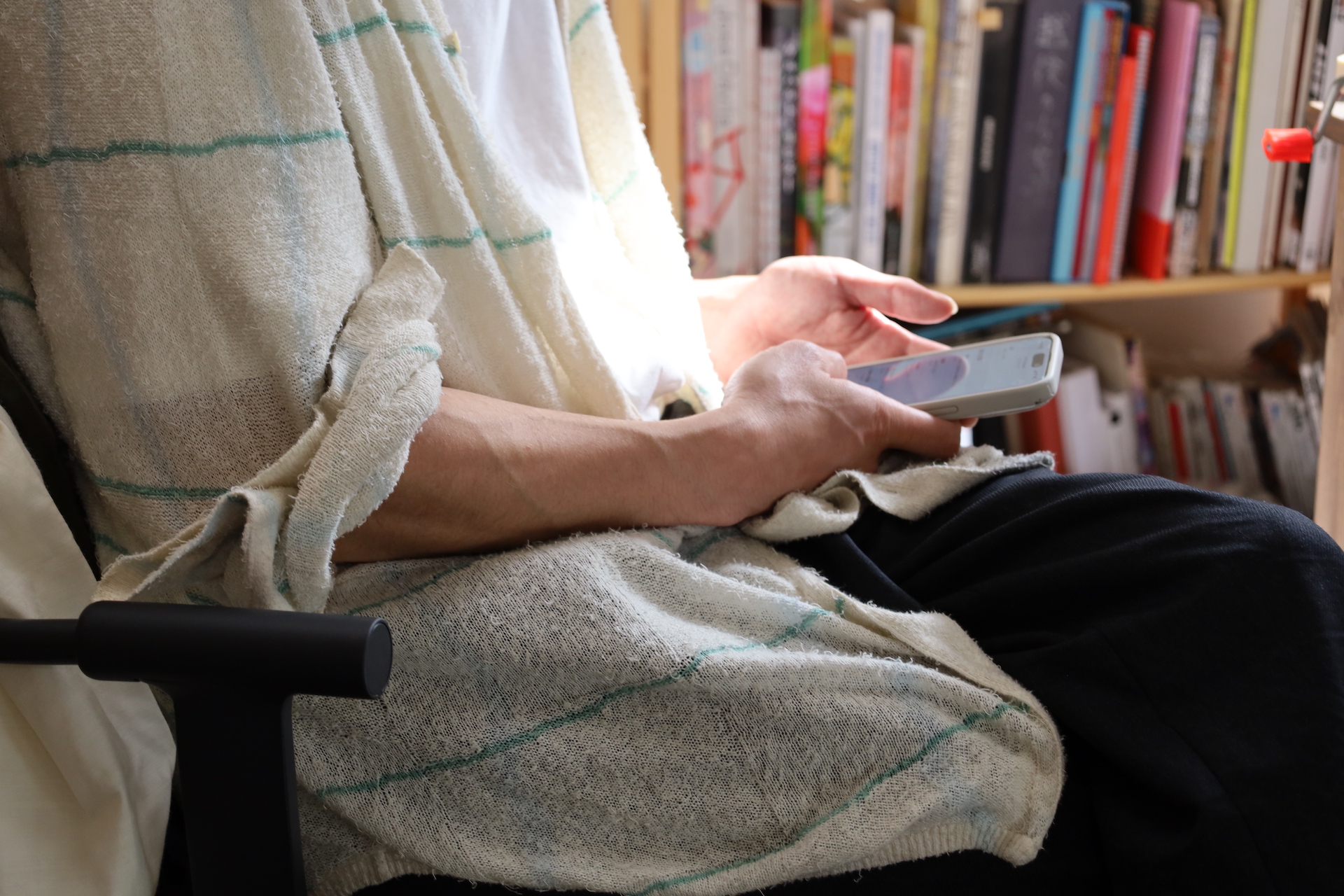
Notes recorded by the designer over six months of daily life.
Those words then move into the next stage: actual knitting.
The designer begins to knit himself, using either a domestic knitting machine or hand knitting.
He tests whether what exists as language or image can truly rise into being as a real garment.
Sometimes the idea exists only as a form.
At other times, it begins only as a knitted texture or fabric concept.
He knits with his own hands in order to see what it will actually look like once it becomes clothing.
For Kota Gushiken, I believe this process is not merely prototyping.
It is an essential stage in testing whether an image that once existed only in his mind can truly take shape in reality.
After that, the designer draws the patterns and expressions of the knitted fabric as images, visualizing further what exists in his mind.
And when a knitted structure requires specialized machinery, he works together with factories to bring that structure and expression closer to an actual garment.
In other words, a Kota Gushiken collection begins with language; that language is tested through the act of knitting by hand to see whether it can truly emerge into reality; it is then drawn, visualized, and developed further in collaboration with factories until it finally comes to fruition as clothing.
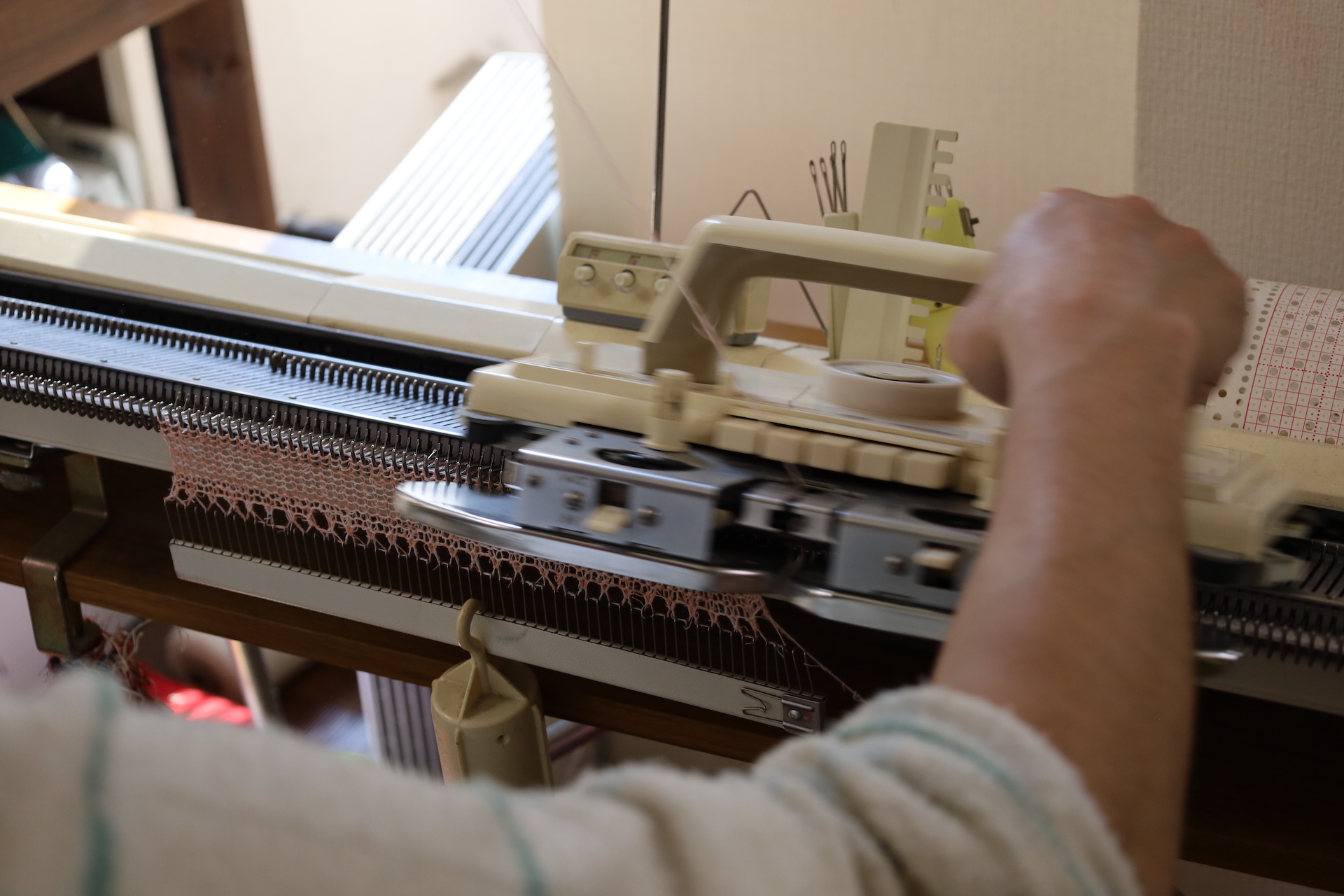
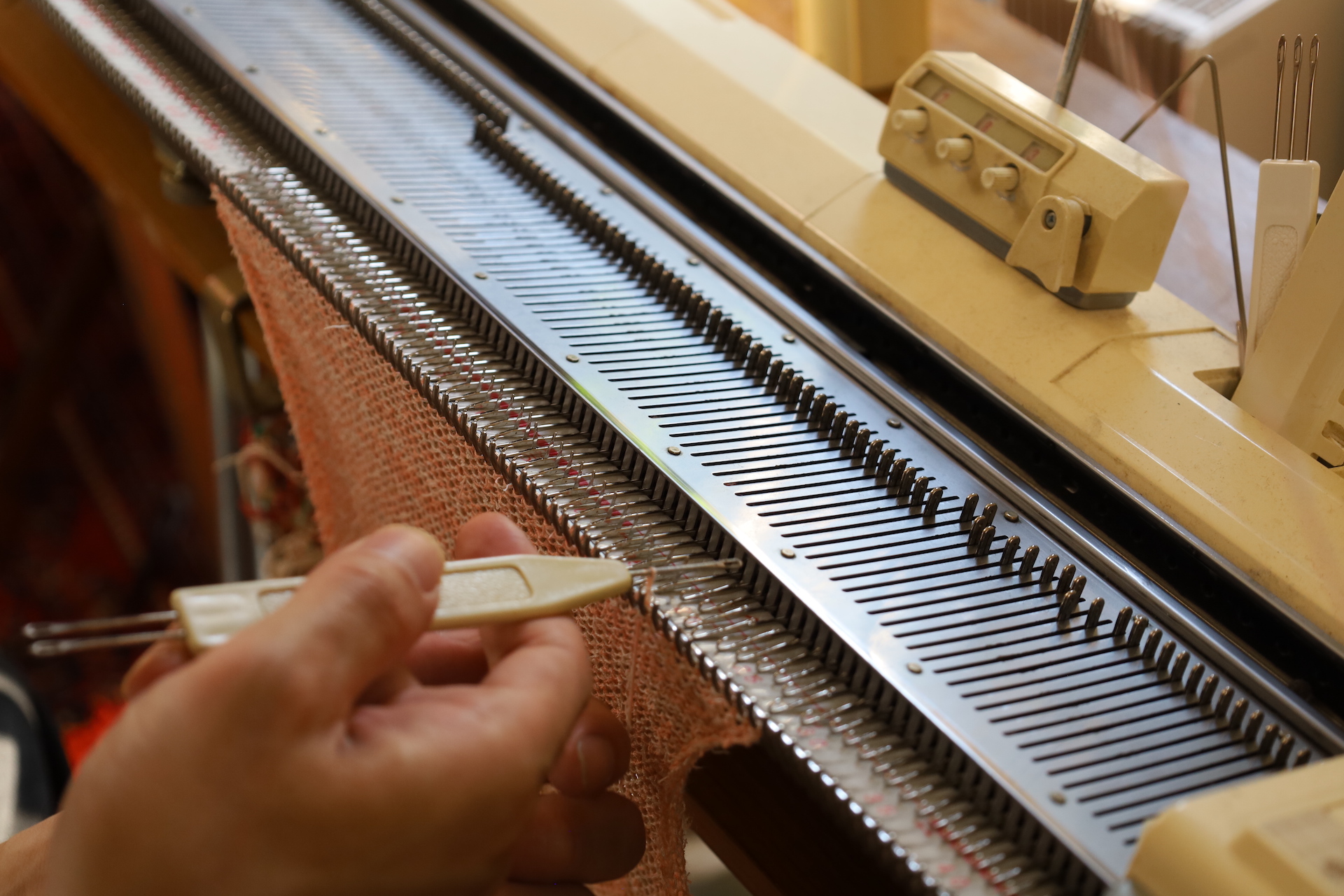
The designer working on a hand flat knitting machine.
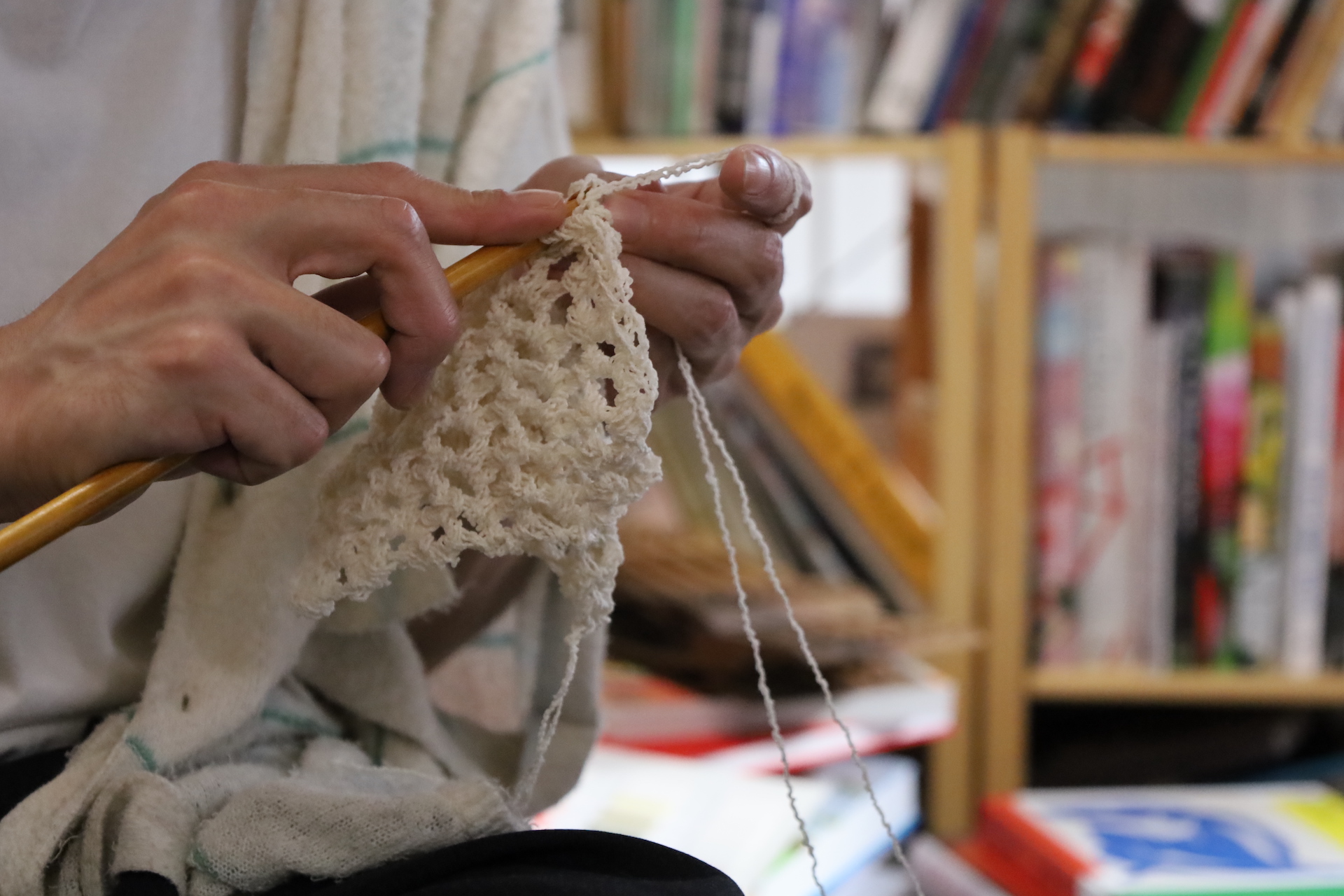
Hand-knitted development for structures beyond the flat knitting machine.
When I visited his studio ahead of the Paris showroom in June, what I felt very strongly once again was that Kota Gushiken is not simply a brand creating visually striking knitwear.
It is a brand in which every part of this process is connected with exceptional density and coherence.
On the Development of Knitted Fabrics
When considering Kota Gushiken’s approach to making, the first thing that must be addressed is the development of the knitted fabric itself.
When people speak about the appeal of knitwear, they often focus on color, pattern, or the interest of the material.
But Kota Gushiken’s real strength lies even before that: the knitted fabric itself is not an extension of anything that already exists.
What struck me most strongly when I saw the fabric swatches at the atelier was that Kota Gushiken’s knitwear has an expression that cannot quite be described by any existing name.
In some areas, the surface sinks delicately inward, while in others the knitted pattern rises boldly to the fore.
Moreover, these variations are not isolated. Within a single piece, multiple layers of unevenness and subtle shifts in color overlap, creating the overall impression of the garment itself.
Another memorable moment was when I was shown two knitted fabrics that had been made as prototypes.
At first glance, they appeared somewhat similar.
But when I touched them, the difference was unmistakable.
One remained at the level of an experiment.
The other, by contrast, had firmness yet softness, and there was genuine comfort in its touch. It possessed a convincing quality as clothing.
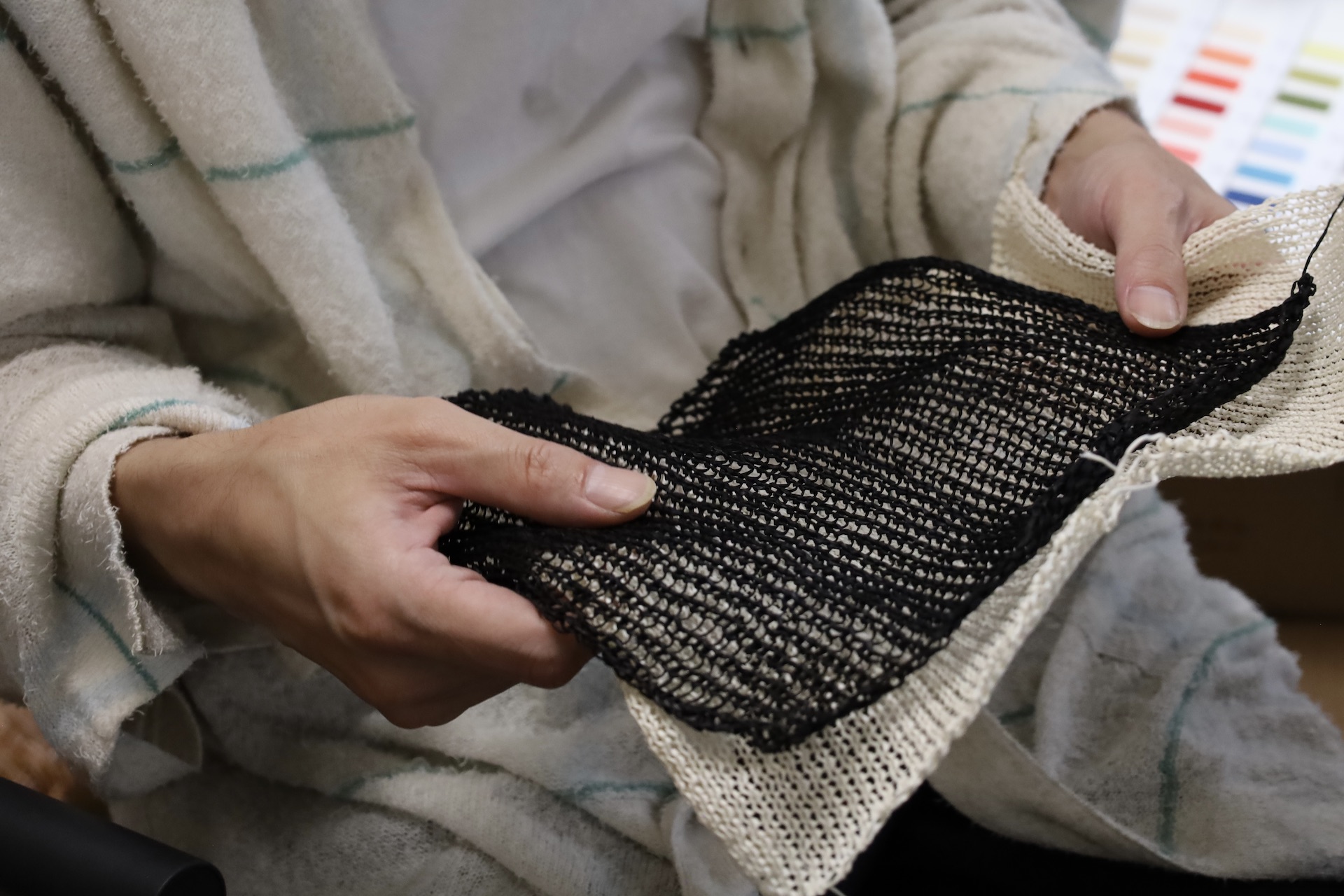
Two knitted fabric samples made in the process of developing the knit structure
At that moment, the designer used the word “LOVE”.
I felt that this word refers both to what he hopes people will feel through the Kota Gushiken collection and to the sensibility with which the knitwear itself is made.
It is not only about visual interest.
It is also about a state in which the yarn is not under strain, and in which there is real comfort when the garment is touched and worn.
What is important here is that this development does not remain at the level of concept alone.
A Kota Gushiken collection begins with language, and in order to test whether that language can truly exist in the real world, the designer first knits it himself.
He also renders the expression of the knitted fabric in drawings.
Because of this, he is able to grasp with remarkable clarity the structure such abstract images must have, and the way in which they ought to emerge.
The designer is not thinking only about what he himself can knit by hand.
Even when the fabric requires specialized machinery, he understands its structure and can express it visually in drawings. That is why he is able to engage deeply with factories on a technical level and develop the work in close dialogue with them.
He is not simply saying, “It would be interesting if something like this could be made.”
He understands how the yarn runs, where strain is placed, and what kind of construction is necessary for a particular expression to come into being.
And on top of that, he tests with his own hands whether what began as language and images in his mind can truly emerge as knitted fabric.
It is precisely because Kota Gushiken can speak with factories at this level of precision that such extraordinarily creative knitted fabrics are able to exist as real garments.
To create knitted expressions unlike anything that has existed before, while ensuring that they function as clothing—and, more importantly, as something that comes into contact with the body—this is what Kota Gushiken achieves.
The development of knitted fabrics at Kota Gushiken is not simply about producing a new visual effect.
It is, I believe, the creative act itself: raising words into reality as knitted fabric.
On Knitwear Made Through Pattern Cutting
Another essential aspect of Kota Gushiken’s knitwear is the way the garments are shaped through pattern making.
At first glance, this may seem obvious.
But in knitwear, it is by no means a given.
Knitwear is not made like woven garments, where a sheet of fabric is cut and shaped through fine curves and seams.
Because the shape of each part is adjusted through increases and decreases in the stitches themselves, particularly in low-gauge knitwear where each stitch is large, it is not easy to bring in the same delicate lines and structures found in woven clothing.
For this reason, the appeal of knitwear is generally weighted more toward color, texture, and surface pattern than toward shape itself.
The designer has said that he became strongly aware of the importance of pattern making around the time of his university graduation collection, when he encountered a pattern maker.
That encounter marked a major turning point for him.
For the first time, he experienced what happened when he developed knitwear without being constrained by preconceived limitations of form, and he felt clearly that the results were better than anything he had made before.
I believe this experience is crucial to understanding Kota Gushiken’s current approach to clothing.
This brand has reexamined knitwear not merely as an expression of knitted fabric, but from the perspective of how it can truly function as clothing.
What struck me strongly when looking at the samples in the studio was that Kota Gushiken considers form at the same time as knitted structure.
By constructing toiles and developing the design in that way, some garments emerge with clearly defined outlines, while others fall softly against the skin and take on the rounded, gentle forms unique to knitwear.
What matters is that these differences are not accidental.
They are designed with clear intention.
These are not simply flat pieces falling under the force of gravity.
The brand considers, simultaneously from both sides, what the garment should be as clothing, what kind of knitted fabric is necessary for that purpose, and what kind of pattern is most appropriate.
Kota Gushiken’s knitwear carries that sense of design.
This difference is not always fully visible at first glance.
A garment that appears simple while hanging on a hanger may reveal an unexpectedly defined form when worn.
Conversely, a piece that does not insist strongly on shape may still produce a beautiful natural drape that follows the body once it is put on.
Kota Gushiken works within the constraints inherent to knitwear, yet still continues to use patterns to build form as clothing.
I believe that this is another major strength of the brand.
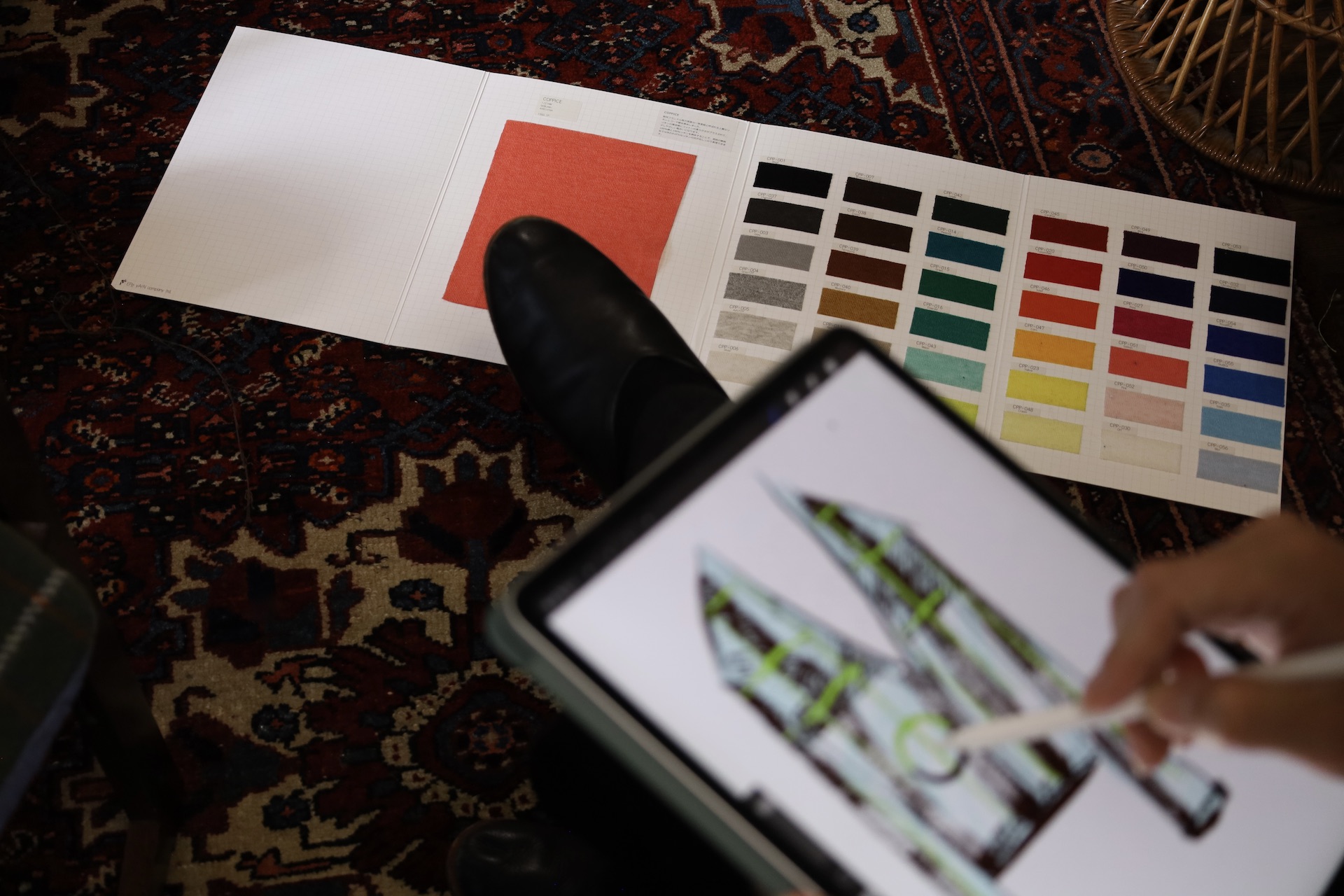
From design sketch to knit structure rendering.
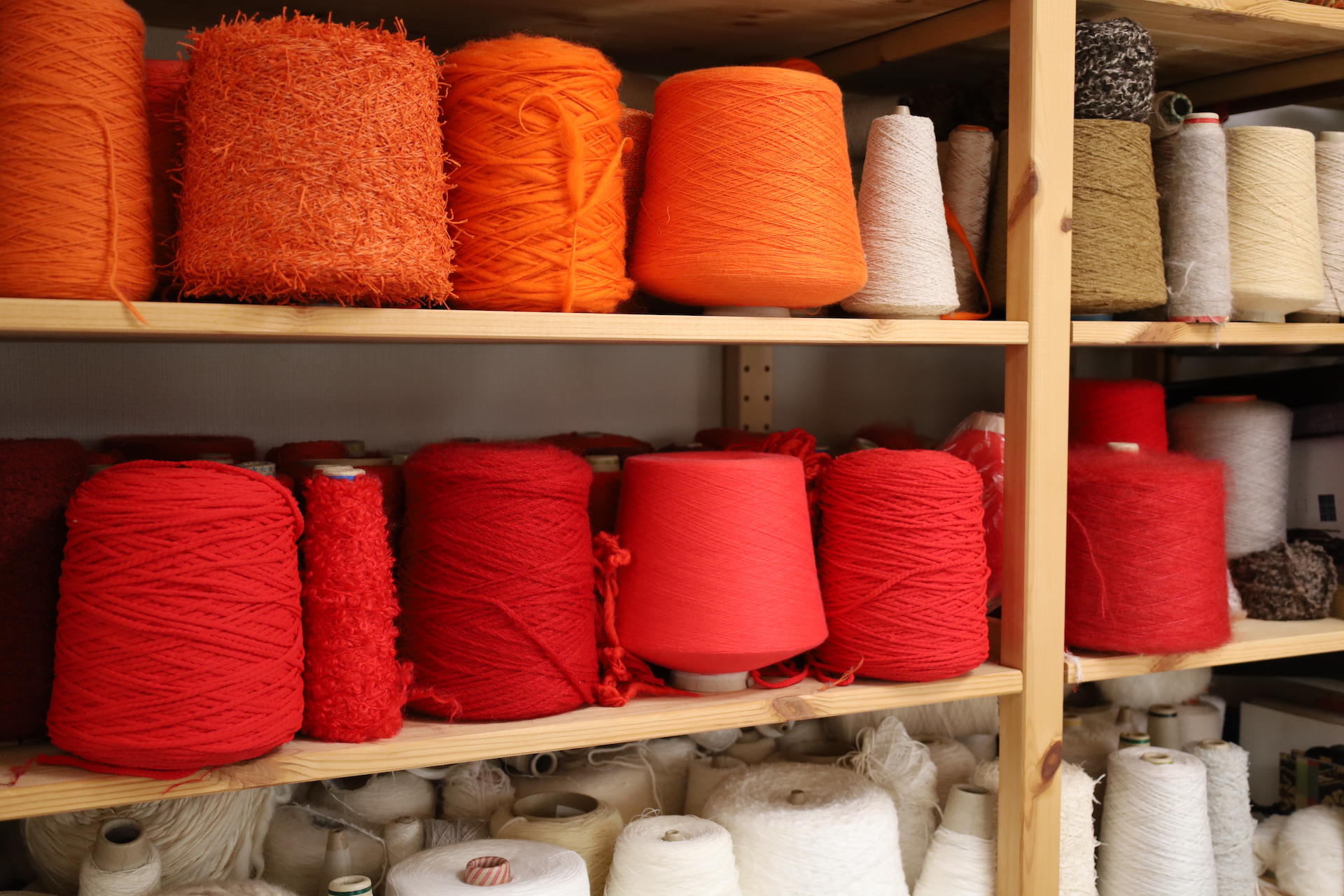
A wide range of yarns used in past collections are arranged here
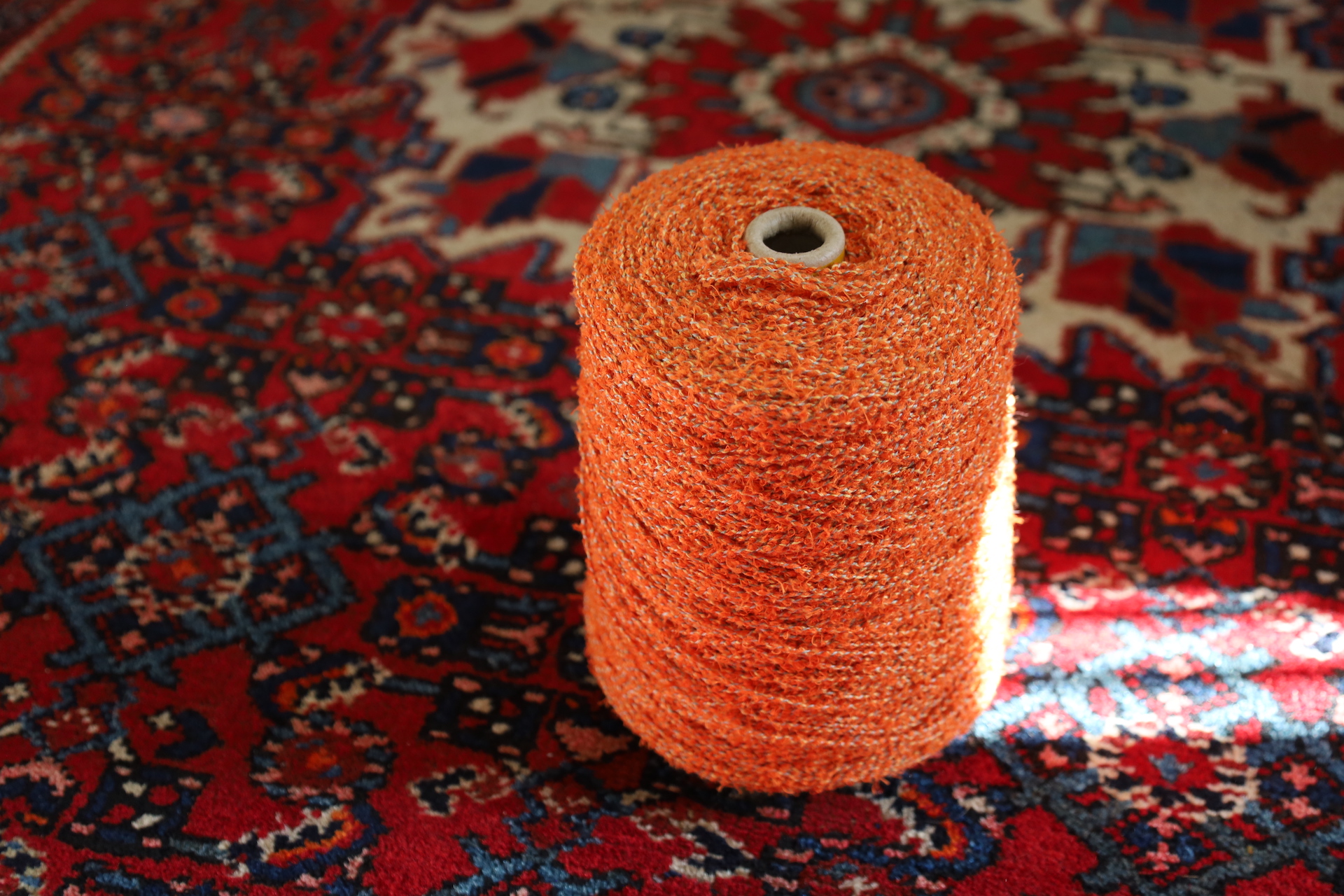
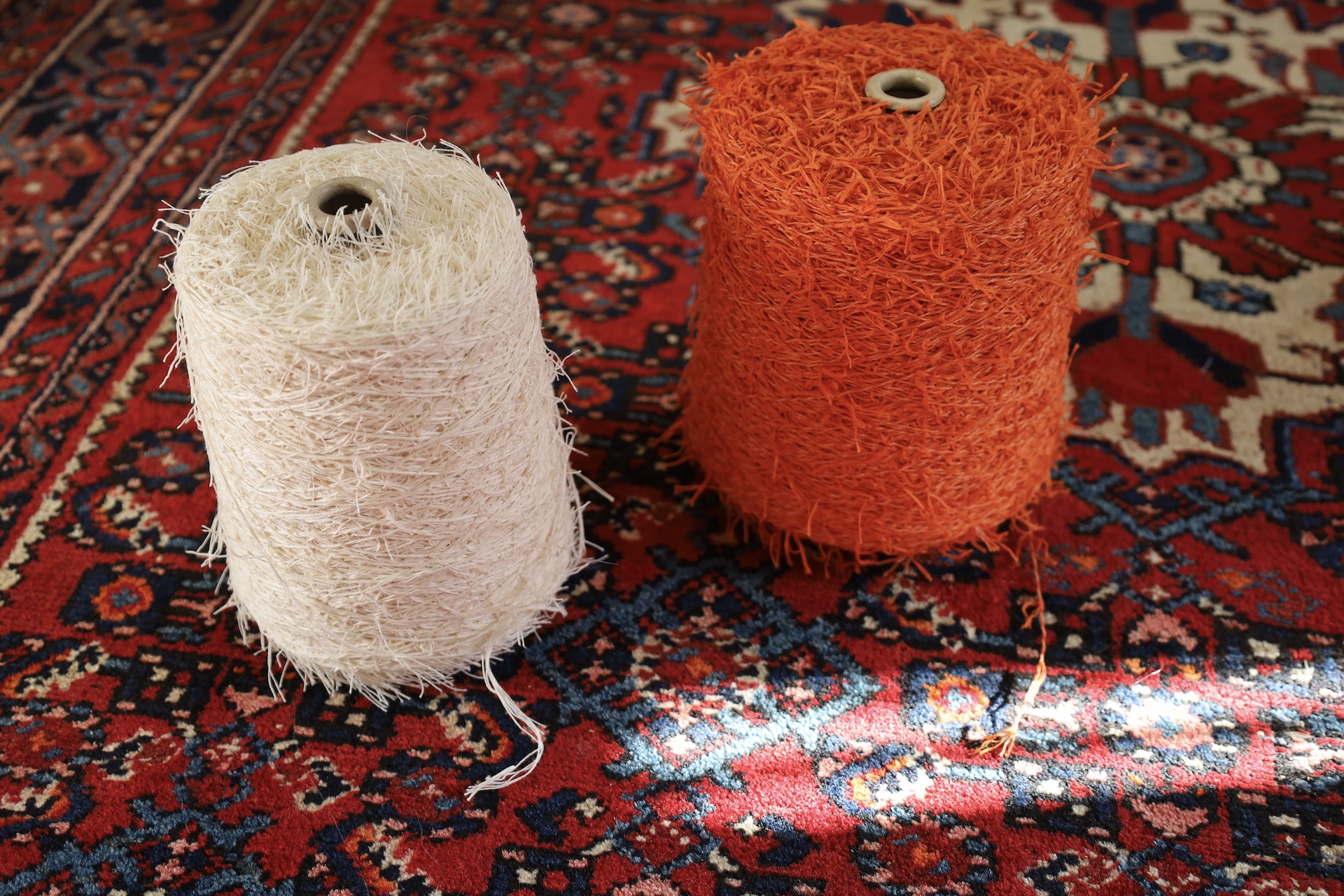
In some cases, development begins with the yarn itself. The photograph shows some of the yarns developed over time—each one already rich in expression on its own.
In Closing
Kota Gushiken’s knitwear leaves a strong impression even in photographs alone.
Its colors, patterns, knitted textures, and distinctive atmosphere can certainly be felt through the screen.
And yet, the true strength of the brand does not lie only there.
It is only when one takes the garments in hand—when one sees the thickness and relief of the knitted fabric, and confirms the difference between how the garment hangs and how it sits on the body—that the precision of the work becomes fully apparent.
What I felt particularly strongly this time was that a significant part of Kota Gushiken’s knitwear is only completed once it is worn.
The 27SS samples I saw at the atelier this time carried a very clear intention: to allow spring/summer knitwear to exist with lightness, while never weakening the presence or contour of the garment as clothing.
The actual knitwear is breathable and airy, yet never flat.
The overlapping textures of the knitted patterns and the layering of colors preserve a strong sartorial presence even in the lighter dressing of warmer seasons.
These garments are built not only through the newness of the knitted fabric itself, but also through the forms created by pattern making and the drape that emerges when they follow the body.
For that reason, I very much hope that at this upcoming Paris showroom, people will have the opportunity to experience Kota Gushiken’s knitwear in person.
I would be delighted if they could discover the brand’s appeal not only through its visual impression, but also through what becomes visible when the garments are touched and worn.
What Kota Gushiken is pursuing is not merely a new expression in knitwear.
Rather, it is an attempt to renew the very possibilities of knitwear itself: what kinds of knitted structures are possible, and what kinds of forms can exist within this mode of making.
I hope you will experience that in person this June in Paris.
Here are the details of the Kota Gushiken Paris Showroom.
<Kota Gushiken Paris Showroom>
Address: 49 Ave Parmentier, 75011 Paris
Dates: June 25 – 29, 2026
We sincerely look forward to welcoming all buyers to the showroom.
LE BERGER
shop talk & communications by Akihiko Fukuda
__________
以下は日本語訳となります。
Kota Gushikenがひらく、ニットの新しい形
Kota Gushiken のコレクションは、最初から服の形として始まるわけではありません。
その出発点にあるのは、まず言葉です。
デザイナーは、普段の生活の中で感じたこと、目にしたこと、考えたこと、あるいは服の断片的なアイデアまで、日々膨大な量のメモを書き留めているそうです。
その一部を見せていただいたのですが、そこに記されていたのは、凡人であれば見過ごしてしまいそうなことばかりでした。
日常の中で、通り過ぎてしまった方が楽なことさえも見逃さないようにしている。
それは外の世界を観察することでもあり、同時に、自分自身と向き合うことでもあるのだと思いました。
実際にコレクションの製作へ取りかかる際、デザイナーはまずそのメモを見返すところから始めるそうです。
半年間の生活の中で何を感じ、何を考えてきたのかを振り返り、必要なものとそうでないものを分け、さらに言葉としてまとめ直していく。
その作業を二度、三度と繰り返していく過程は、単にアイデアを整理するというよりも、コレクションの物語を少しずつ紡ぎ出していくようにも見えました。
半年間の日々の中で書き留めたメモの数々
そして、その言葉は次に実際の編みへと移っていきます。
デザイナーは、自ら手横編み機や手編みによって、実際に編み始めるのです。
言葉やイメージとしてあるものが、本当に現実の服として立ち上がることができるのか。
形だけのアイデアのときもあれば、編み地やテクスチャーだけの発想のときもある。
それが服になったときにどのように見えるのかを確かめるために、自分で編む。
この工程は、Kota Gushiken にとって単なる試作ではなく、言葉として頭の中にあるイメージが現実に成立し得るのかを確かめるための重要な工程なのだと思います。
その後に、デザイナーは柄や編み地の表情を絵として描き、頭の中にあるものをさらに視覚化していきます。
そして、専門的な機械を必要とする編み地については、工場と協業しながら、その構造や表情を実際の服へと近づけていく。
つまりKota Gushiken のコレクションは、言葉から始まり、自ら編むことでその言葉が現実に立ち上がるのかを確かめ、さらに絵を描き、工場と協業しながら、最後に服として結実していくのです。
手横編み機を使って自身の手で編み進める
手横編み機では編めない構造のものは、自身が手編みする
今回、6月のパリ展示会を前にアトリエを訪ね、あらためて強く感じたのは、Kota Gushiken が単に印象的なニットをつくっているのではなく、こうした過程のすべてが高い密度でつながっているブランドだということでした。
編み地の開発について
Kota Gushiken のものづくりを考えるとき、まず触れなければならないのは、編み地そのものの開発です。
ニットの魅力として、色や柄、あるいは素材の面白さが語られることは多くあります。
けれど、Kota Gushiken の強さは、その前に編み地そのものが既存の延長ではないという点にあります。
実際にアトリエで編み地のサンプルを目にして強く感じたのは、Kota Gushiken のニットには、既存の名前では呼びきれないような表情があるということでした。
繊細に沈む箇所がある一方で、別の箇所では編み柄が力強く浮かび上がる。
しかもその変化は、一枚の中で凹凸や色合いが複数重なり合いながら、服全体の印象そのものをつくっています。
また、印象的だったのは、試作として見せていただいた二つの編み地でした。
一見すると近いようにも見えるのですが、実際に触れてみると、その違いははっきりしていました。
一方は試作段階で終わり、もう一方は、ハリがありながらもやわらかく、肌触りにも心地よさがあり、洋服としての説得力を持っていました。
編み地のサンプルとして編んだ2枚の生地
そのときデザイナーが口にしていたのが、「LOVE」という言葉でした。
それは、Kota Gushiken のコレクションを通して人に感じてほしいことでもあり、同時に、ニットの製作そのものにも向けられた感覚なのだと思いました。
見た目の面白さだけでなく、糸に無理がなく、触れたときや着たときにもきちんと心地よさがあること。
そのような状態を指しているのだと感じました。
ここで重要なのは、この開発が単なる発想にとどまっていないことです。
Kota Gushiken のコレクションは言葉から始まり、その言葉が現実の世界で成り立つのかを確かめるために、デザイナーはまず自ら編みます。
さらに、編み地の表情を絵としても描いていく。
だからこそ、頭の中にある抽象的なイメージが、どのような構造を持ち、どのように立ち上がるべきかを、自分自身の中で高い解像度で捉えているのだと思います。
デザイナーは、自分で編むことのできるものだけを考えているわけではありません。
専門的な機械を必要とする編み地であっても、その構造を理解し、さらに絵として具現化できるからこそ、工場と技術的なレベルで深くやり取りしながら開発を進めていくことができます。
単に「こういうものができたら面白い」と伝えるのではなく、糸がどう走り、どこに負荷がかかり、どのような組み方をすればその表情が成立するのかまで把握している。
そのうえで、言葉として生まれたものが本当に編み地として立ち上がるのかを、自ら編むことで確かめている。
ここまでの精度で工場と会話ができるからこそ、Kota Gushiken では、見たことのないほど創造的な編み地が実際の服として成立してくるのだと思います。
既存では存在しないような編み地の表情を生み出しながら、それを洋服として、さらに身体に触れるものとして成立させること。
Kota Gushiken の編み地の開発とは、単に新しい視覚表現をすることではなく、言葉を現実の編み地へと立ち上げていく創作そのものなのだと思います。
パターンを用いたニットについて
Kota Gushiken のニットを語るうえで、もうひとつ欠かせないのが、パターンを用いて服の形をつくっていることです。
これは一見すると当然のようにも思えるかもしれません。
けれど、ニットにおいては決して当たり前のことではありません。
そもそもニットは、布帛のように一枚の生地を裁断し、細かなカーブや切り替えによって形をつくっていくものではありません。
編み目の増減によってパーツそのものの形を調整していくため、特にローゲージのニットでは、一目一目が大きく、布帛のような繊細なラインや構成をそのまま持ち込むことは容易ではありません。
そのため一般的には、ニットの魅力は形そのものよりも、色やテクスチャー、編み柄の表情に重心が置かれやすくなります。
デザイナーがパターンの重要性を強く意識するようになったのは、大学の卒業コレクションの頃、パタンナーと出会ったことが大きな転機だったそうです。
そこで初めて、形の制限を考えることなく製作を進めた結果、それまでよりも明らかに良いニットができていることを実感したと言います。
この経験は、Kota Gushiken の現在の服づくりを理解するうえで重要なのだと思います。
つまりこのブランドは、ニットを単なる編み地の表現としてではなく、服としてどう成立させるかという視点から見直してきたのです。
アトリエでサンプルを見ながら強く感じたのは、Kota Gushiken の服は、編み地と同時にフォルムが考えられているということでした。
実際にトワルを組みながら設計を進めることで、はっきりと輪郭が現れるものもあれば、肌に寄り添うように落ち、ニット特有のやわらかく丸いフォルムが出るものもある。
重要なのは、その違いが偶然ではなく、明確な意図のもとで設計されていることです。
平面的につくられたものが、ただ重力によって落ちているのではありません。
服としてどうあるべきか、そのためにどのような編み地が必要で、どのようなパターンが適しているのかが、両面から同時に考えられている。
Kota Gushiken のニットには、そうした設計の感覚があります。
その違いは、見た目だけでは分かりきらない部分でもあります。
ハンガーに掛かっているときにはシンプルに見えるものが、実際に着てみると驚くほど明確なフォルムを持っていたり、逆に、形を強く主張しているわけではないのに、着ることで自然に身体に沿いながら美しい落ち感が生まれたりする。
Kota Gushiken は、そうしたニットの制約を前提にしながら、それでもなおパターンを用い、服としての形をつくり続けている。
そこに、このブランドのもうひとつの大きな強さがあるのだと思います。
デザイン画から編み地の構造まですべてを絵で描く
これまでコレクションで用いてきた数多くの糸が立ち並ぶ
これまで開発してきた糸の一部。糸だけでもとても表情豊か
最後に
Kota Gushiken のニットは、写真だけでも充分に印象に残ります。
色や柄、編み地の表情、そして独特の空気は、画面越しにも確かに伝わってきます。
けれど、このブランドの本当の強さは、そこだけではありません。
実際に手に取り、編み地の厚みや凹凸を見て、服として吊られた状態と身体に乗った状態の違いを確かめたときにはじめて、その精度の高さがよりはっきりと見えてきます。
特に今回あらためて強く感じたのは、Kota Gushiken のニットは着ることで初めて完成する部分が大きいということでした。
今回アトリエで拝見した27SSのサンプルには、春夏のニットを軽やかに成立させながら、服としての表情や輪郭を決して弱めないという明確な意識が通っていました。
実際のニットは、風通しのよさを備えながらも平坦ではなく、編み柄の凹凸や色合いが複数重なり合うことで、薄着になる季節にも装いとしての強さを保っています。
編み地そのものの新しさだけでなく、パターンによってつくられたフォルムや、身体に沿ったときに生まれる落ち感まで含めて、このブランドの服は成り立っています。
だからこそ、今回のパリ展示会では、ぜひ Kota Gushiken のニットを実際にご覧いただきたいと思っています。
見た目の印象だけではなく、触れたとき、着たときに見えてくるものまで含めて、このブランドの魅力を確かめていただけたら嬉しいです。
Kota Gushiken が追求しているのは、単に新しいニットの表情ではありません。
ニットというものづくりにおいて、どのような編み地が可能で、どのような形があり得るのか。
そのこと自体を更新していくような試みなのだと思います。
6月のパリで、ぜひそれを実際にご覧ください。
以下は Kota Gushiken のパリショールームの詳細です。
<Kota Gushiken Paris Showroom>
Address: 49 Ave Parmentier, 75011 Paris
Dates: 25 – 29 2026
バイヤーの皆さまのご来場を心よりお待ちしております。