COTTLE 民藝の思想を纏う”ZEN JACKET” / “ZEN JACKET” Worn with the Spirit of Mingei
2025.11.20
COTTLEの核となる洋服の一つ”ZEN JACKET”。
自社縫製工場を持つCOTTLEでは、アトリエ内で職人が一着を最初から最後まで丸縫いをしています。
コレクション全体を見渡しても、縫製仕様を含めた構造は、どれも非常に凝ったもので、僕自身も見る度に驚くほどです。
それは、生産効率を優先するのではなく、”価値あるものをつくる”ということを何よりも重要視している姿勢の表れだと、いつも感じています。
その中でも、最も複雑な構造であるのがこのZEN JACKETです。
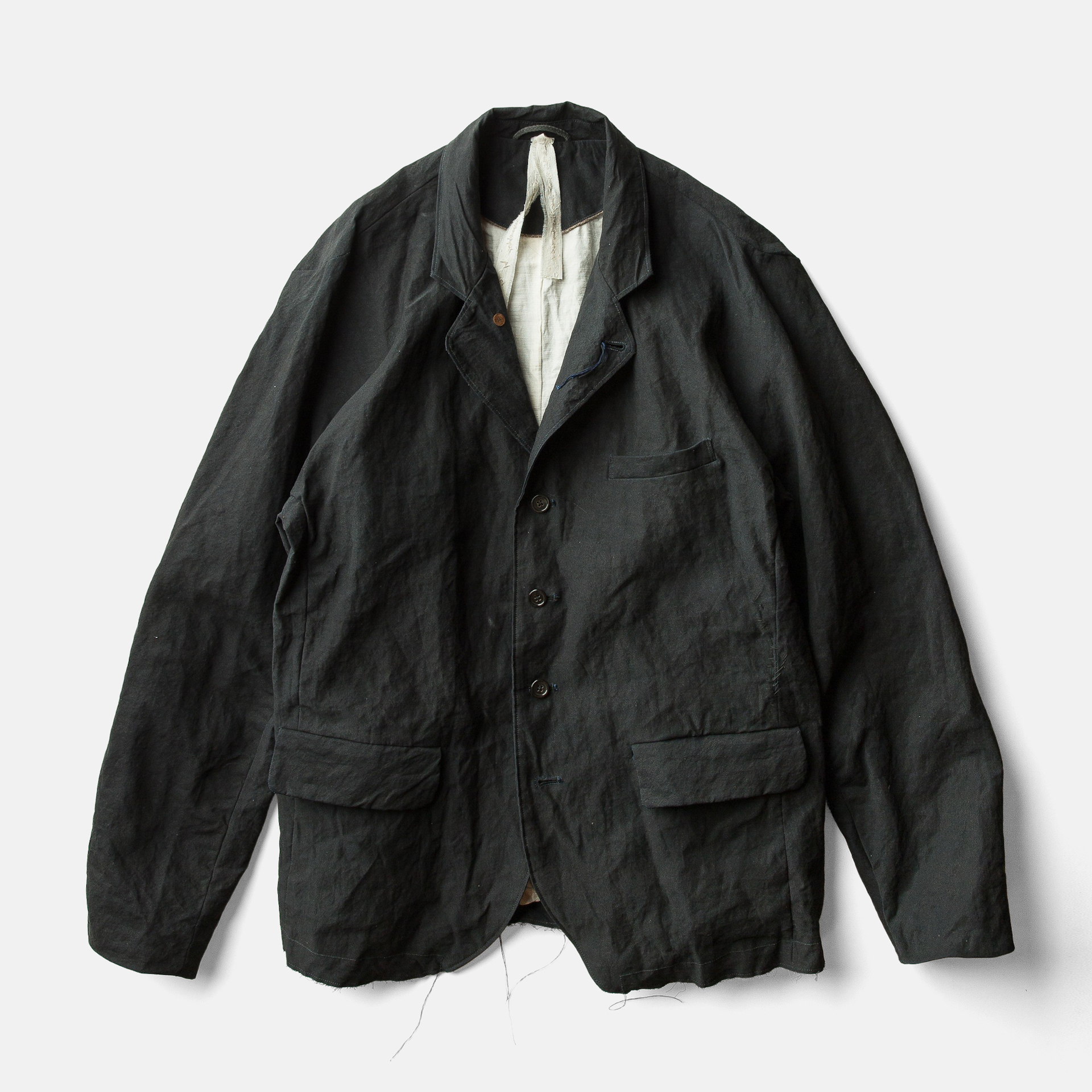
冒頭にも述べた通り、ブランドを象徴する一着。
長年洋服づくりに携わってきたデザイナーの考えから、濃く深い思想のもとで生み出されるのがCOTTLEの洋服です。
そんなブランドが「核」と位置付けるのが、ZEN JACKET。
徹底されたブランドの思想が随所に反映されたこの型は、
LEAF VEIN・EARTH WALL・GOLDEN WHEAT FIELD CORDUROY、DEAR DENIM、SAKIORIなど複数のコレクションに跨って存在しています。
では、そのZEN JACKETがなぜここまでCOTTLEの中心に据えられているのか。その背景とディテールをshop talkで紐解いていきます。
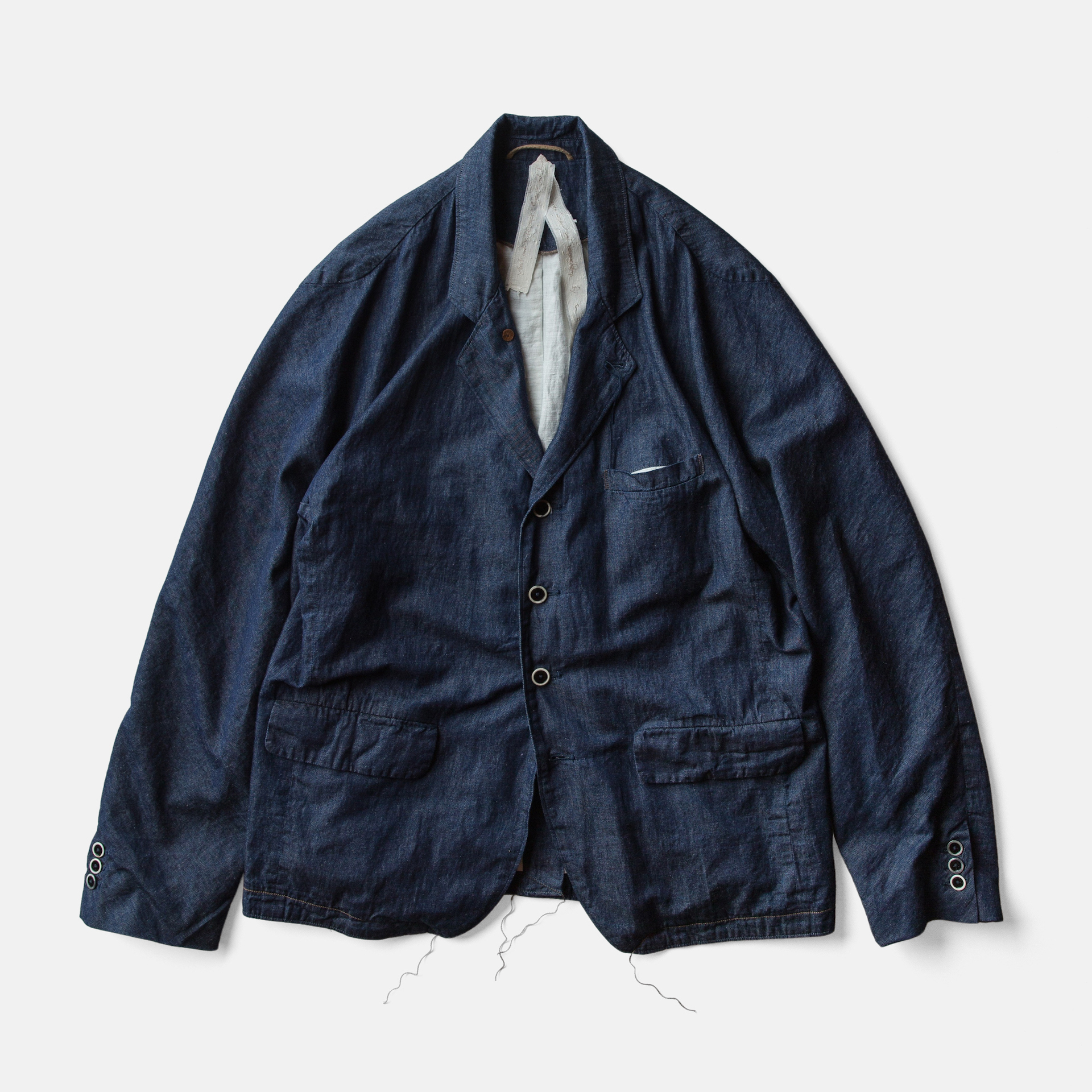
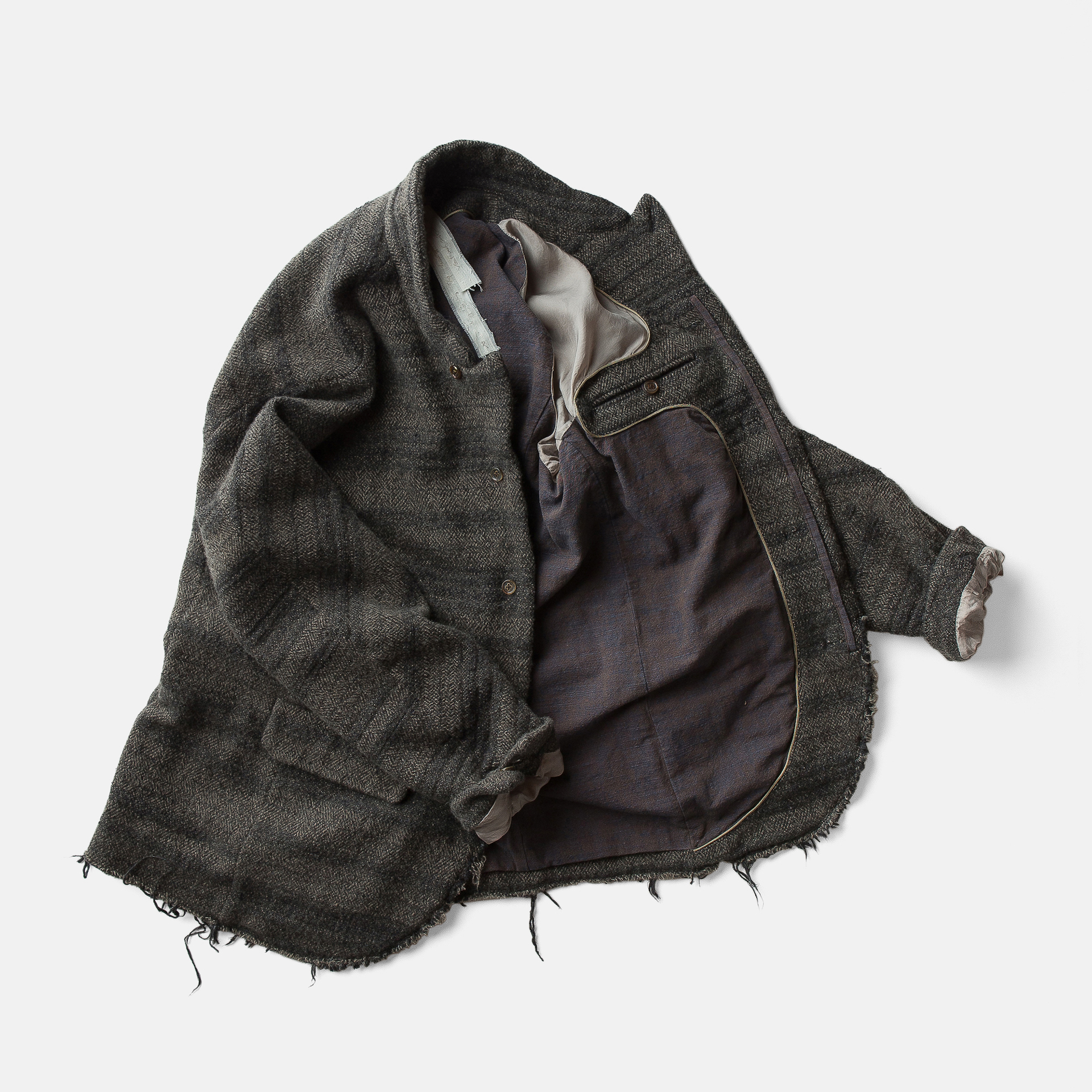
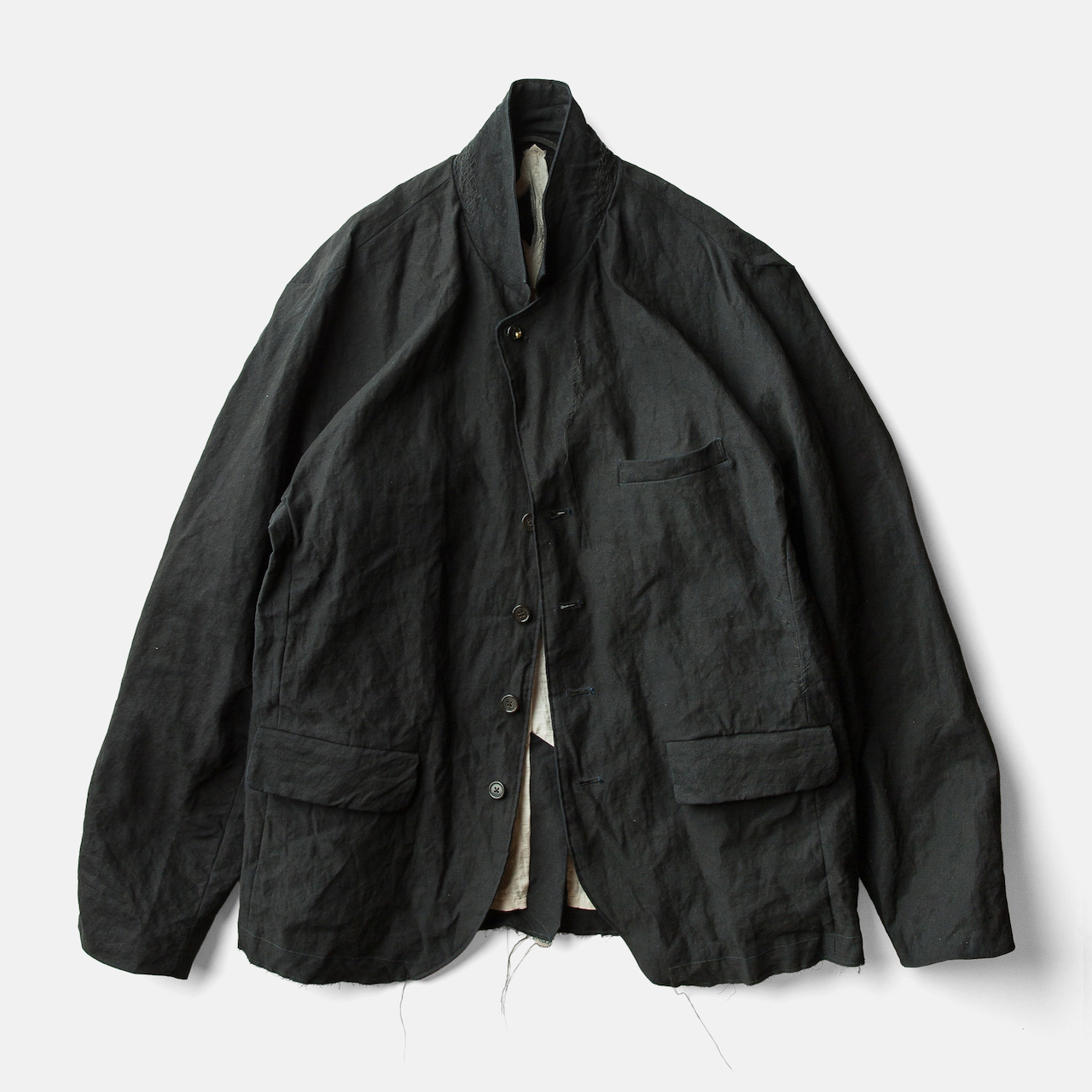
たくさんのコレクションが存在するCOTTLE。
その中でも、セットアップ対応であったり、写真のようにお台場仕立てや、ベント処理、本切羽など、昔ながらのテーラードとしての格式を備えつつも、日常に馴染むバランスを重視しています。
ブランドのオフィシャルサイトにも記載がありますが、「特別な日に着る服」でありながらも、着る人の日常に静かな影響を与え、共に歳を重ねていくことを目指したジャケットです。
そのために、手にした5年後・10年後も着られるよう目立ちすぎないデザインに整えています。
衿の大きさや開きの広さなど普遍的なバランスを意識した設計です。
その上、単なるスタンダードではなく、ブランドとしての意思や徹底したつくり込みも注がれることで、洋服として「特別な価値」も併せ持った一着です。
先述のように、ブランドの様々なシリーズにおいて存在するZEN JACKETという型。
そこには、その名にもある通り、一貫して共通した、構造とパターンの2つの特徴があります。
まず、1つ目は、「身体のどこにもぶつからない」、「窮屈さがない」という構造を徹底していること。
古来からのジャケット特有の硬さや重さは、極力取り除き、それよりも軽さや柔らかさを優先しています。
その軽さと柔らかさを追求するために、ジャケットを構築するディテールを再考しています。
具体的には、表地や裏地の生地端の処理や、構造における縫い代の生地の重なりを見直すことで、不要な布を削ぎ落とした設計です。
洋服の耐久性を担保しながらも、構造をできる限り薄くつくりあげることに努め、物理的にも精神的にも身体を締め付けない、”禅”のように心が穏やかで落ち着き、フラットになるような着心地を目指しているとデザイナーの渡辺さんと、奥さんの由香里さんは言います。
2つ目は、前身頃の肩と袖がラグランスリーブのような形状で、立体的な一続きのパターンであること。
これは、ユニセックスブランドとして、体格の差があっても身体馴染みの良い服を追求していく中で、辿り着いたそうです。
サイズや体型の差による肩の張りが強調されにくい設計であり、パターンの力でサイドネックポイントから肩にかけての曲線美と可動域の広さを重視したもの。
一着あたりの生地の取り都合を考えた際には、決して効率の良いパターン設計とは言えませんが、身頃と袖が一枚に繋がる事でしか生み出せない美しいシルエットがあると言います。
この構造は、袖は生地がバイアス状になりますが、坐禅姿における特有の柔らかな肩のアウトラインや、日本的な「布を肩に乗せて垂らした」フォルムから着想を得たものだそうです。
これにより、イセも多く、COTTLEの中でも最も複雑な縫製が必要となります。
その結果、実際に洋服に袖を通した時の着心地は、とても柔らかく、窮屈さや硬さがありません。
ブランドのオフィシャルサイトに記載があるように、子供の参観日や初対面の方に会う時にも着られるような、ジャケットとして風格のある見た目。
それでいて、身体をふわりと包み込むような感覚。
この体験は、COTTLEのZEN JACKET特有のものではないかと思います。
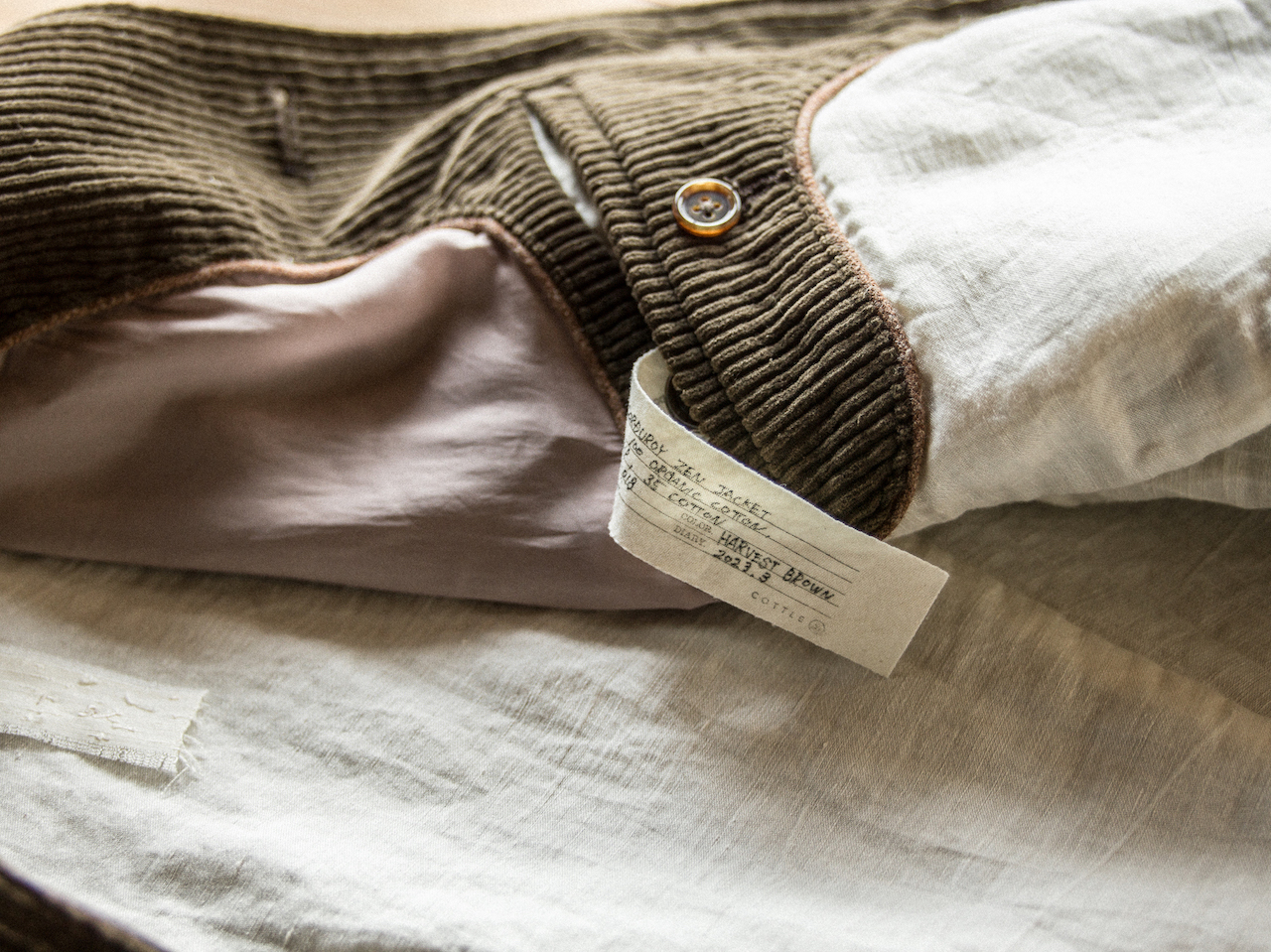
更に、もう少し踏み込んだ洋服の内側のディテールについて。
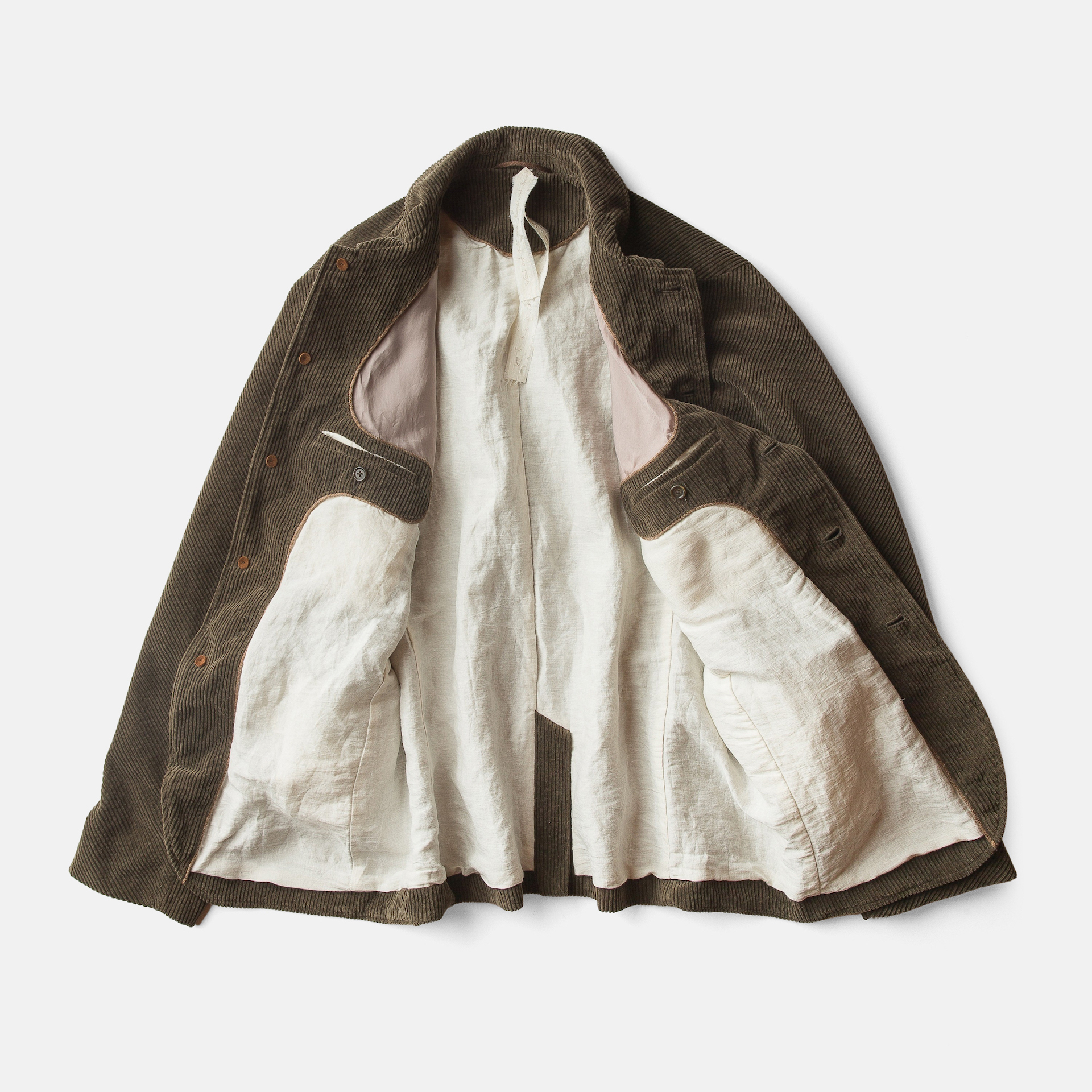
デザイナーは、「裏地にこそ気品のある仕立てが必要である」と口にしています。
お台場仕立ての内ポケット、ベント、本切羽など、クラシックなテーラリングの要素。
それだけではなく、裏にはリネンコードを走らせるなど裏側の仕様も非常に複雑です。
“民藝の思想”が息づくブランドであるCOTTLE。
このような徹底して手を行き届かせるものづくりは、その他にもハ刺しや、星留め、手仕事のステッチワークを随所に用いることで「人の手がかかっていることの価値」を再認識させてくれると思います。
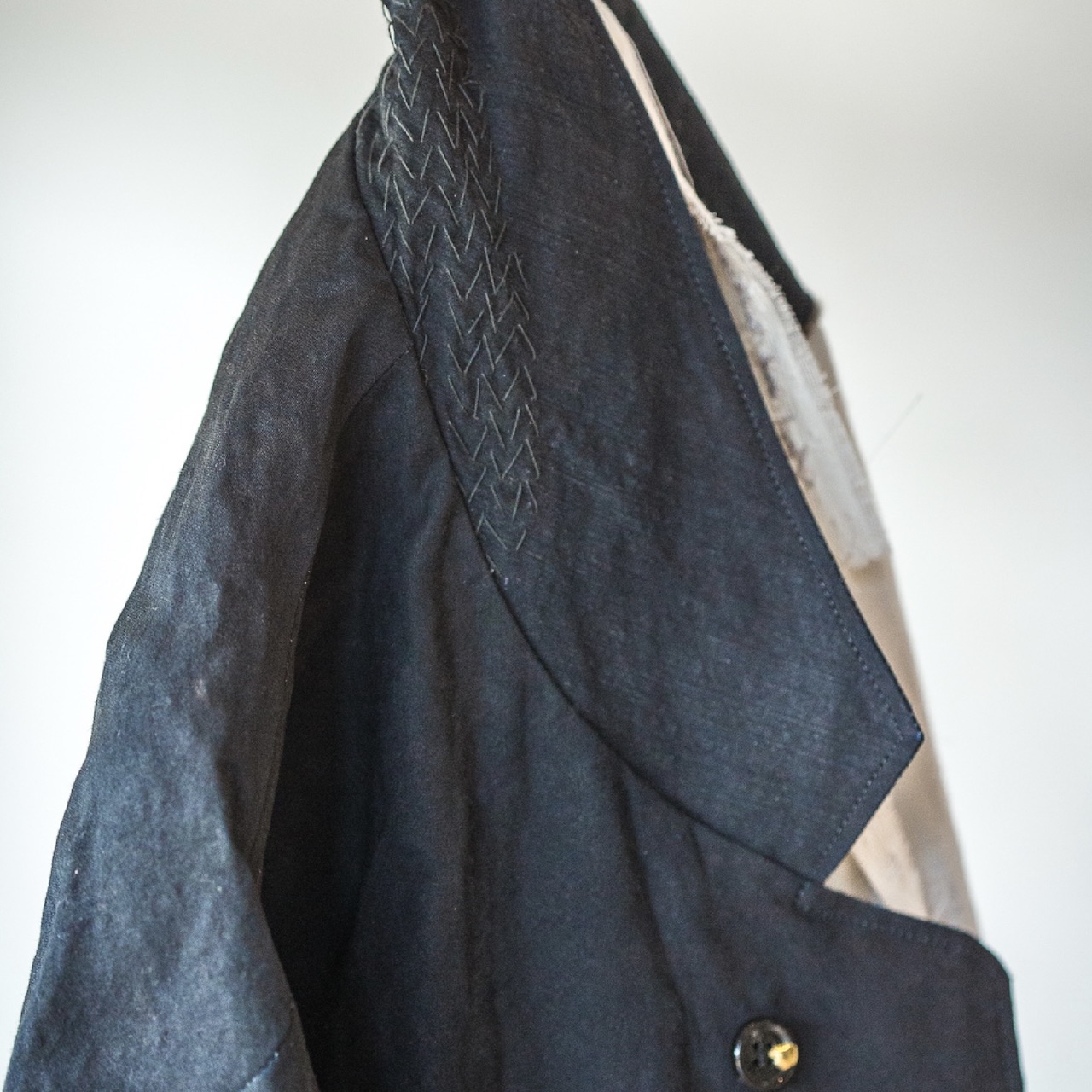
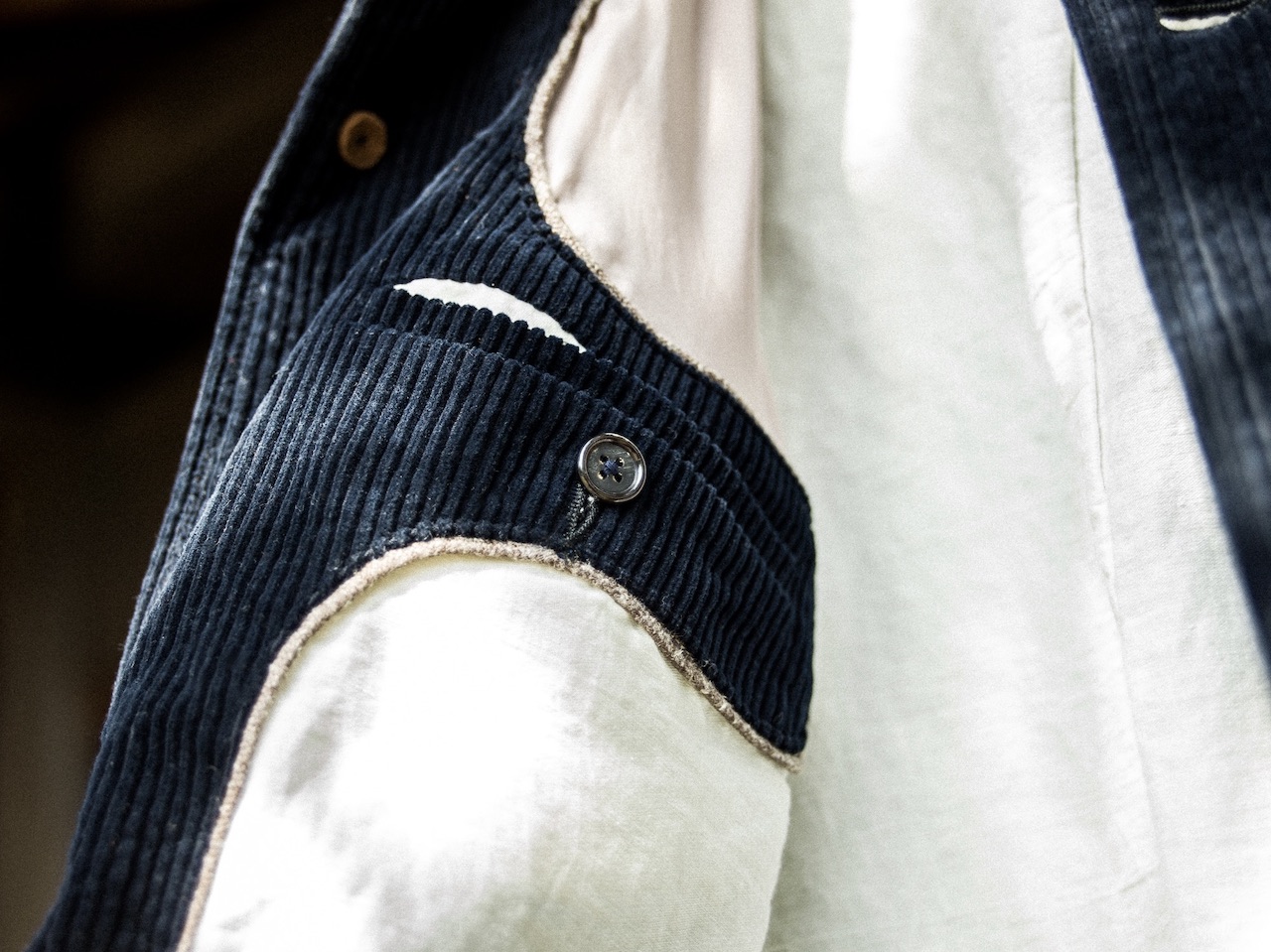
先に書いた通り、ZEN JACKETとして、一本筋の通った共通項は存在します。
しかし、それぞれをよく見ると、ラペルの大きさ、生地端の処理などをはじめ、ブランドとして目指す理想の姿が生地ごとに異なります。
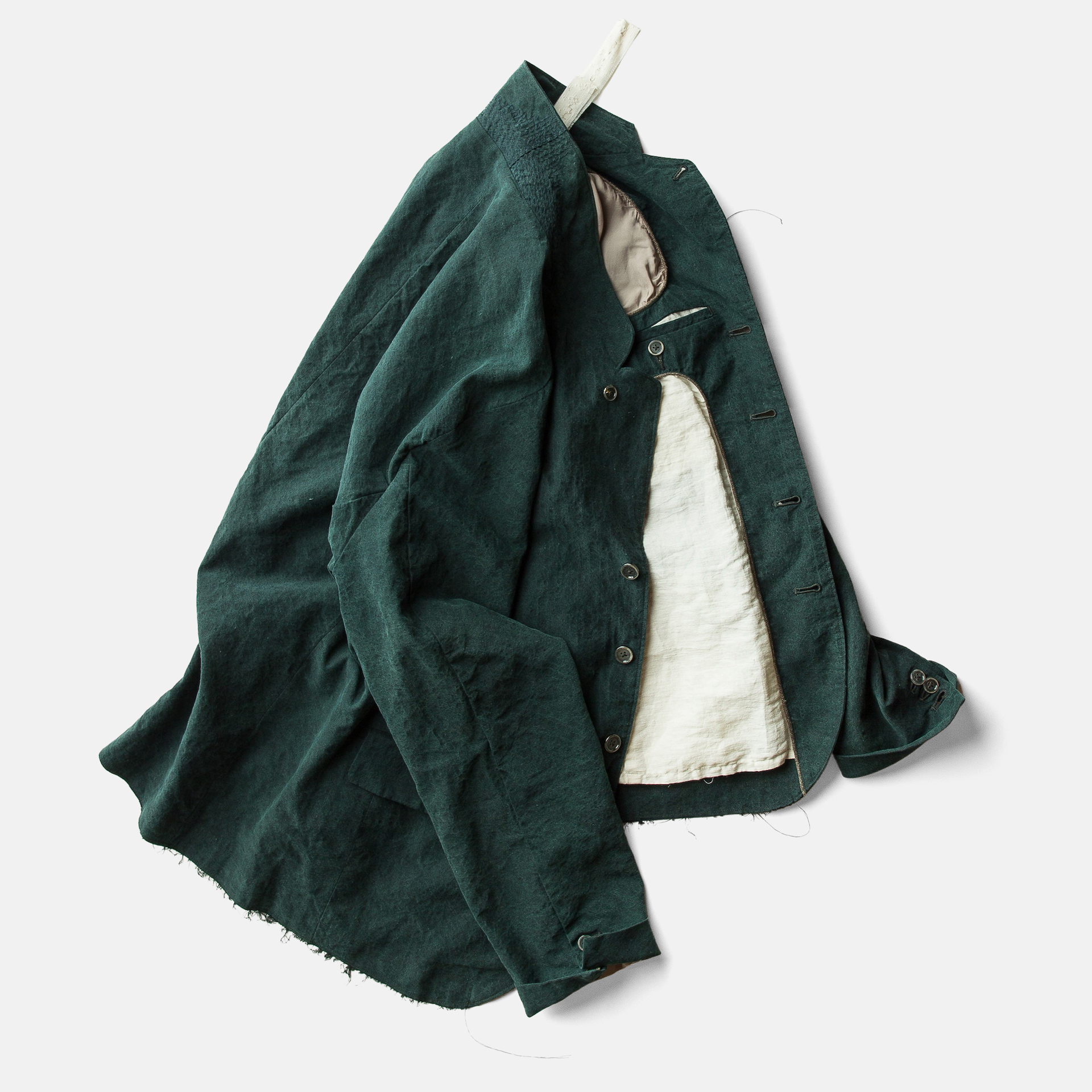
例えば、LEAF VEIN。
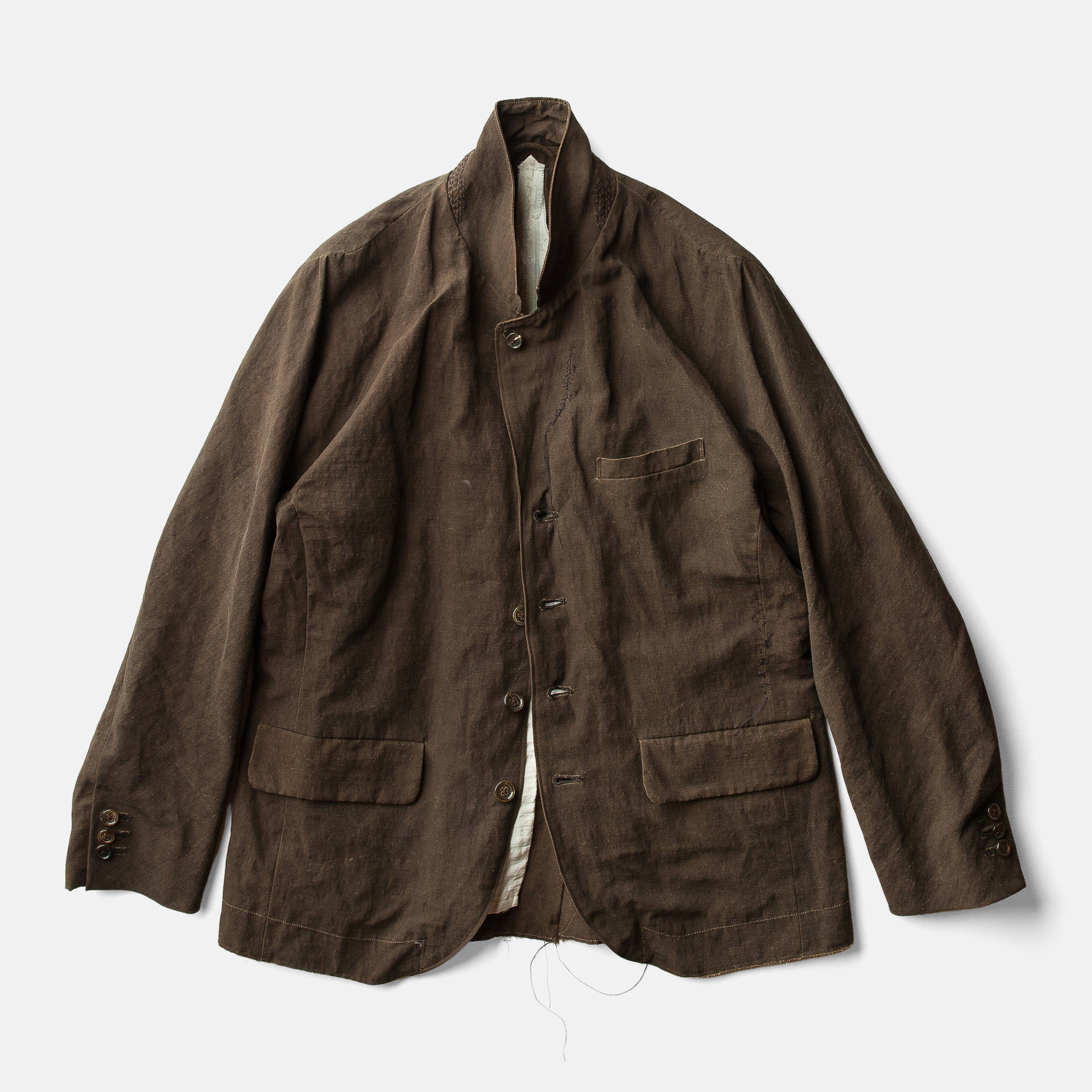
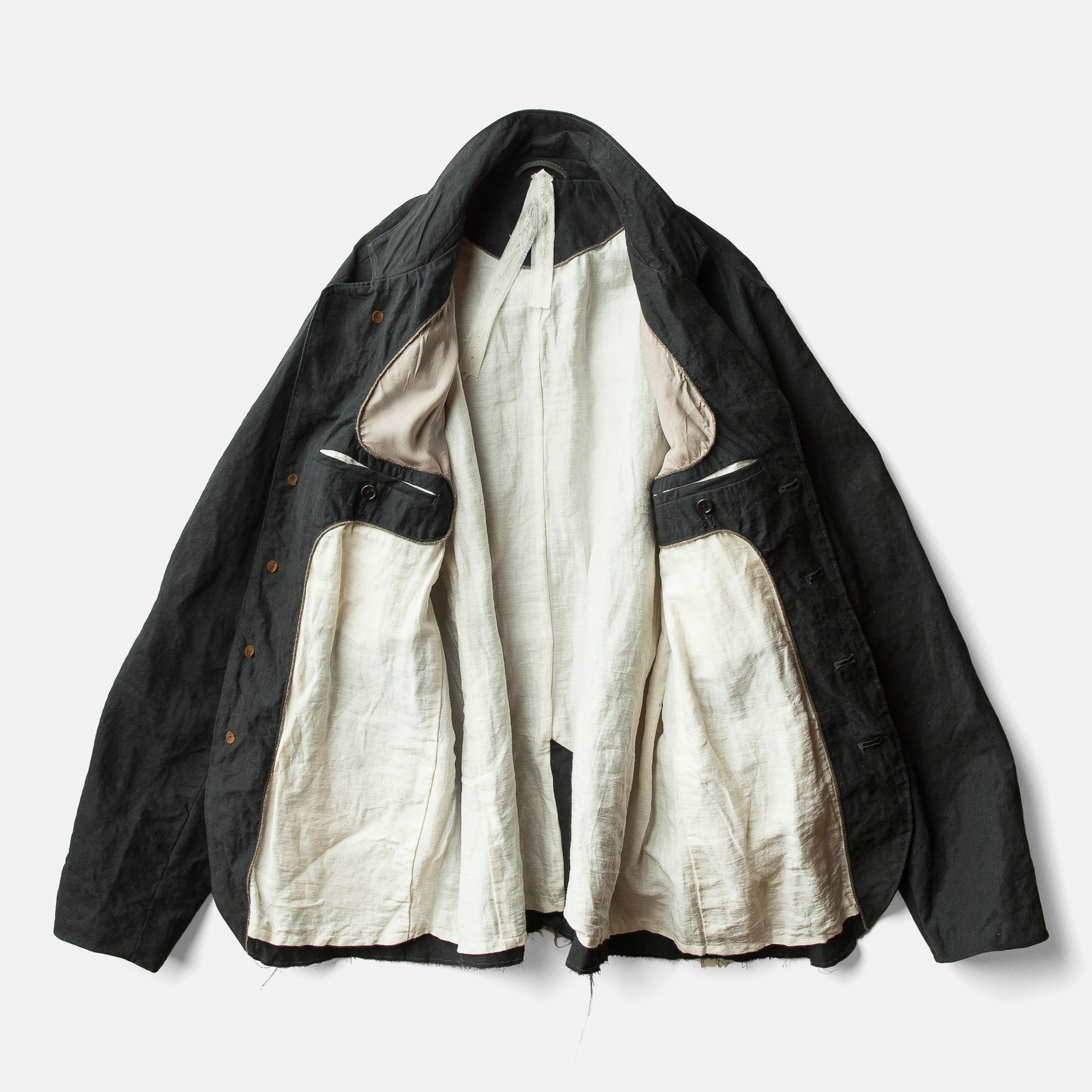
<LEAF VEIN “ZEN JACKET”>
LEAF VEINという”葉脈”を表現したコレクションのZEN JACKETについては、よりフォーマルな場でも、そうではない日常の場でも活用できるために、洋服を薄く仕立てる事も追求していると言います。
縫製の面においては、オーバーロックの仕様を用いないことで、縫製糸の使用を最低限に留めるように心がけているとデザイナーは言います。
それにより、身体に纏った際に感じる布の重さは1枚仕立てに近い軽やかさを実現しています。
更に、裾などからほつれている糸には生糸、大麻、有機綿による織り込まれた布から儚く解けてくる、糸の美しさも垣間見え、ブランドが機屋とつくり込んだオリジナル生地の美意識も反映されています。
<GOLDEN WHEAT FIELD CORDUROY “ZEN JACKET”>
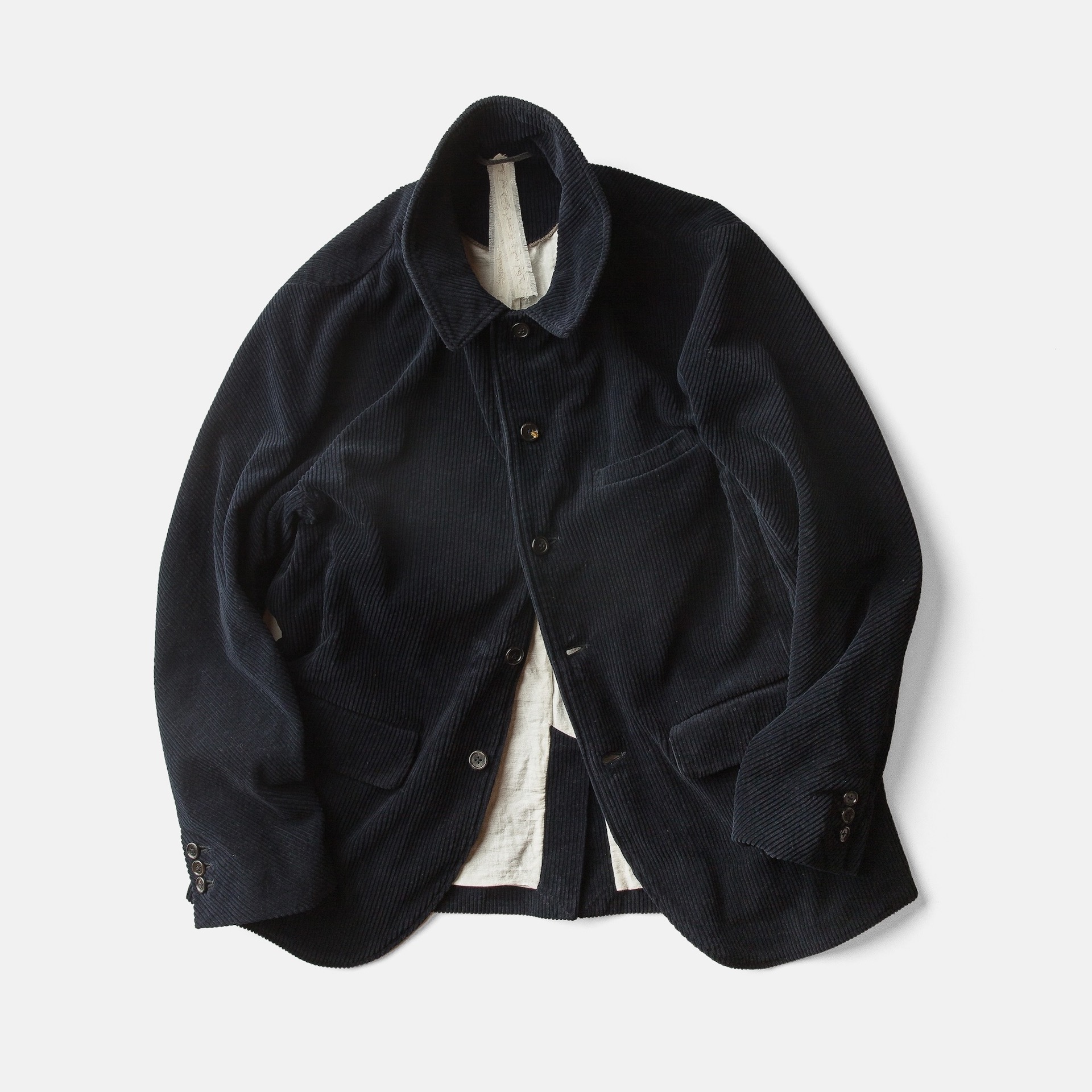
GOLDEN WHEAT FIELD CORDUROYのZEN JACKETについては、伝統的なハンティングジャケットをモチーフにしています。
LEAF VEINや他のコレクションのZEN JACKETとは、襟の形や裏地の始末などは全く異なる仕様です。
これは、コーデュロイの特性を踏まえ、素材のほつれよりも畝の膨らみや柔らかさを最大限に感じられるように仕上げたものです。
その上、裾の部分に関しては、素材の膨らみを活かす箇所と、削ぎ落とす箇所を使い分けて3種類の生地の処理が存在します。
実際に目にした際に感じる細部の美しさは言うまでもありません。
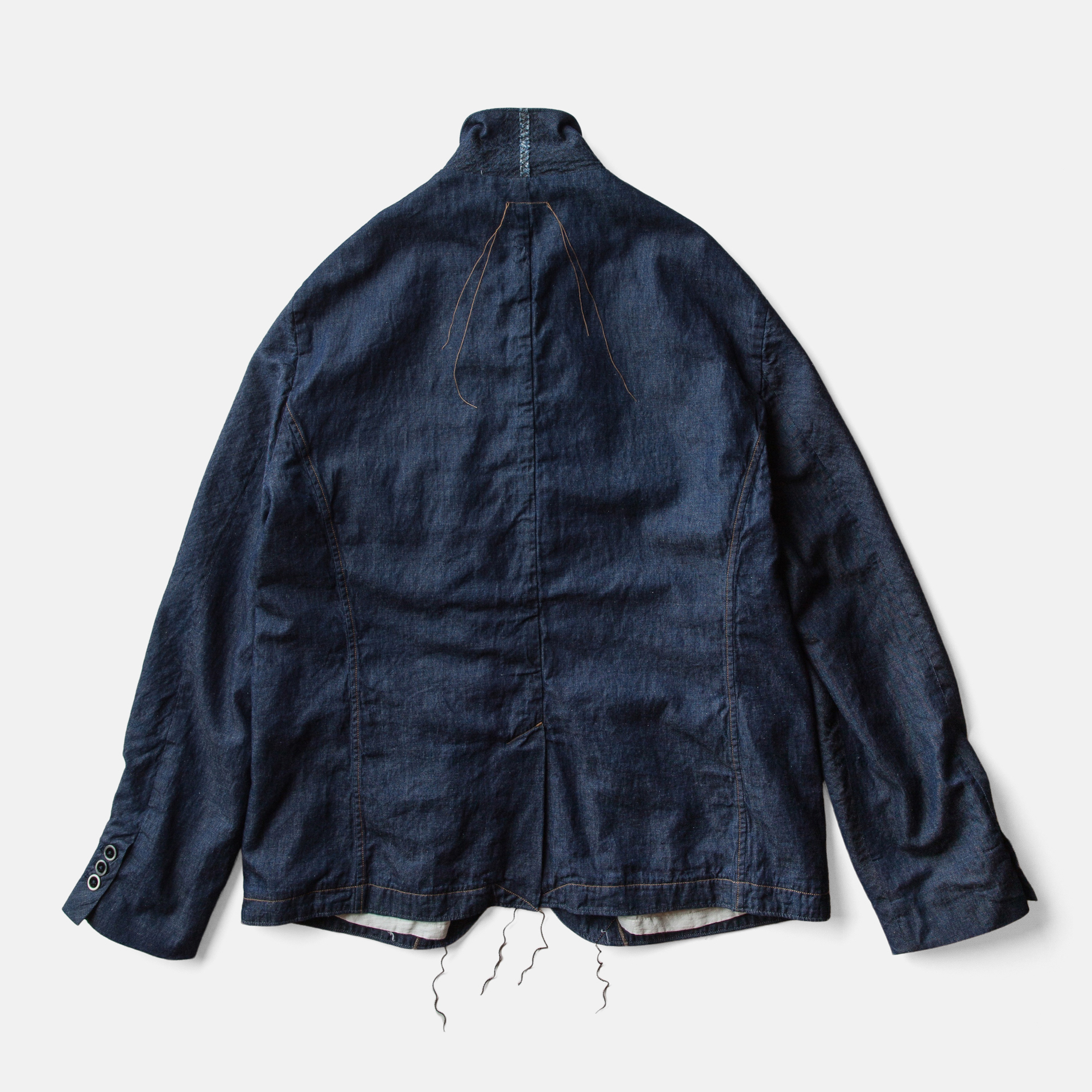
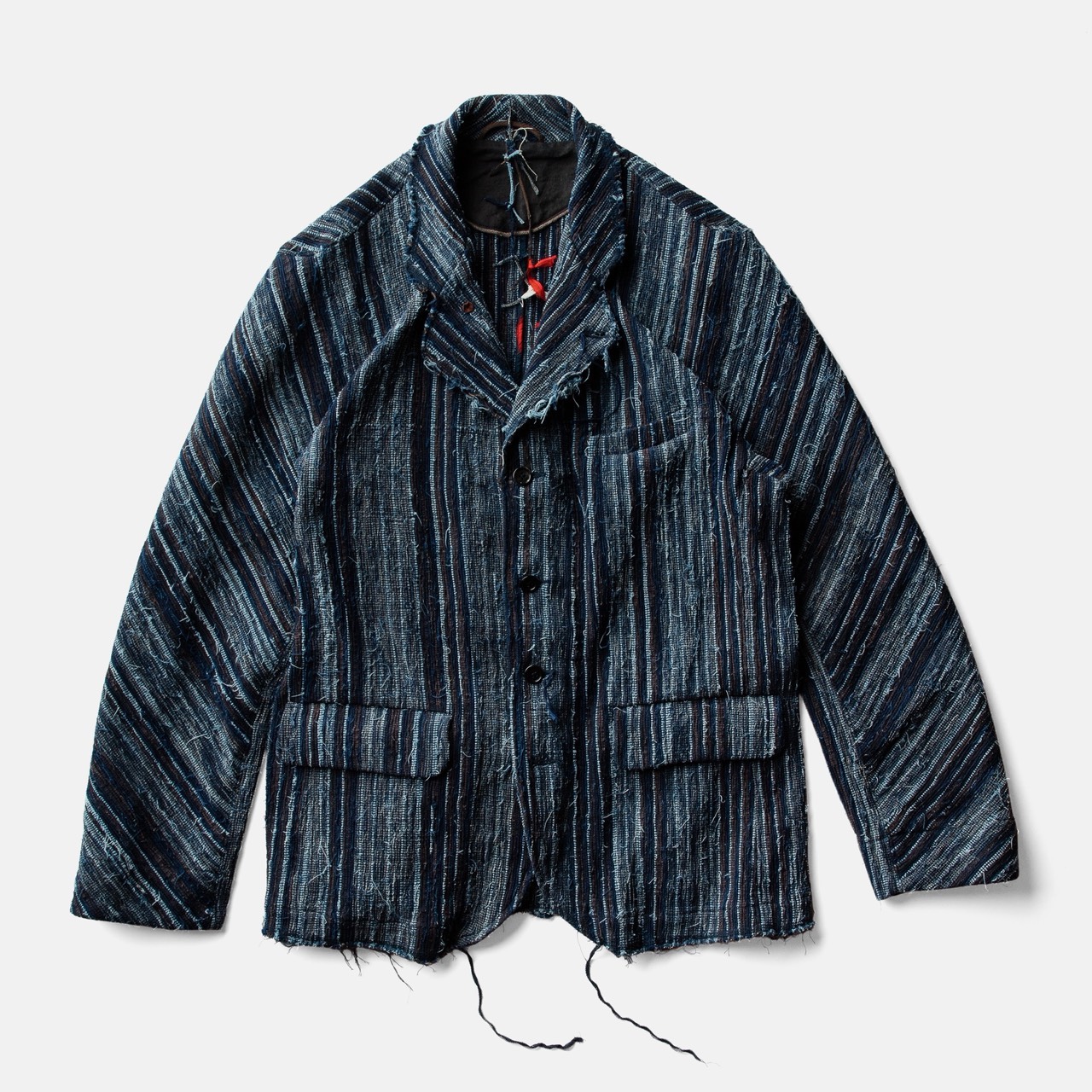
<DEAR DENIM “ZEN JACKET”>
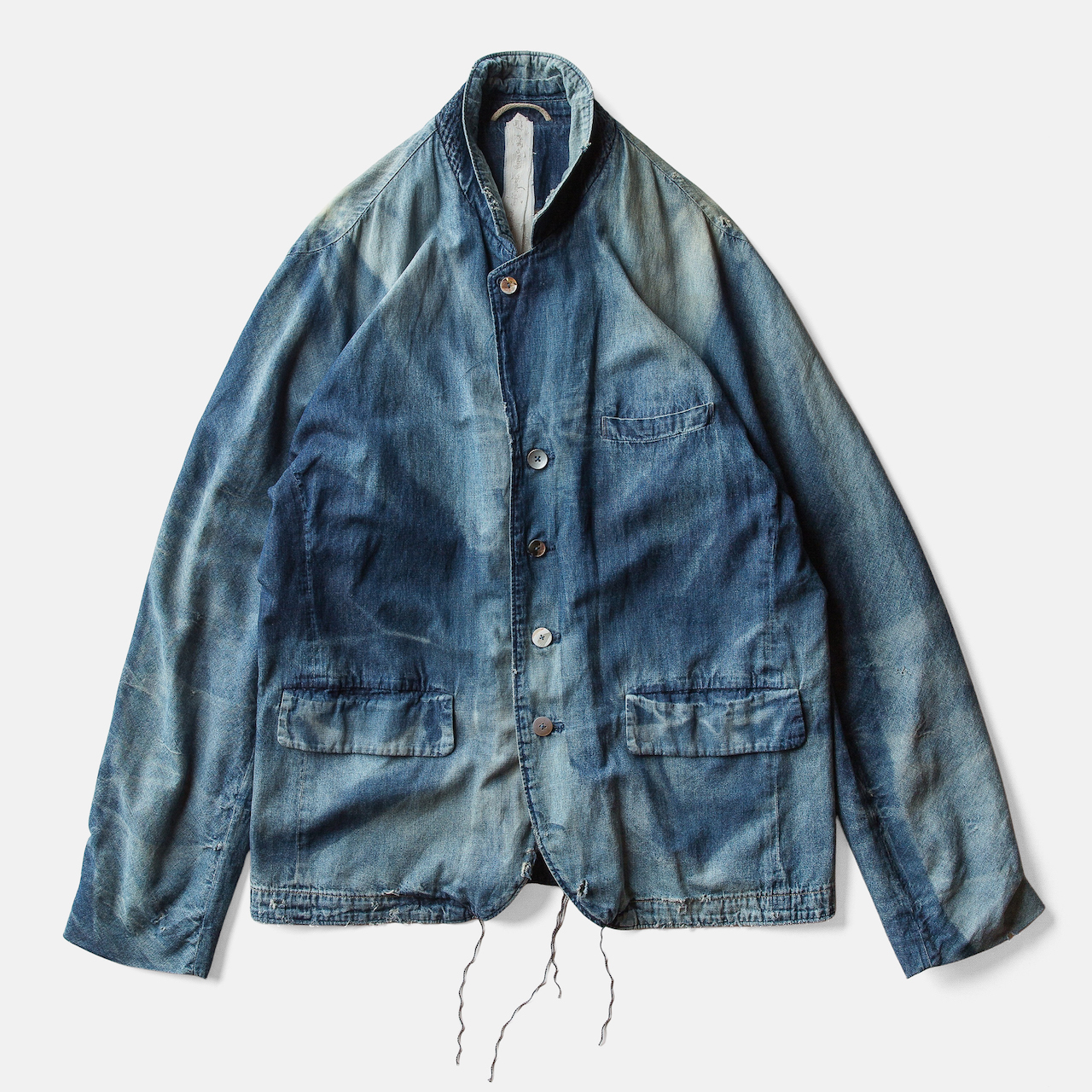
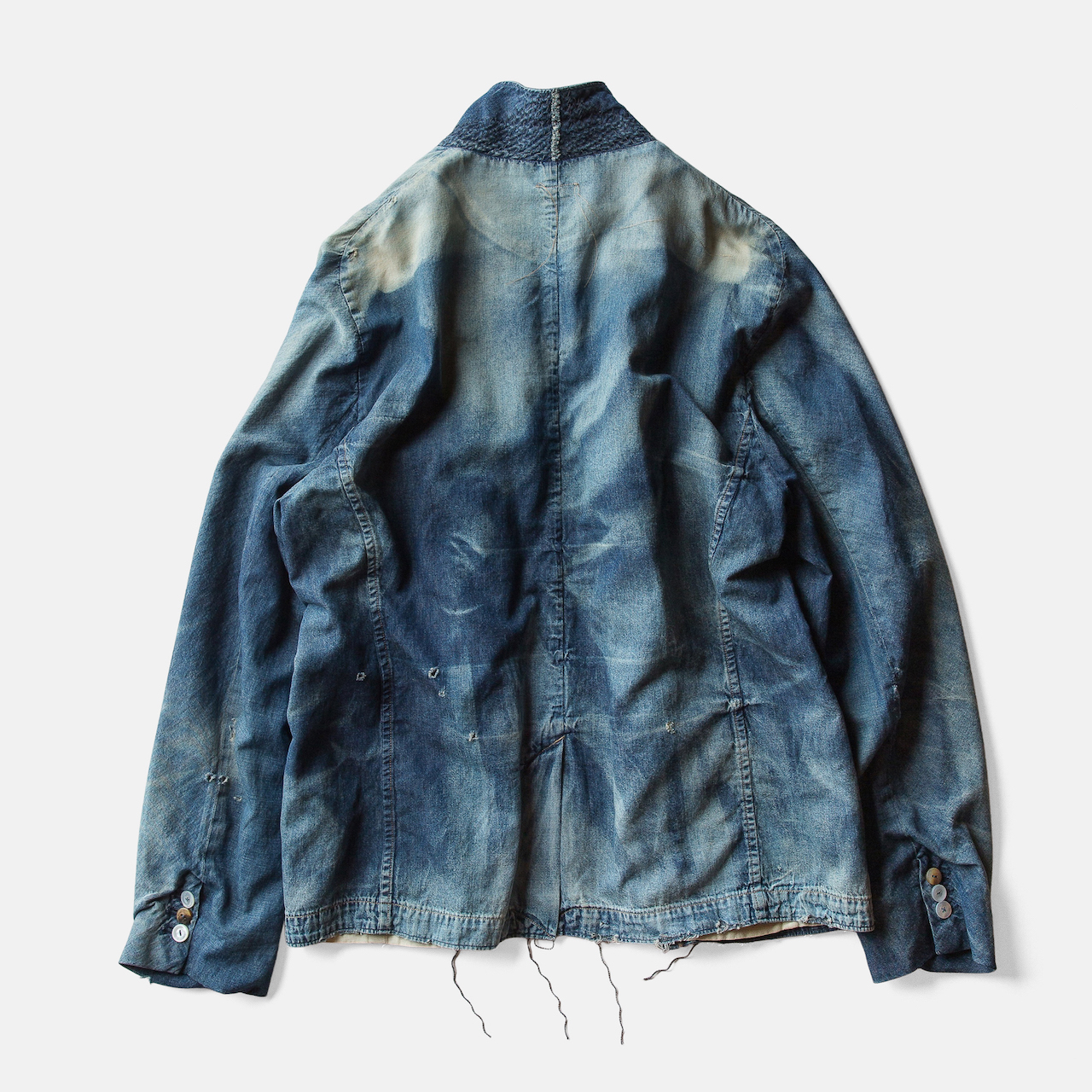
こちらは、DEAR DENIMのコレクションのZEN JACKET。
8ozのデニムを使用したジャケットは、デニム素材にテーラーのテクニックと細やかな運針。
更には、素材に合う配色ステッチを取り入れています。
カジュアル衣料であるデニム素材から紳士服の仕立てへと新しい価値観の融合にも挑戦しているものだとデザイナーは言います。
このような目に見える設計の違いだけではなく、それ以外にもパターンの段階で表地と裏地との比率、アトリエ内で行なう最終の仕上げ方法の違いなど、事細かに完成までの道筋が描かれています。
それは、それぞれの生地に応じた適性を見極め、ブランドとして考える最適な構築。
これにより、洋服としてバランスの取れた美しさや着心地の良さ、耐久性の確保などを実現しています。
このようにひとつのジャケットの型を軸にしながら、生地の性質ごとに構造とディテールを徹底的に調整し、ブランドの思想による人の手仕事と着心地、そして着る人に長く寄り添うための気持ちを込めた“COTTLEらしい一着”だと思います。
11月22日(土)から4日間、デザイナーが東京の下記の場所でオーダーメイドセッションを開催する予定です。
<COTTLE Order Exhibition>
日程 : 11月22日(土)〜11月25日(火)
時間 : 11時〜18時
会場 : 東京都渋谷区神宮前2-16-14 S.Hビル101
ブランドのものづくりが強く現れた”ZEN JACKET”。
手に取ってご覧いただけたら幸いです。
LE BERGER / Herd Limited.
shop talk & communications by Akihiko Fukuda
__________
The English translation is provided below:
One of COTTLE’s core garments: the “ZEN JACKET.”
At COTTLE’s in-house sewing atelier, each garment is carefully “maru-nui”—fully sewn from start to finish—by a single craftsperson.
Even when looking across the entire collection, the structures and sewing specifications are all remarkably intricate; I find myself astonished each time I see them.
This reflects a philosophy that prioritizes creating things of true value rather than pursuing production efficiency.
Among all of COTTLE’s garments, the ZEN JACKET is the one with the most complex construction.
As mentioned at the beginning, this is a garment that symbolizes the brand.
COTTLE’s clothing is born from the deep and mature philosophy of a designer who has spent many years devoted to making garments.
And among those garments, the one the brand positions at its very “core” is the ZEN JACKET.
This pattern, which reflects the brand’s philosophy in every detail, appears across multiple collections—
LEAF VEIN, EARTH WALL, GOLDEN WHEAT FIELD CORDUROY, DEAR DENIM, SAKIORI, and more.
So why is the ZEN JACKET placed at the very center of COTTLE’s work?
In this shop talk, we will delve into the background and the details behind that significance.
COTTLE offers a wide range of collections.
Among them, the ZEN JACKET is designed to work as a set-up, and—as shown in the photos—features traditional tailored details such as odaiba pockets, vents, and functioning sleeve buttonholes. Yet, it maintains a balance that feels natural in everyday life.
As written on the brand’s official site, this jacket is meant to be “a garment for special occasions,” while also quietly influencing the wearer’s daily life—an item intended to age alongside its owner.
For that purpose, the ZEN JACKET is designed so it can be worn five or even ten years from now.
Its collar size, the width of its opening, and other key proportions are arranged with a sense of timeless balance.
And beyond simply being a standard jacket, the brand’s intent and meticulous craftsmanship imbue it with a unique sense of value.
As mentioned earlier, the ZEN JACKET appears across a variety of COTTLE’s series.
Within this single archetype, there are two consistent structural and pattern features that define its identity.
1.A structure designed to “touch nowhere” and “never feel constricting.”
Traditional jackets often have inherent stiffness or weight, but COTTLE removes these elements as much as possible, prioritizing lightness and softness instead.
To pursue this, they reconsidered every construction detail:
the treatment of fabric edges on both the outer and lining materials, the overlapping of seam allowances, and the removal of unnecessary fabric wherever possible.
While still ensuring durability, they aim to make the structure as thin as possible, creating a garment that never tightens the body—physically or emotionally.
Designer Mr. Watanabe and his wife, Yukari, say that their goal is a calm, settled, “Zen-like” wearing experience, one that brings the mind to a quiet, flat state.
**2. A continuous, three-dimensional pattern:
a front-body shoulder and sleeve shaped like a raglan.**
As a unisex brand, COTTLE sought a form that would fit gracefully across different body types.
This construction minimizes the emphasis on the shoulder line—something that often varies noticeably with size or physique.
The pattern emphasizes the curve from the side-neck point to the shoulder while ensuring generous mobility.
Although this approach is far from efficient in terms of fabric usage, they say there is a silhouette that can only be achieved by connecting the body and sleeve as a single piece.
In this structure, the sleeve fabric naturally falls on the bias.
The inspiration came from the soft shoulder outline seen in a monk’s posture during seated meditation, as well as the Japanese sensibility of “placing cloth on the shoulder and letting it fall.”
Because of this design, the garment requires a significant amount of easing, making it one of the most complex pieces to sew within the entire COTTLE lineup.
As a result, the feeling when you slip your arms into the ZEN JACKET is exceptionally soft—free from tightness or rigidity.
As the brand notes, it has the presence of a proper jacket suitable for occasions such as a child’s school event or meeting someone for the first time.
Yet it still wraps the body with a gentle, floating sensation.
This experience is something truly unique to COTTLE’s ZEN JACKET.
Now, let us go a little deeper and look at the internal details of the garment.
The designer often says, “It is precisely the lining that requires the most refined construction.”
Inside the ZEN JACKET, you will find classic tailoring elements such as odaiba-constructed interior pockets, vents, and functioning buttonholes.
But beyond that, the inside is highly intricate—linen cords are routed through the interior, and many other unseen details reveal the garment’s complexity.
COTTLE is a brand rooted in the philosophy of mingei, Japanese folk craft.
This commitment to meticulous, human-centered craftsmanship can also be seen in the use of hand-stitching, pick-stitch accents, star tacks, and other handworked techniques throughout.
These details remind us of the value of garments shaped by human hands.
As mentioned earlier, there are clear through-lines—shared principles—that define the ZEN JACKET as a single archetype.
However, when you look closely at each version, the ideal form the brand aims for differs depending on the fabric:
the size of the lapel, the way the fabric edges are finished, and many other subtle decisions shift from collection to collection.
For example, the LEAF VEIN series.
<LEAF VEIN “ZEN JACKET”>
For the ZEN JACKET in the LEAF VEIN collection—whose fabric expresses the delicate structure of leaf veins—the designers pursue a construction that is intentionally thin, so the jacket can function both in more formal settings and in everyday, informal situations.
In terms of sewing, the designer explains that they avoid using overlock finishes, keeping the amount of sewing thread to an absolute minimum.
As a result, when worn, the garment feels almost like a single layer, with an exceptionally light and fluid weight.
Furthermore, the threads that softly unravel at the hem and other edges reveal the beauty of the fibers—raw silk, hemp, and organic cotton—that are woven into the fabric.
Through this, you can sense the aesthetic sensibility of the brand and the textile mill that developed this original material together.
<GOLDEN WHEAT FIELD CORDUROY “ZEN JACKET”>
The ZEN JACKET within the GOLDEN WHEAT FIELD CORDUROY collection is modeled after a traditional hunting jacket.
Its collar shape, lining treatments, and various internal specifications differ entirely from those found in LEAF VEIN or other ZEN JACKET iterations.
This version is constructed with careful consideration of the characteristics of corduroy—finished in a way that maximizes the plush volume and softness of the wales, rather than focusing on fraying of the fabric.
Additionally, along the hem, three different finishing methods are used, selectively emphasizing or reducing the fabric’s bulk depending on the area.
This intentional variation preserves the material’s fullness where needed, and pares it back where the silhouette benefits from restraint.
Needless to say, when seen in person, the beauty of these meticulous details is immediately apparent.
<DEAR DENIM “ZEN JACKET”>
This is the ZEN JACKET from the DEAR DENIM collection.
The jacket is made from an 8oz denim, incorporating tailoring techniques—fine, precise stitching and construction—into a fabric typically associated with casual wear.
In addition, the designers use color-coded thread that harmonizes with the denim, bringing a refined nuance to the garment’s expression.
The designer explains that this piece represents an attempt to merge the world of casual denim with the sensibilities of traditional menswear tailoring, creating an entirely new kind of value.
These visible differences in construction are only part of the story.
At the pattern-making stage, the balance between the outer fabric and lining is reconsidered for each material. Even the final finishing process carried out in the atelier differs depending on the collection.
This is how the brand determines the most appropriate approach for each fabric—constructing the garment in a way they believe is truly optimal.
Through this process, they achieve beauty in balance, comfort in wear, and durability in everyday life.
In this way, while keeping a single jacket pattern at the core, COTTLE meticulously adjusts the structure and details according to each fabric’s nature.
It is a garment infused with the brand’s philosophy, human craftsmanship, and a desire for the piece to accompany the wearer for many years—truly a “COTTLE-like” creation.
From Saturday, November 22nd, the designer will be in Tokyo for four days to host an order-made session at the location below.
<COTTLE Order Exhibition>
Date: November 22 (Sat) – November 25 (Tue)
Time: 11:00–18:00
Venue: S.H Building 101, 2-16-14 Jingumae, Shibuya-ku, Tokyo
The “ZEN JACKET” embodies COTTLE’s craftsmanship at its deepest level.
I hope you will have the chance to see it in person.