COTTLE “GOLDEN WHEAT FIELD CORDUROY”
2026.4.16
今回は、COTTLEの “GOLDEN WHEAT FIELD CORDUROY” というコレクションについて紐解いていきたいと思います。
このコレクションに用いられているのは、COTTLEが遠州の機屋・カネタ織物とともに開発した、オリジナルのコーデュロイです。
コーデュロイは、誰もが知る生地です。
秋冬の定番として長く親しまれ、畝のある表情と、どこか素朴で温かみのある質感によって広く知られてきました。
それだけに、多くの人がコーデュロイに対して、ある程度共通したイメージを持っているのではないでしょうか。
少し厚みがあり、季節感があり、どこかカジュアルな生地。
おそらく多くの人にとって、コーデュロイとはそういう存在だと思います。
しかし、COTTLEのつくるコーデュロイは、その既成のイメージには収まりません。
見た目はコーデュロイでありながら、触れた瞬間、その印象は裏切られます。
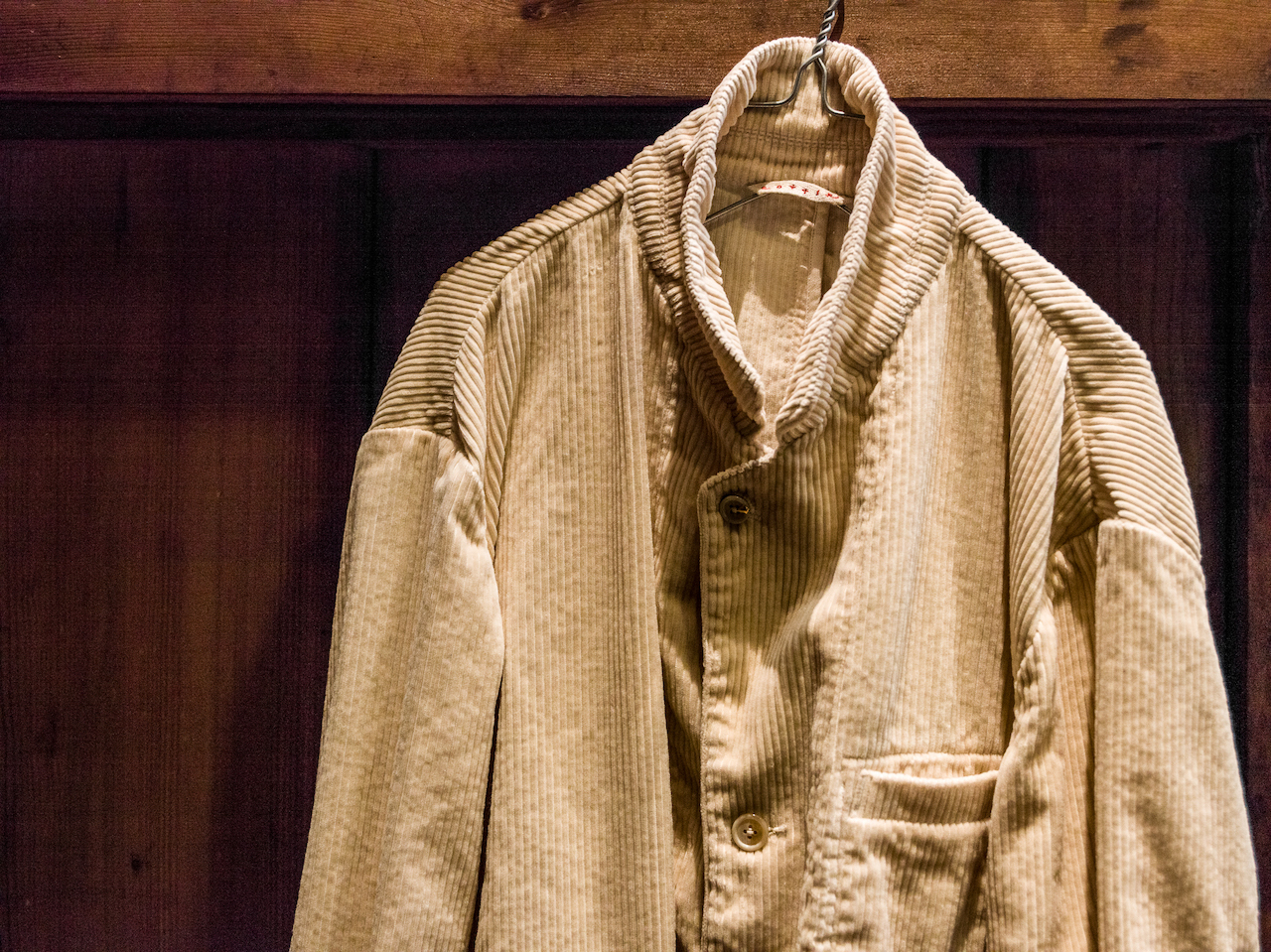
軽く、やわらかく、そしてなめらかで、一般的なコーデュロイが持つ重さや硬さ、季節性の強さとはまったく異なる特徴を持っています。
秋冬の素材として理解されがちなコーデュロイでありながら、一年を通した着用を可能にするほどの軽やかさがあり、それでいて表情にはしっかりと奥行きがある。
単に風合いが良い、というだけでは言い表しきれません。
これは、多くの人が“コーデュロイ”という言葉に対して持っている常識そのものを、根本から組み替えてくる生地です。
その特異性は、後加工や表面的な装飾によって生まれたものではありません。
綿100%という混率でありながら2種類のコットンを使い、さらに組織設計そのものにまで踏み込み、世の中にない規格として構想された完全オリジナルの生地。
つまりCOTTLEのコーデュロイは、既存の素材を少し新しく見せたものではなく、誰もが知るオーセンティックな素材の表情を保ちながら、その中身をまったく別のものとして再構築した試みだと言えます。
実際にこの生地に触れた方の中には、「コーデュロイのイメージが変わった」と話される方も少なくありません。
これまでコーデュロイを苦手としていた方が、この生地のコレクションを手にすることもあります。
それは単なる好みの問題ではなく、この生地が従来のコーデュロイとは異なる地点で成立していることの表れでもあるように思います。
そしてそこには、COTTLEとカネタ織物が協業することでしか辿り着けなかった、ものづくりの思想が込められています。
なぜ、これほどまでに見慣れた素材の中に未知の風合いを生み出すことができたのか。
その背景を理解するためには、まず前提として、コーデュロイという生地がそもそもどのような構造を持つのかを見ていく必要があります。
誰もが知る生地でありながら、実はコーデュロイは非常に特殊な成り立ちを持ちます。
その特殊性を象徴しているのが、表面にあらわれる “畝” です。
多くの生地が比較的フラットな表面を持つのに対して、コーデュロイには明確な起伏があります。
あの立体的な畝は、単なる見た目の特徴ではありません。
コーデュロイという生地が、他の織物とは異なる発想と工程の上に製作されていることを示す象徴的な要素でもあります。
ここからはまず、そのコーデュロイの構造そのものについて整理しながら、COTTLEの “GOLDEN WHEAT FIELD CORDUROY” が、なぜこれほど特別な風合いを持つものなのかを紐解いていきたいと思います。
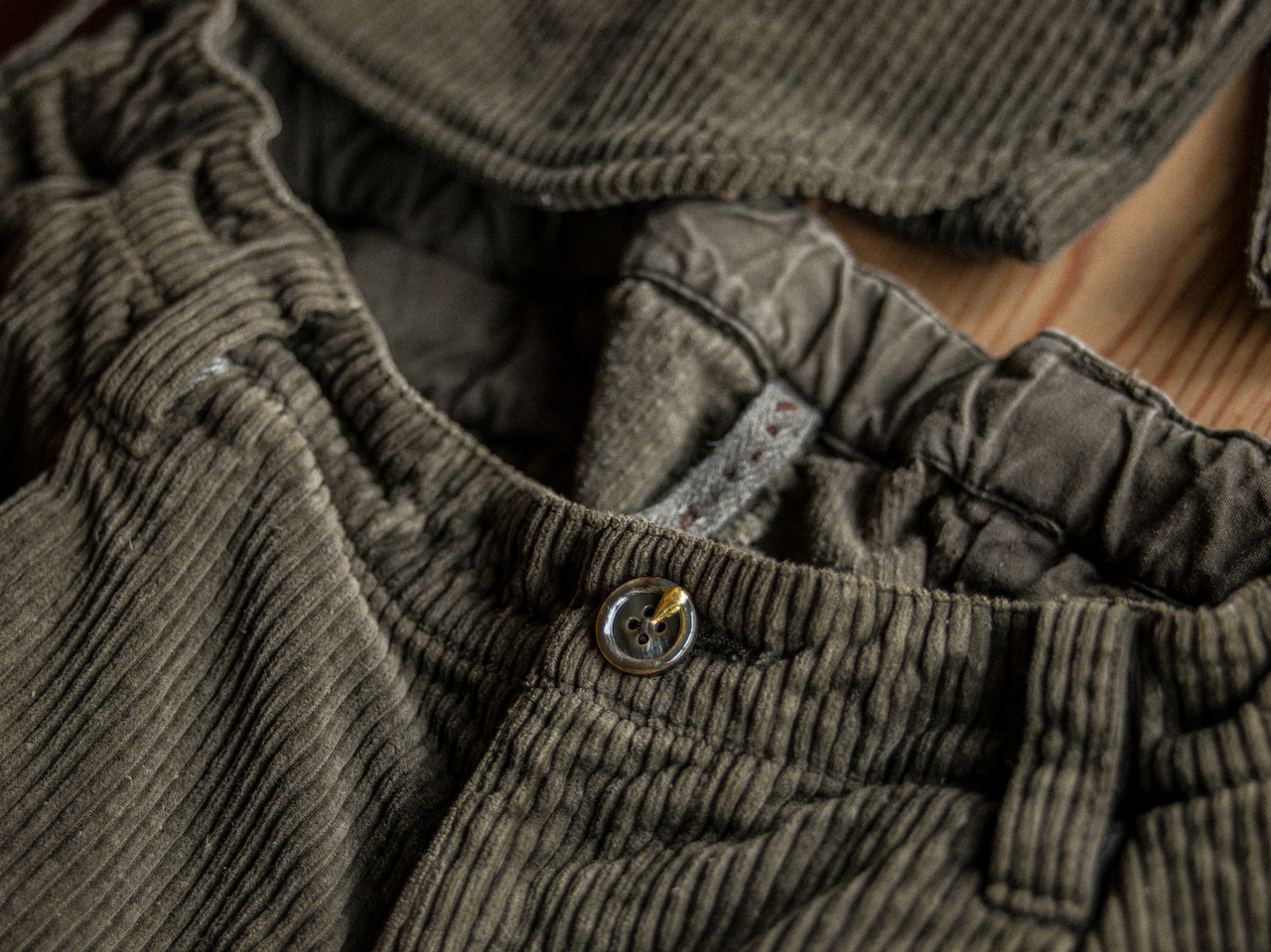
[日本製コーデュロイの背景]
コーデュロイの起源は、ヨーロッパにあります。
現在では中国製の安価なものが流通の多くを占める一方、日本における代表的な産地として知られているのが遠州です。
そして、日本におけるコーデュロイの成り立ちは、非常に示唆に富んでいます。
日本に最初に伝わった際、そこにもたらされたのは、製法でもなければ、技術を伝える職人でもなかったといいます。
渡ってきたのは、ドイツから届いた一枚の生地だけでした。
つまり日本のコーデュロイづくりは、完成された技術の移転として始まったのではなく、目の前にある一枚の生地を手がかりに、それをいかに再現するかという、極めて手探りな試行錯誤から始まったのです。
レシピもなければ、機械の条件も、工程の正解もありません。
そうしたなかで、日本の職人たちは生地を読み、構造を推し量り、工夫を重ねながら、少しずつ独自の技術として育て上げていきました。
その果てに生まれたのが、海外のコーデュロイとは異なる、日本独自の発展を遂げたコーデュロイです。
遠州の現場では、こうした日本製コーデュロイを「コール天」と呼びます。
この呼称の違いは、単なる言い換えではありません。
同じコーデュロイであっても、海外製のものとは工程も規格も異なる、日本独自の成り立ちを持つからです。
そして何より重要なのは、その風合いを支えているのが、他の織物とは明らかに異なる手数の多さであるということです。
コーデュロイは、織り上げた時点ではまだ完成していません。
特徴的な畝は、織物の表面に最初から完成形として現れるものではなく、その後に重ねられるいくつもの工程を経て、ようやく姿を見せます。
一般的な生地に比べて、倍以上の手間がかかるとも言われる理由は、まさにこの点にあります。
ここからは、日本製コーデュロイの要となる工程を、順を追って見ていきます。
一見すれば馴染み深い生地の奥に、どれほど特異な製造背景が潜んでいるのか。
その特殊性が、少しずつ見えてくるはずです。
・カッティング
まず、コーデュロイが持つ最も特徴的な部分である、畝について触れておきます。
あの立体的な膨らみは、織り上がった瞬間に完成しているわけではありません。
コーデュロイ用に織られた生地には、後に畝となる部分として、表面に浮いたパイル糸が並んでいます。
その浮いた糸を一本ずつ切り開いていくことで、はじめてコーデュロイ特有の起毛した表情が現れてきます。
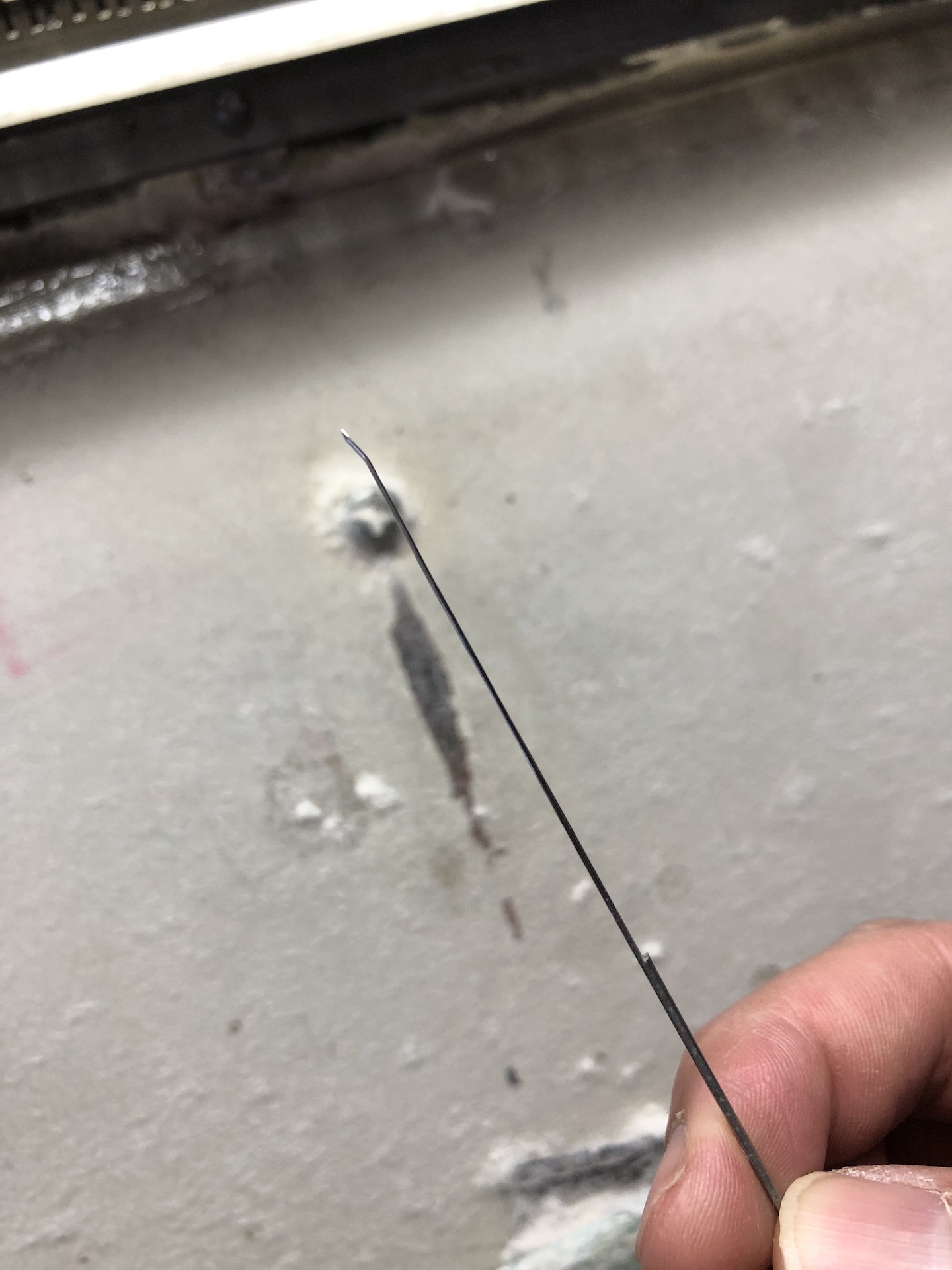
ガイドニードル
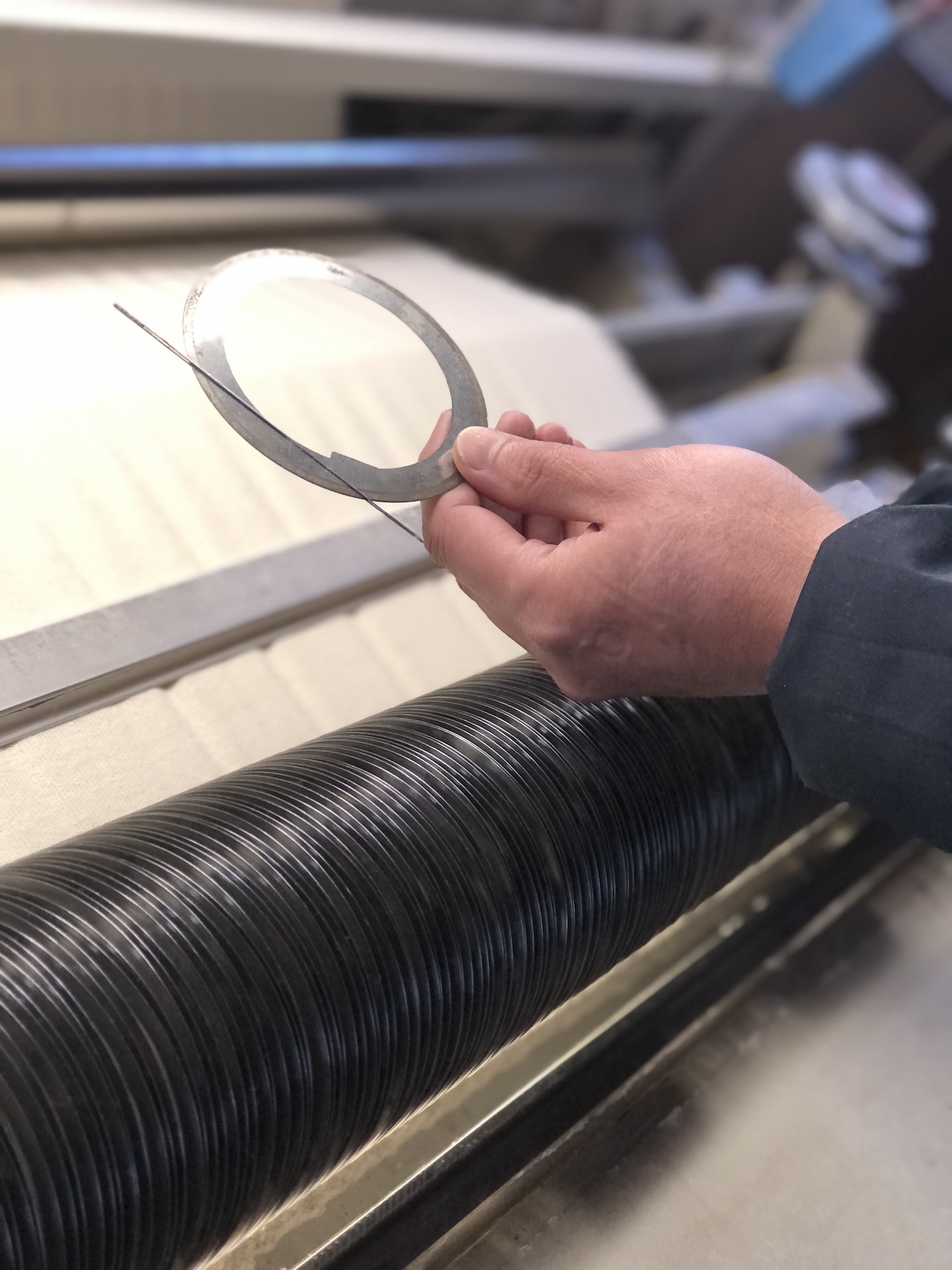
ガイドニードルとカッター
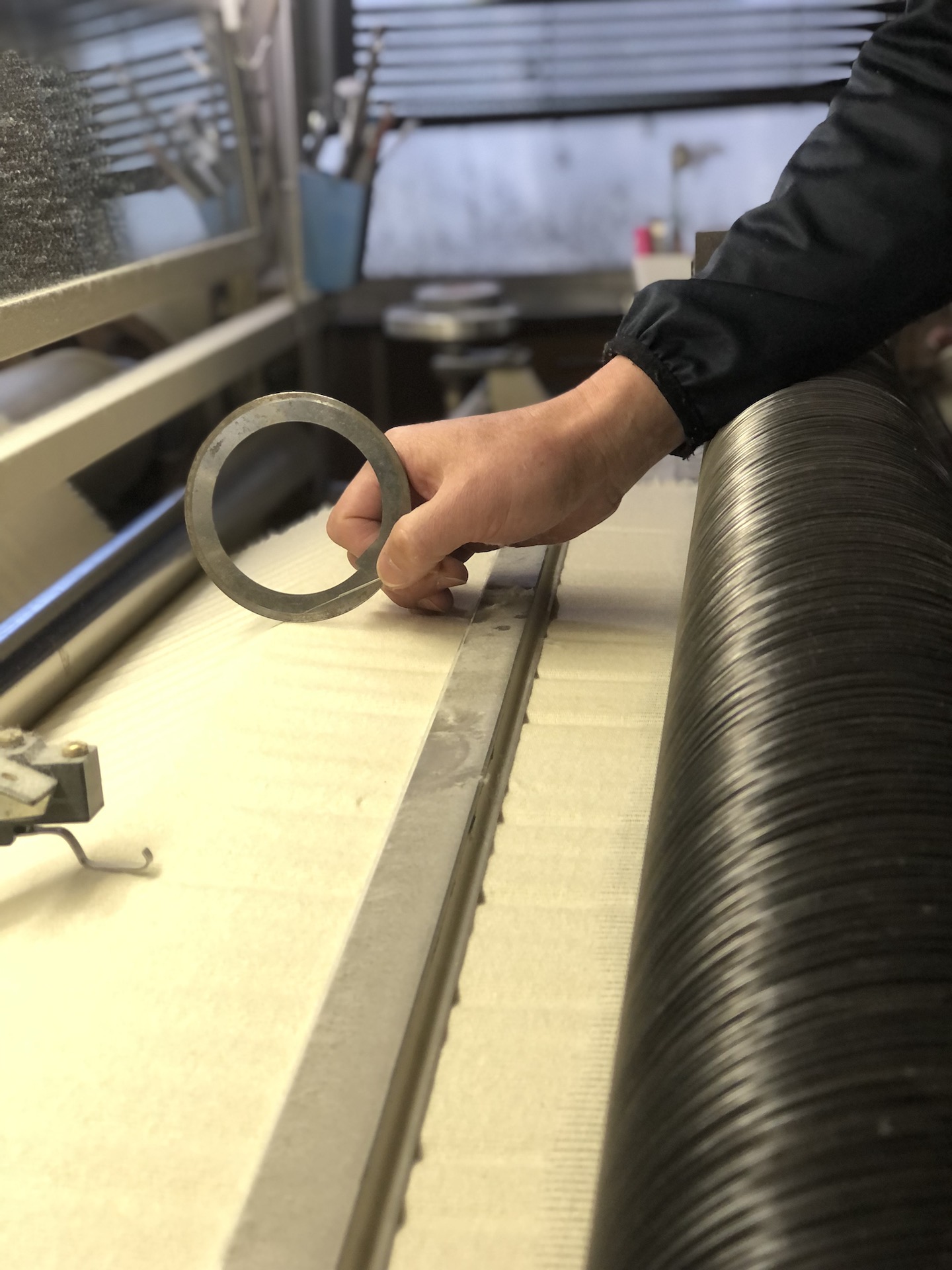
一つのカッターで一つのパイルがカットされる
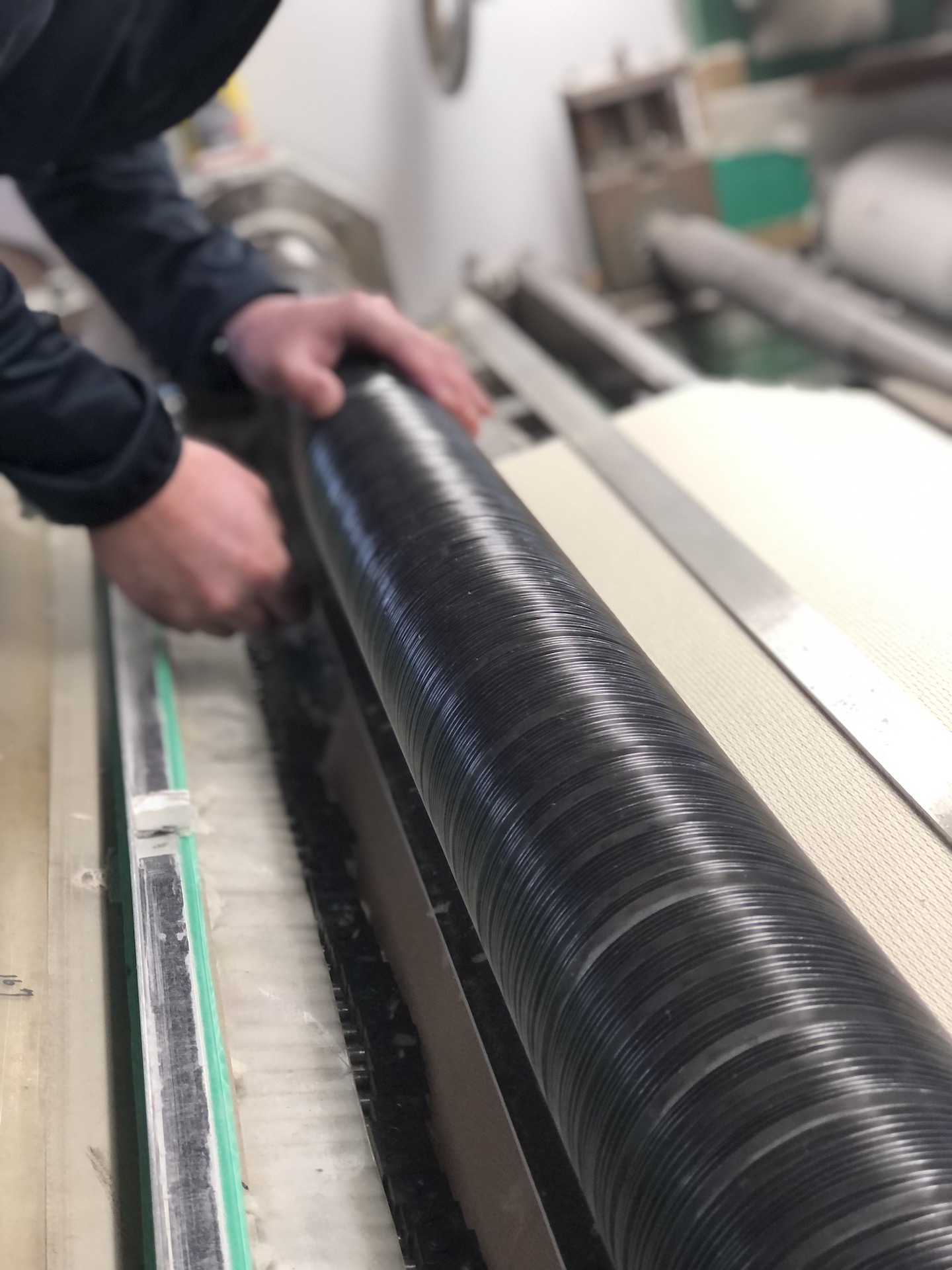
カッティング前のカッターが並ぶ様子
その最初の要となるのが、「カッティング」と呼ばれる工程です。
ここでは、ガイドニードルとカッターが対になった専用の道具を用いて、生地表面に浮いたパイル糸だけを切っていきます。
ガイドニードルを一つひとつのパイル部分に手作業で通し、その溝に沿ってカッターを走らせることで、不要な部分を傷つけることなく、必要な糸だけを断っていきます。
言葉にすれば簡潔ですが、実際には、生地の繊細なパイル箇所を読み解き、最適なガイドニードルとカッターを用いるこの非常に細かな作業を、ひたすら丁寧に繰り返していくことになります。
コーデュロイの畝は、織りだけで生まれるものではありません。
まず切ること。その工程を経てはじめて、あの独特の表情への入口が開かれていきます。
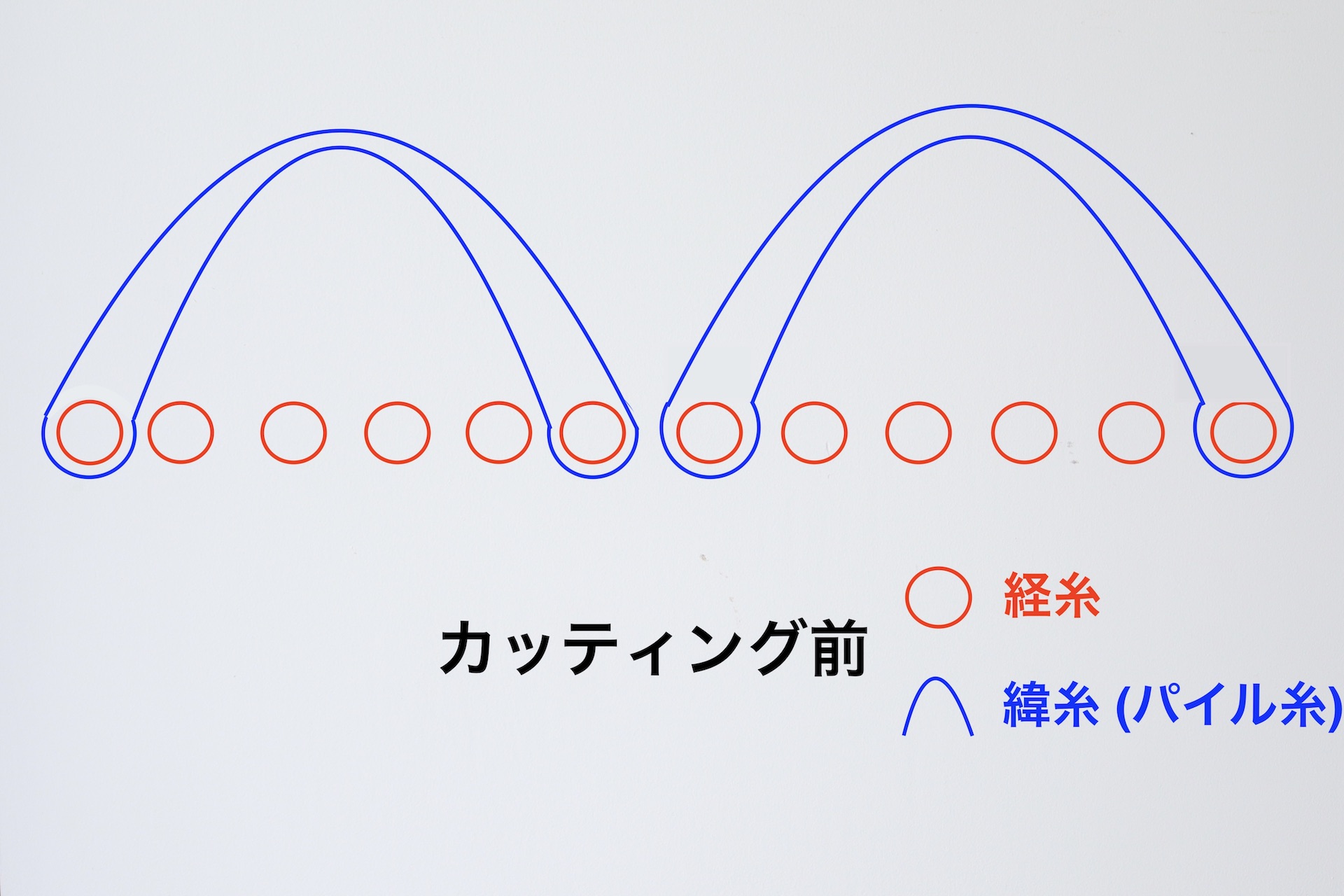
カッティング前の構造
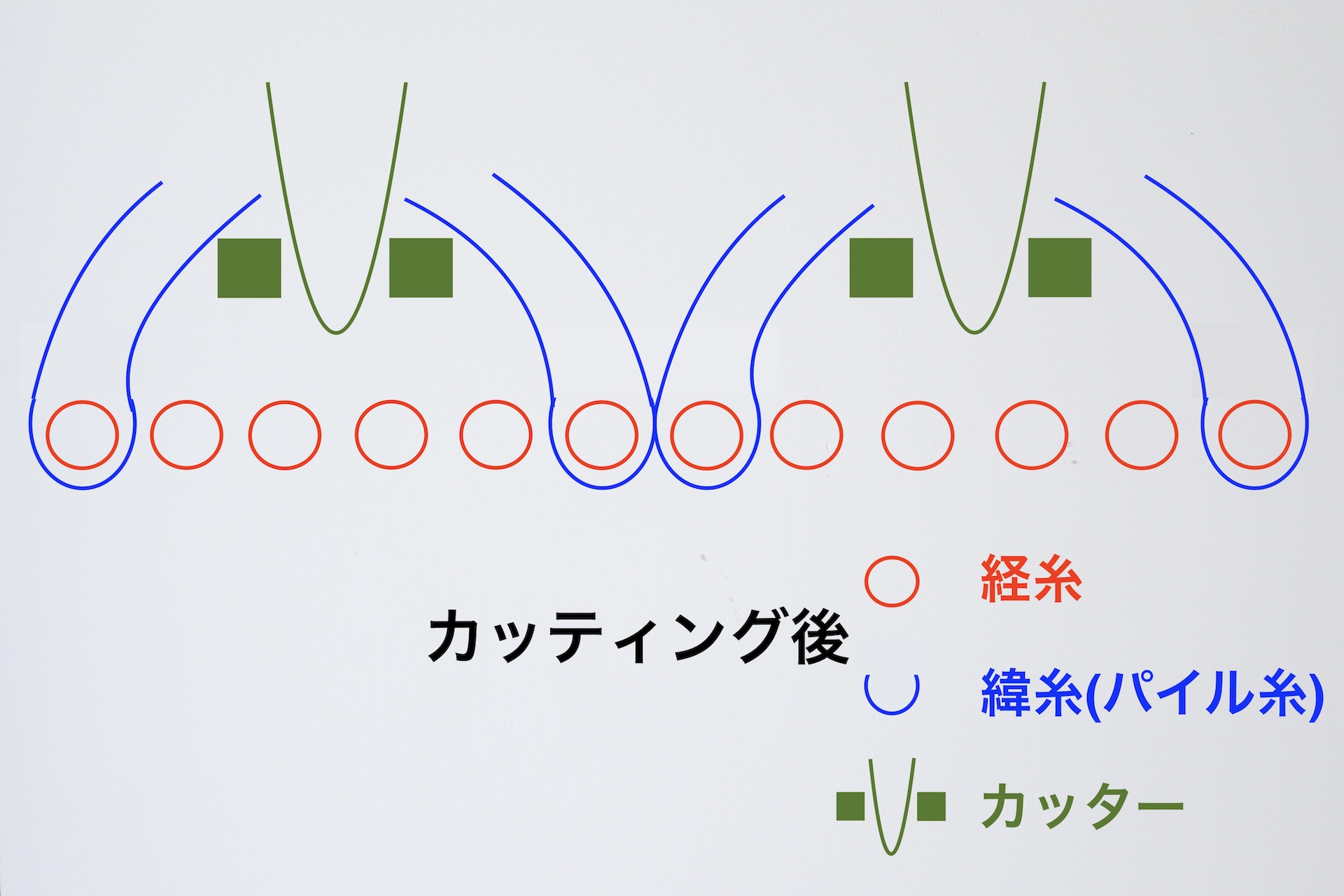
カッティング後の構造
・糊抜き工程
カッティングを終えた生地は、次に仕上げ加工へと進みます。
そしてこの仕上げ加工こそ、日本製コーデュロイの風合いを支える、きわめて重要な領域でもあります。
特筆すべきなのは、この一連の工程を国内で担っているのが、現在では磐田産業ただ一社のみだという点です。
日本製コーデュロイの品質は、こうした限られた現場によって支えられています。
最初に行われるのが、糊抜きです。
これは、製織前に糸へ施された糊を落とす工程ですが、コーデュロイにおいては単なる前処理にはとどまりません。
カッティングを終えた生機を、80〜90度ほどの高温の湯に浸しながら、生地をロープ状にしてウインスという機械に通し、水の中で何度も揉み込んでいきます。
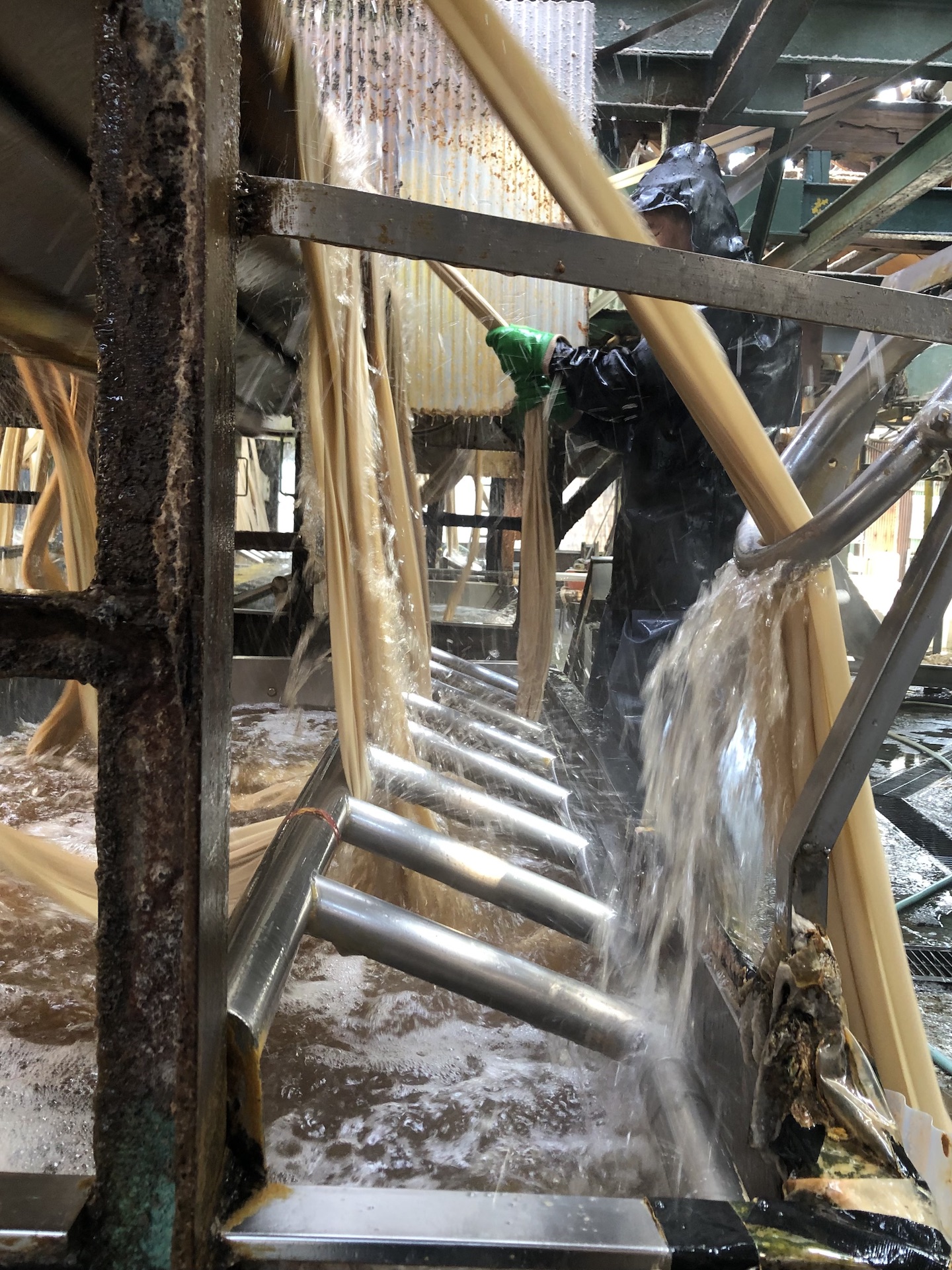
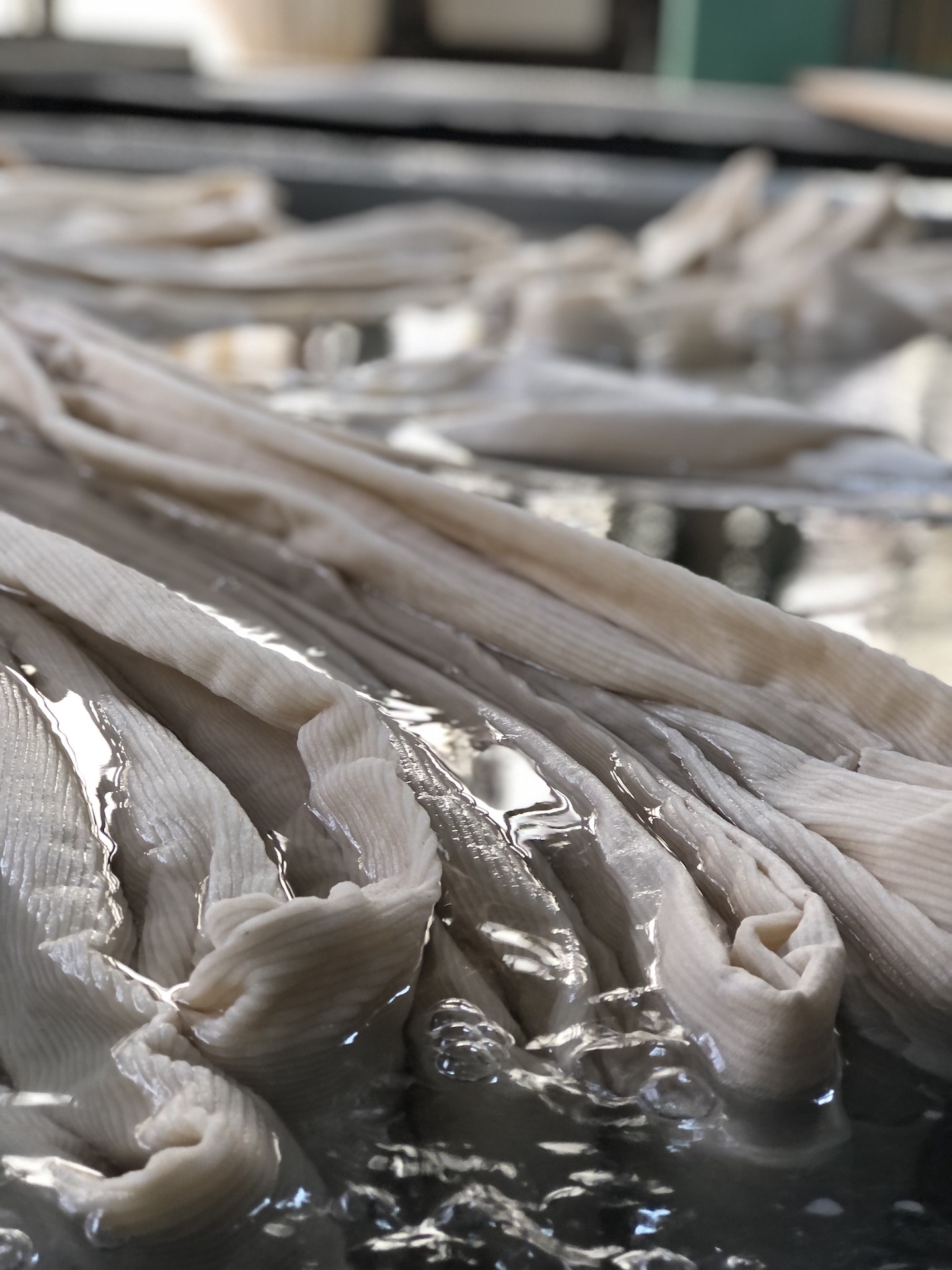
この方法は、日本独自のものだとされています。
大量の水の中で生地を泳がせるように動かしながら、時間をかけて糊を落としていくのです。
その距離は、実に5000メートルにも及ぶといいます。
遠州が豊かな水資源に恵まれた土地であることは、こうした工程において決定的な意味を持っています。
水を惜しまず使い、生地に無理な力を加えず、じっくりと揉み込んでいくこと。
その積み重ねが、コーデュロイ特有のふくらみややわらかさを形づくっていきます。
カネタ織物の太田さんが、この工程を日本のコーデュロイの「肝」と表現されるのも頷けます。
それほどまでに、この糊抜きは風合いの根幹を左右する工程なのです。
・エアーリング
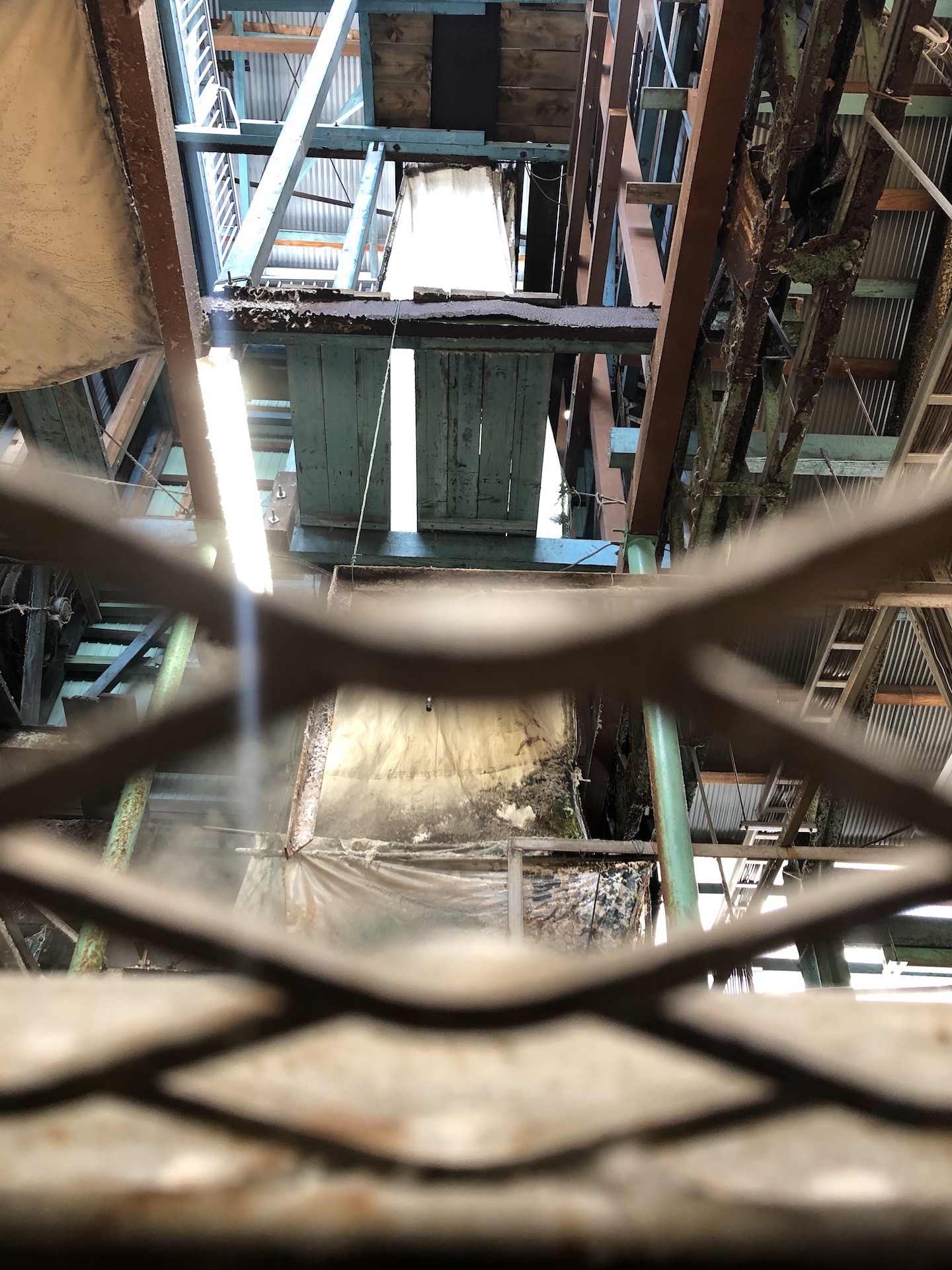
糊抜きによって水を含み、ロープ状に揉み込まれた生地は、その過程でねじれを帯びます。
そのねじれを、無理なく元の状態へと戻していくために行われるのが、エアーリングです。
これは、生地をゆっくりと高所まで持ち上げ、重力と空気の力を使いながら、自然に近いかたちで落ち着かせていきます。
その高さは30メートルにも及びます。
急激な負荷を与えるのではなく、生地自身が持つ回復力を引き出すようにして、少しずつ整えていく。
その姿は、どこか天日干しを思わせます。
これだけの高さを誇る設備はきわめて特殊で、他の染工場でもほとんど見られないと言われています。
ですが、こうした大掛かりな設備と、時間を惜しまない工程こそが、日本製コーデュロイの質を支えているのです。
糊抜きで揉み込み、エアーリングで戻す。
そのなかで、生地は単に形を整えられるのではなく、風合いそのものを深めていきます。
・乾燥
ねじれを戻した生地は、次に乾燥工程へと入ります。
しかしここでも、コーデュロイは一般的な生地と同じ方法では扱えません。
コーデュロイは厚みを持ち、さらに畝という立体的な構造を備えています。
そのため、大型の乾燥機に入れて一気に乾かすような方法では、均一に仕上げることが難しいのです。
畝の立ち方にムラが出れば、コーデュロイとしての表情そのものが崩れてしまいます。
そのため磐田産業では、100度を超える熱を持つ32本ものローラーと無数のシリンダーを用いながら、生地をまっすぐ、均一に保った状態で水分を飛ばしていきます。
乾燥というよりも、表面の表情を壊さず、整えながら仕上げていく工程と言ったほうが正確かもしれません。
コーデュロイにとって、畝の均一さは単なる見た目の問題ではありません。
その生地が持つ品位や完成度に直結するものです。
だからこそ、一見すると地味にも思える乾燥工程にまで、専用の方法と設備が必要になるのです。
・毛焼き
一連の流れの中で、糊抜き、エアーリング、乾燥を経たコーデュロイは、この時点でようやく、多くの人が思い描くコーデュロイらしい姿へと近づいてきます。
畝が立ち上がり、表面にはあの独特の表情が現れてきます。
ただし、まだ完成ではありません。
この段階の生地には、パイル部分に不要な毛羽が残っていることが多くあります。
それを取り除き、表面を整えるために行うのが、「毛焼き」です。
一般的な生地であれば、バーナーで表面を炙る方法がとられることが多いですが、コーデュロイでは、熱した大きな鉄の棒の上を速いスピードで生地が通過していくという、独特の方法が用いられます。
毛羽だけを的確に焼き切り、畝の表情を損なうことなく整えていくための方法です。
実際の現場では、不要な毛羽が燃えることで、生地の表面に火が走る光景が生まれます。
それは、コーデュロイという生地の特殊性を、そのまま可視化したような風景でもあります。
ただしこの毛焼きは、生地に焦げ色がつくため、通常は染色を前提としたコーデュロイに対して施される工程でもあります。
ここでCOTTLEの生地は、さらに独自の条件を持ち込みます。
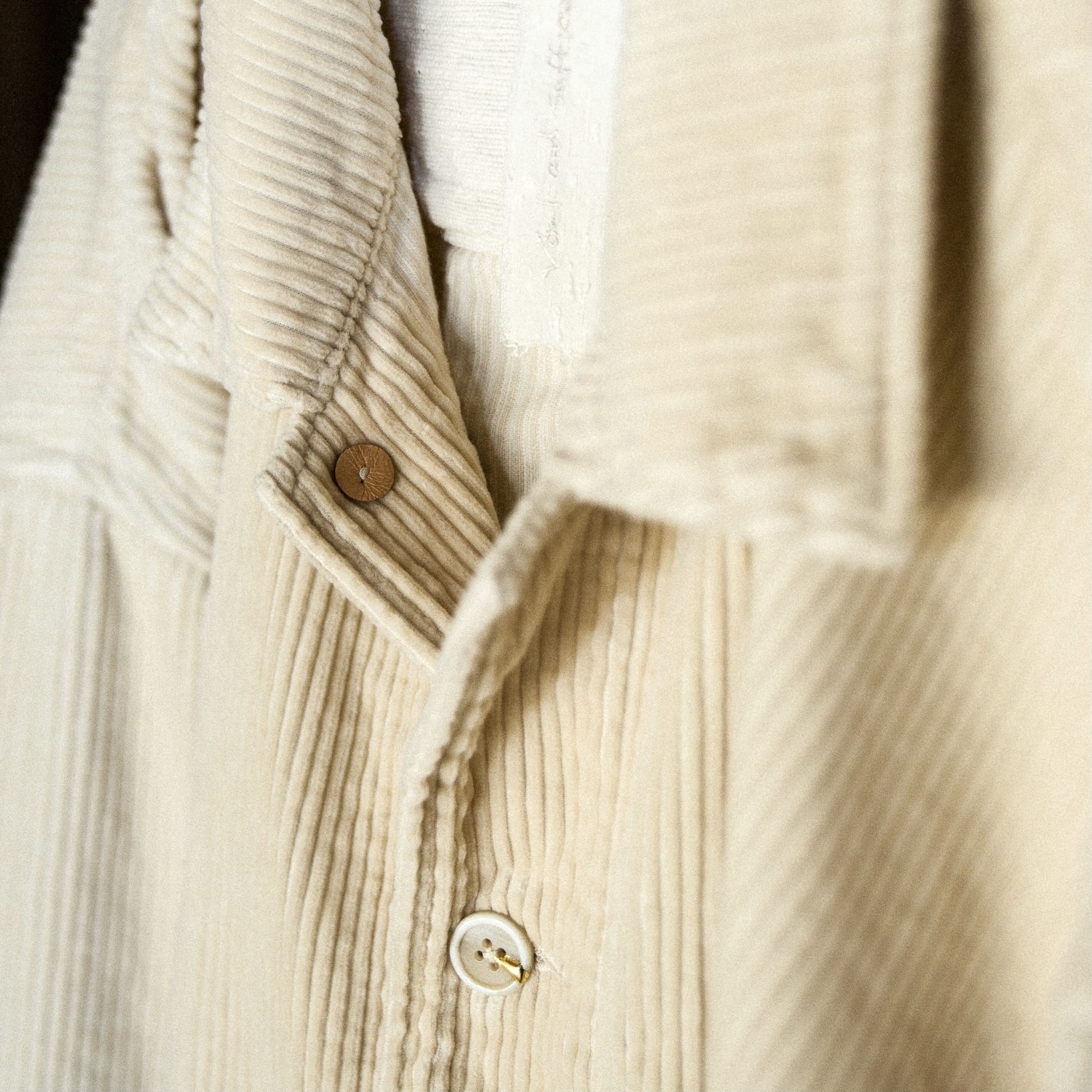
COTTLEには、WHEAT ECRU という無染色の色が存在します。
天然そのものの色合いを活かすこの仕様では、通常の毛焼きを前提にした仕上げが成立しません。
つまりCOTTLEのコーデュロイは、一般的なコーデュロイの工程をなぞるだけでは完成しないのです。
その色と風合いを両立させるために、通常とは異なる判断と工夫が求められます。
・エアータンブラー
最後に行われるのが、エアータンブラーによる仕上げです。
その名の通り、強い風の力を使って生地を叩き、ほぐし、コシを抜きながら、やわらかさとふくらみを引き出していく工程です。
風速は500メートルを超えるとも言われ、その空気の力によって、生地は内側から膨らむような、独特のやわらかさを帯びていきます。
同時に、畝もいっそう際立ち、コーデュロイとしての表情が最終的に整えられていきます。
仕上げ加工にはさまざまな方法がありますが、このエアータンブラーは遠州ならではの方法として知られています。
特に、シャトル織機で織られた生地との相性がよく、生地に空気を含んだような、ふっくらとした風合いをもたらします。
表面だけをやわらかく見せるのではなく、生地全体の風合いそのものを変えていくような仕上げです。
こうして見ていくと、コーデュロイとは、単に畝のある生地ではないことがわかります。
切り、揉み、水を含ませ、戻し、整え、焼き、そして風で仕上げる。
いくつもの工程を重ねながら、少しずつ表情を引き出していく生地なのです。
しかし、COTTLEのコーデュロイの特異性は、日本製コーデュロイの延長線上にあるだけではありません。
その前提の上で、さらに生地組織そのものを組み替えている点にあります。
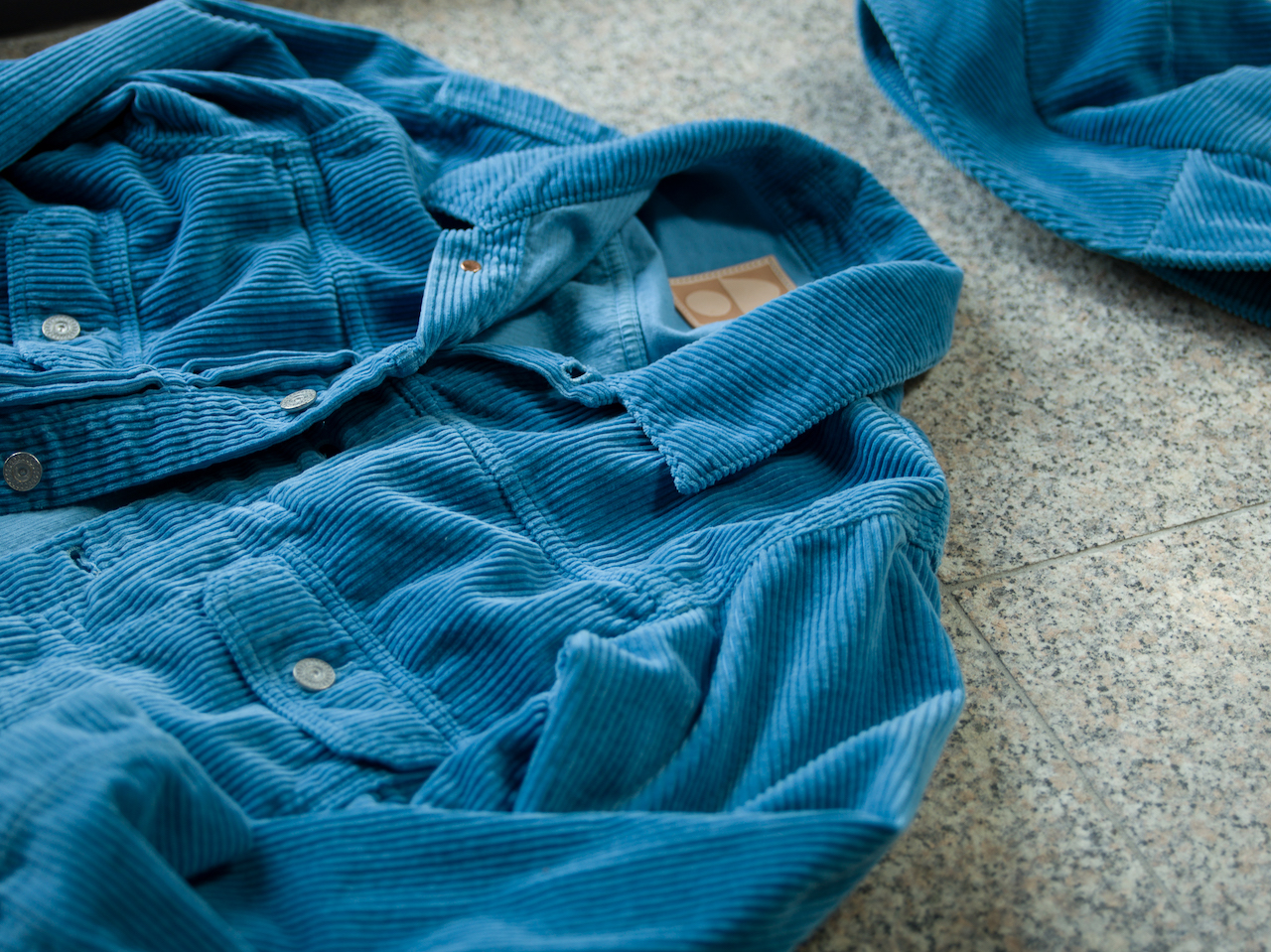
[COTTLEのコーデュロイの特異性]
コーデュロイという生地は、既存規格の蓄積がきわめて厚く、日本国内においてさえ、新たな組織を開発することは極めて稀であると、カネタ織物の太田さんは語ります。
その理由は明快です。
コーデュロイには、前述したカッティングや起毛をはじめとする複雑な工程が不可欠であり、新たな規格を立ち上げるには、それに見合うだけの生産量と継続性が求められます。
半年に一度の企画として単発的に生産するだけでは、どうしてもコストが見合いにくいのです。
その意味で、COTTLEというブランドのあり方は、きわめて重要な条件を備えています。
半年ごとの一過性のコレクションとしてではなく、開発した生地そのものを核として、シリーズとして展開していく。
そうした持続性があるからこそ、通常では成立しにくい独自規格のコーデュロイにも踏み込むことができます。
そしてカネタ織物もまた、既存の定番品が流通の中心であり続ける状況に甘んじることなく、あえて難しい開発へと踏み込もうとする機屋です。
この両者が交わったところに、 “GOLDEN WHEAT FIELD CORDUROY” の出発点があります。
COTTLEが目指したのは、
「軽く、やわらかく、それでいて高級感のある光沢と耐久性を備えた、オーセンティックな畝のコーデュロイ」 でした。
しかし、それは言葉で掲げるほど容易なことではありません。
一般的に、コーデュロイに軽さとやわらかさを求めれば、耐久性や光沢は失われやすくなります。
反対に、耐久性を高め、光沢のある表情を得ようとすれば、生地は高密度になり、重さや硬さを持つことになります。
さらに言えば、コーデュロイの畝は、単に毛羽が立っていれば成立するものではありません。
カットされたパイル糸同士が摩擦によって支え合うことで、繊細な畝は保たれています。
軽さとやわらかさを求めながら、畝の美しさと耐久性まで損なわずに成立させるためには、組織設計の段階から根本的な工夫が必要になります。
ただし、この設計は、構想すればそのまま成立するようなものではありませんでした。
当初の試作では、新しい組織によってコーデュロイの畝が美しい円形に立ち上がらず、狙っていた表情に届かなかったといいます。
さらに、パイルの繊細さと高級感を表現するために、やわらかく細いアルティメイトピマを用い、そのうえで毛量を確保するために緯糸の密度を高めると、今度は非常に強い織り縮みが発生しました。
特に、シャトル織機では、製織時に耳へ負荷がかかりやすい構造を持っています。
そのため、織り縮みによって生地幅が想定以上に変化すると、両耳の糸に強い力がかかり、糸切れが起こりやすくなってしまいます。
つまり、目指す風合いに近づくほど、今度は“織ることそのもの”の難易度が上がっていったのです。
それでも試作を重ねた末にたどり着いたのが、緯糸の組織のみを高密度にし、地の組織部分はあえて低密度に設計する という、完全オリジナルの織り組織でした。
しかも、その構想は素材選定においても徹底されています。
この生地は綿100%でありながら、2種類のコットンを使い分けて構成されています。
経糸:シャンカールコットン(インド産超長綿)
緯糸:アルティメイトピマコットン(世界最高級品種)
生地全体に占める割合で見れば、地組織を担う経糸はおよそ3割、緯糸はおよそ7割を占めます。
つまりこのコーデュロイは、表面に現れる畝の表情だけでなく、生地全体の設計思想そのものが、新たに組み立てられているのです。
そして、この規格を現実のものとして織り上げるうえで欠かせなかったのが、カネタ織物の保有するシャトル織機です。
そもそも、シャトル織機で織られたコーデュロイ自体が、現在ではきわめて希少な存在です。
ただし、ここで重要なのは、単に「時間をかけて織っている」という事実ではありません。
太田さんは、シャトル織機について、「時間をかけたから良いものなのではなく、時間をかけることでしかできない調理方法である」という考え方が大切だと語ります。
この言葉は、COTTLEのコーデュロイを理解するうえで重要です。
実際にこの生地を見ると、それが単に手間をかけてつくられたものではなく、目指す風合いのためにゼロから規格された生地であることが、はっきりと伝わってきます。
時間は価値そのものではなく、必要な風合いへと至るための方法として用いられているのです。
ここで、比較のために、日本製の一般的なコーデュロイと、COTTLEの “GOLDEN WHEAT FIELD CORDUROY” を見比べてみます。
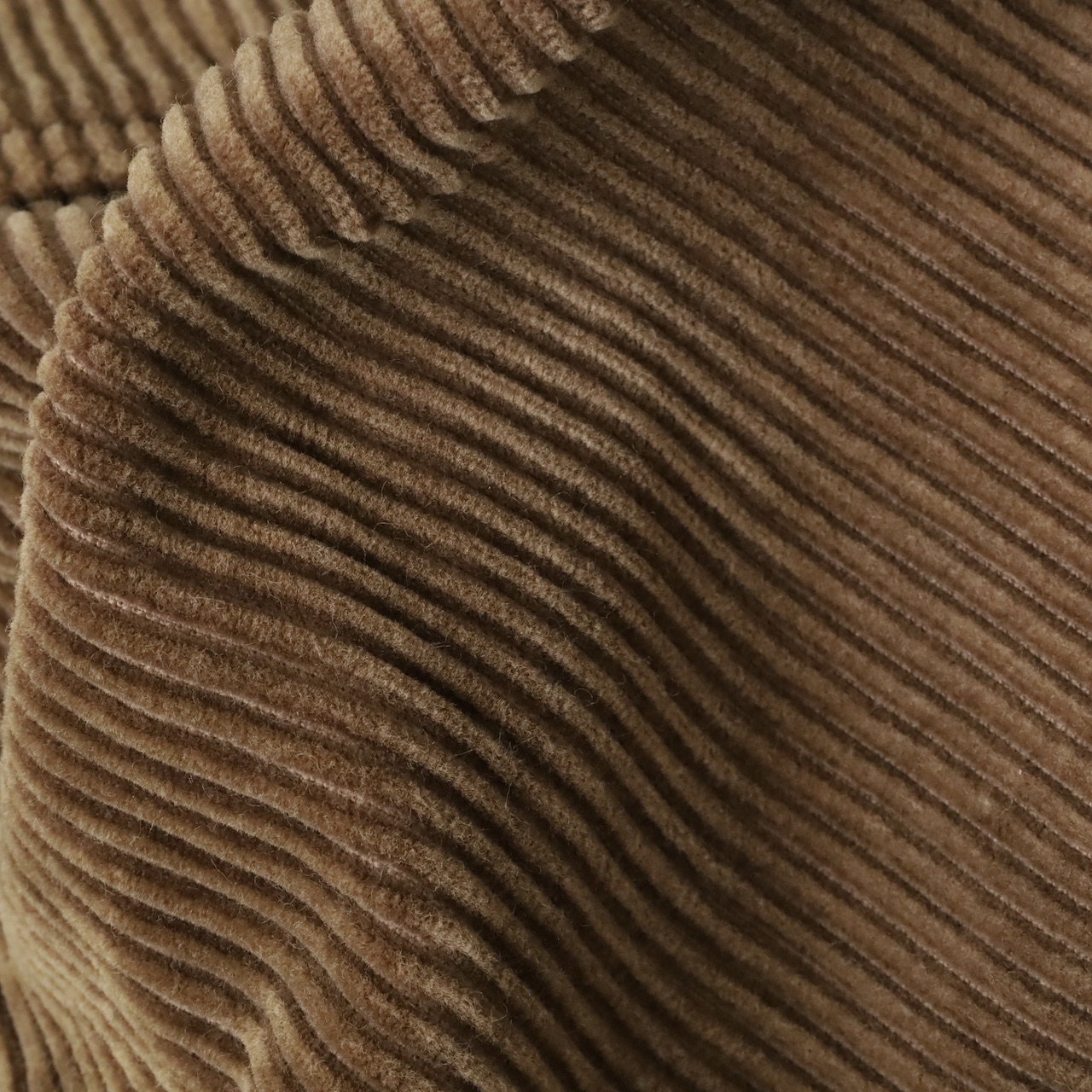
日本製コーデュロイ
こちらは、一般に広く秋冬素材として認知されている、日本製コーデュロイです。
適度なハリとコシがあり、重厚感を備えながら、整った繊細な畝が現れています。
いわば、多くの人がコーデュロイと聞いて思い浮かべる、ひとつの完成された定番像です。
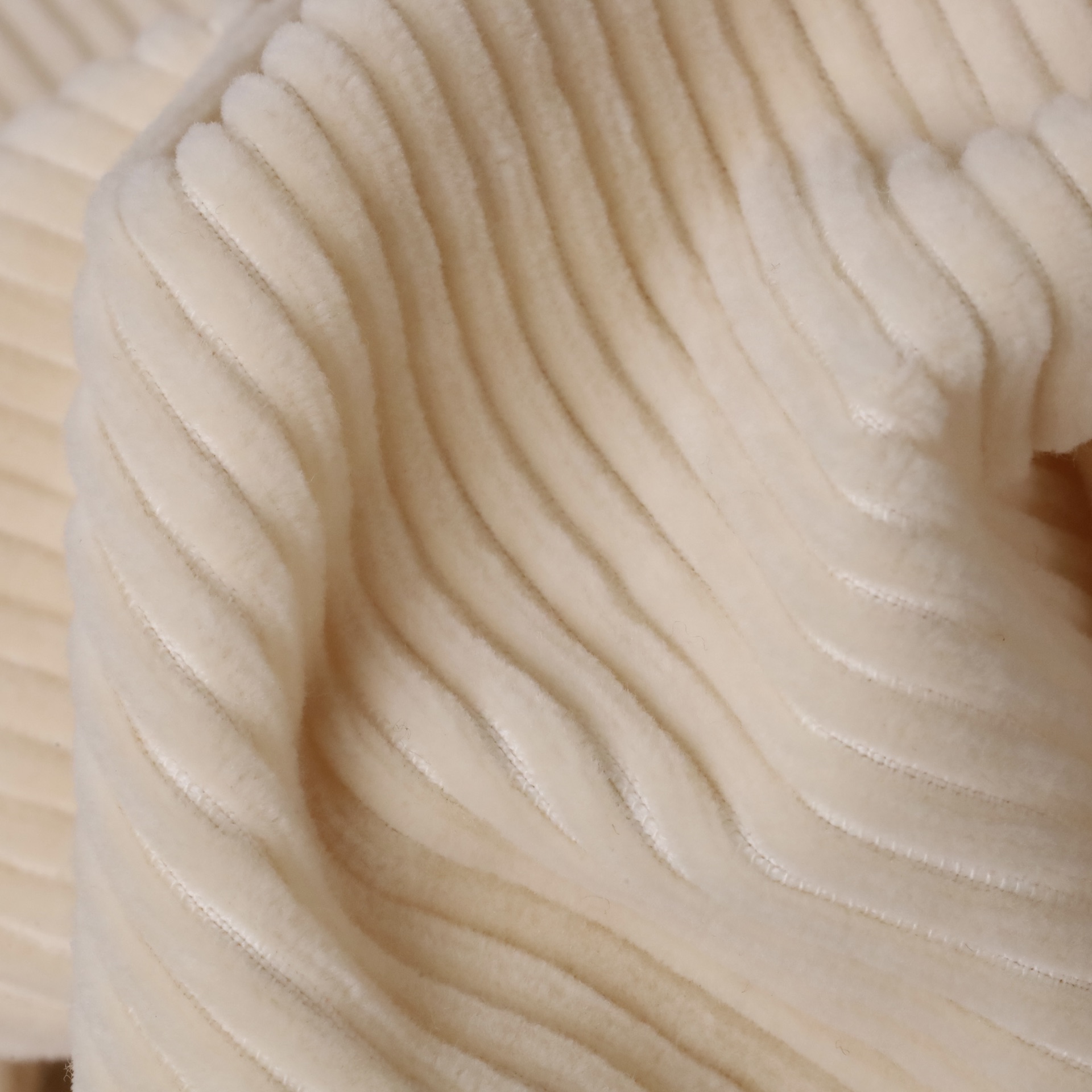
COTTLEのコーデュロイ
対してこちらが、COTTLEの “GOLDEN WHEAT FIELD CORDUROY” です。
畝はより細やかで、表面には繊細な毛羽立ちと光沢があります。
見た目の段階ですでに、一般的なコーデュロイに見られる重さとは異なる、やわらかく膨らみを含んだ表情が感じられます。
そして実際に触れると、その差はさらに明確になります。
これは単に軽いというだけではなく、ふくらみとしなやかさを伴った、まったく別の触感です。
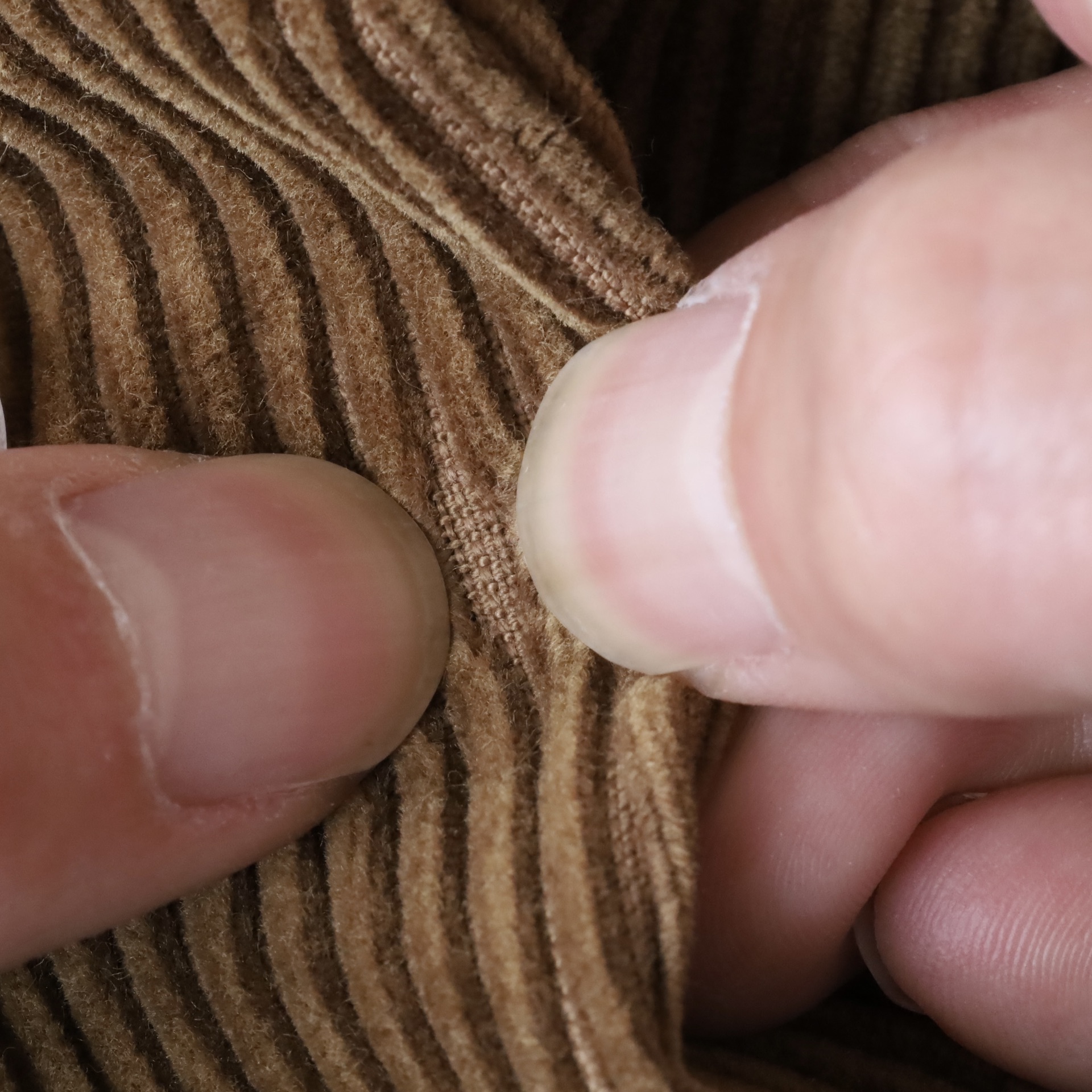
日本製コーデュロイ地の組織
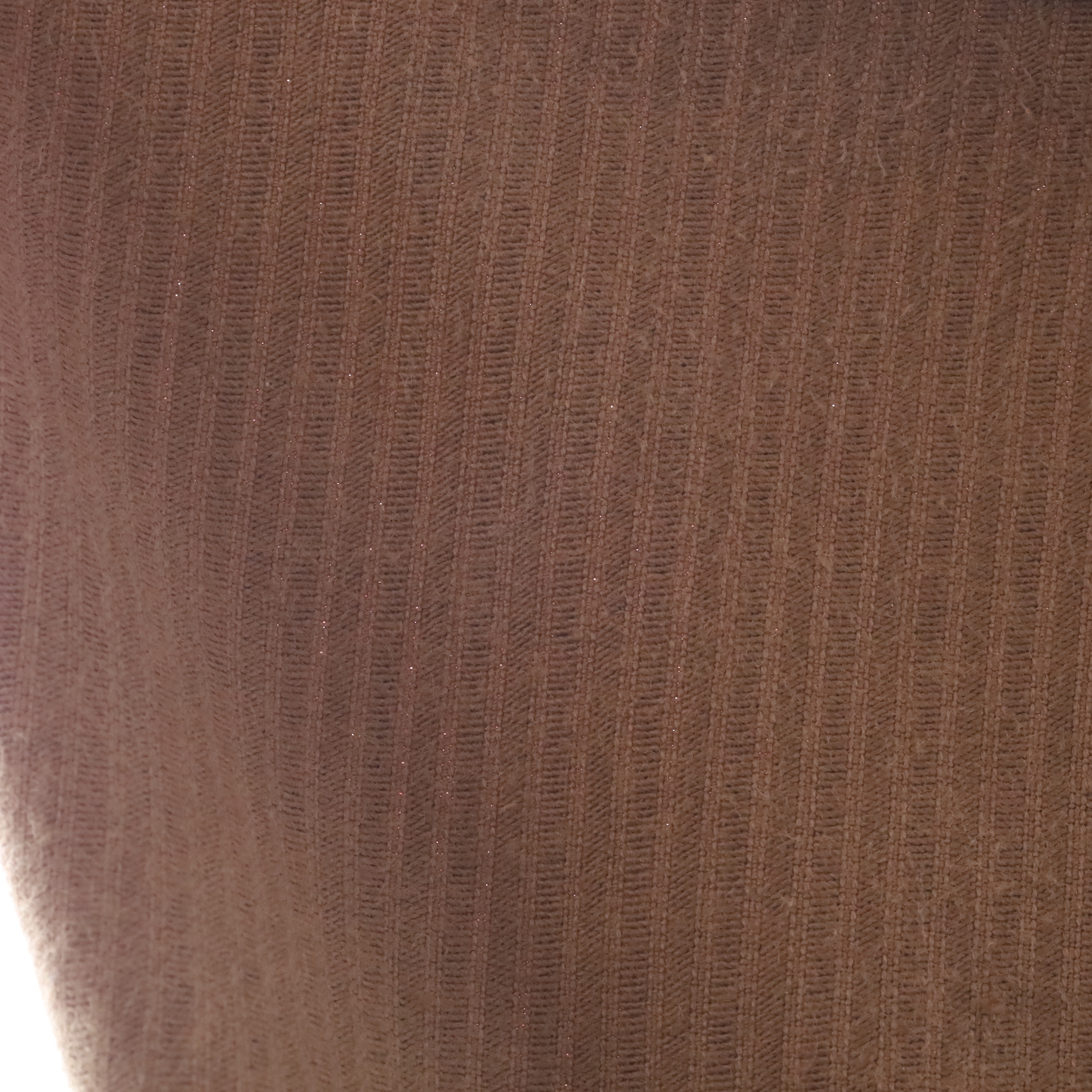
日本製コーデュロイ裏面
一般的なコーデュロイの地組織を見ると、その打ち込みの強さがよく分かります。
表面の畝だけでなく、地の組織に至るまで綿密に詰められており、裏側から光に透かしてみても、光が抜ける箇所はごくわずかです。
白く見えるわずかな点が、かろうじて光の通る部分にあたります。
こうした構造は、高い耐久性と重厚な質感につながっています。
同時に、それがコーデュロイを秋冬の素材として強く印象づけてきた理由のひとつでもあります。
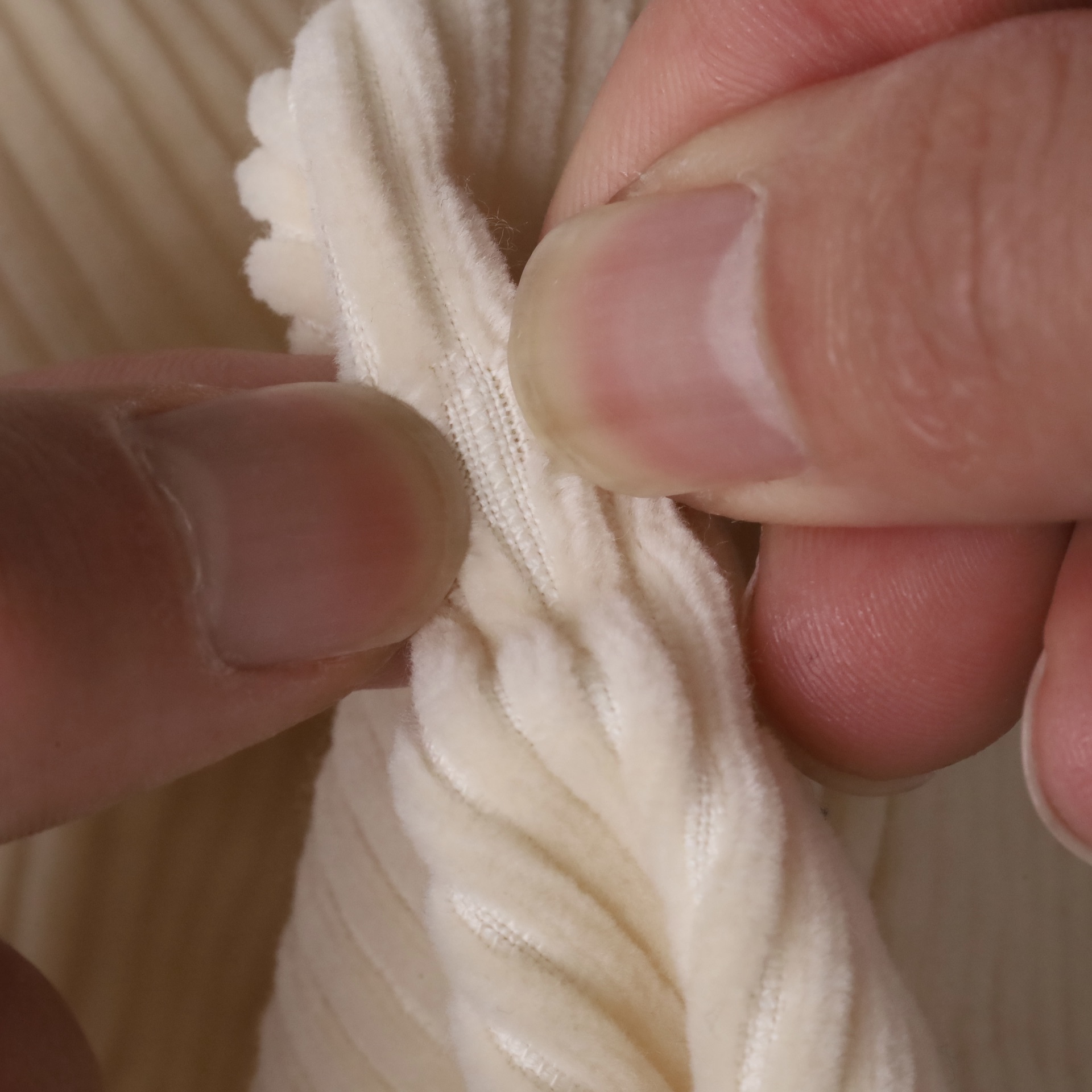
COTTLE コーデュロイ地の組織
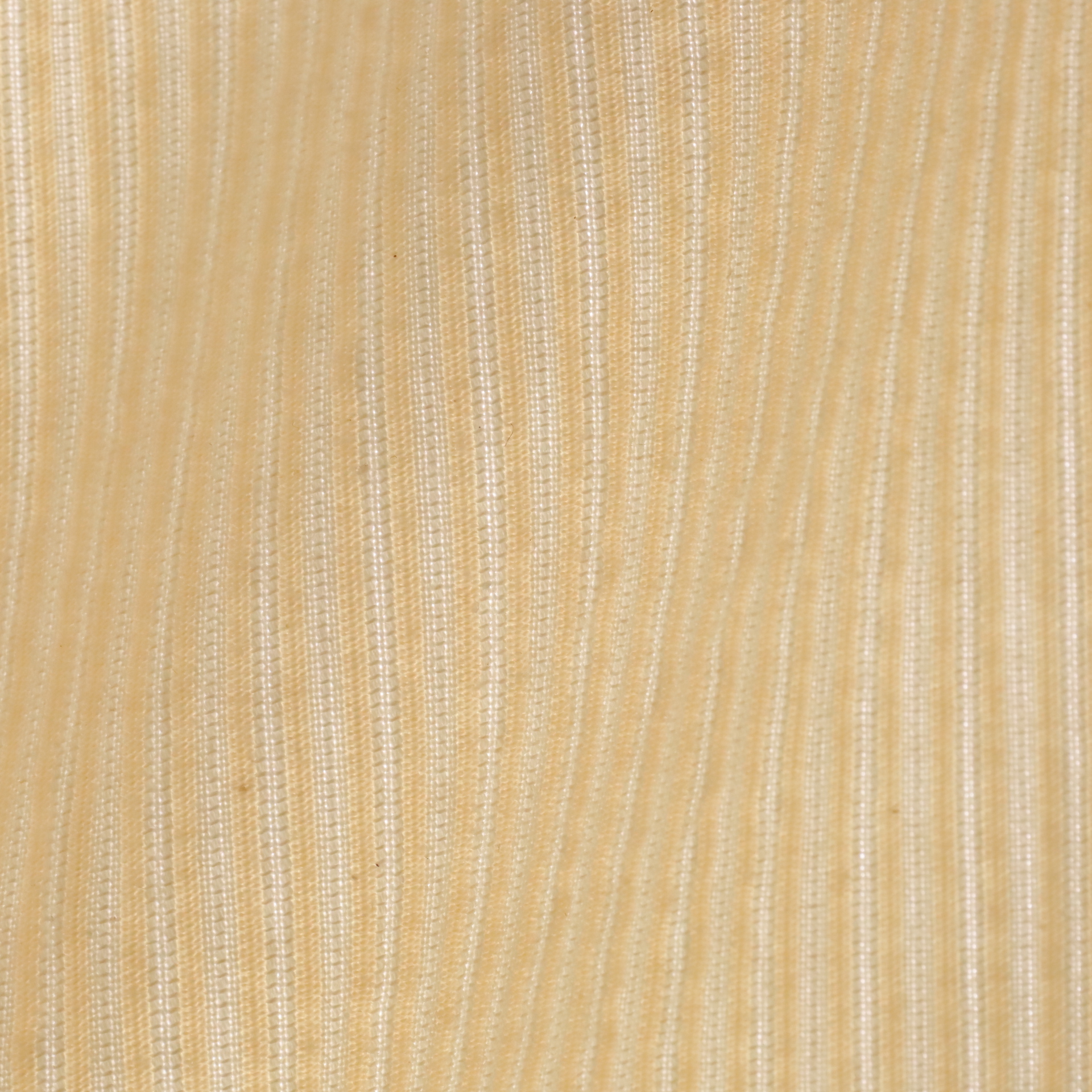
COTTLE コーデュロイ裏側
一方、COTTLEのコーデュロイでは、緻密で高密度な畝に対して、地組織には明確な余白が設けられています。
太い糸と細い糸が組み合わされることで、裏側から光に透かした際には、均一で細やかな隙間が見て取れます。
それは単なる粗さではなく、意図をもって設計された”抜け”です。
繊細で高密度な畝が空気を抱え込み、衣服内の温度を保ちながら、地組織に設けられた細かな通り道が、内部の空気を適度に循環させる。
この生地は、ただやわらかく、軽いだけではありません。
着用したときの心地よさにまで意図を持って設計されています。
その意味で、COTTLEのコーデュロイは、従来のコーデュロイの価値を否定するものではありません。
むしろ、コーデュロイという素材が本来持っていた魅力を深く理解したうえで、その構造をあらためて組み替え、現代において新たな快適性と美しさを与えたものだと言えるでしょう。
だからこそ、 “GOLDEN WHEAT FIELD CORDUROY” は、見た目にはオーセンティックでありながら、触れたときにはまるで別の生地のように感じられます。
多くの人が知っているはずのコーデュロイを、新たな価値を持つものへと構造から更新していく。
COTTLEの生地の本質は、まさにそこにあります。
長くなりましたが、ブランドのオフィシャルページでは、そのコンセプトについて詳細に記載があります。
ご興味を持っていただける方は、以下のブランドページをご覧ください。
Dictionary “GOLDEN WHEAT FIELD CORDUROY”
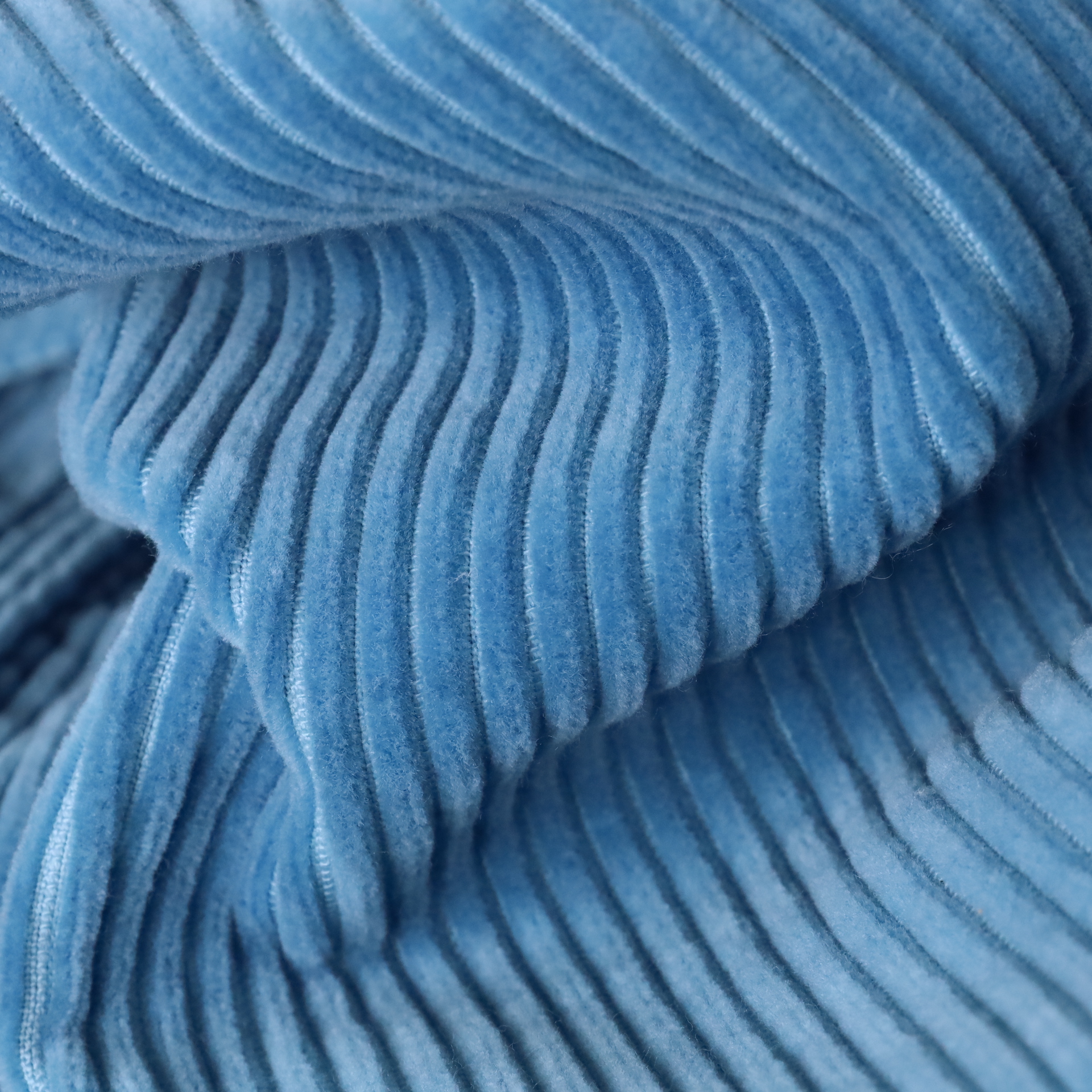
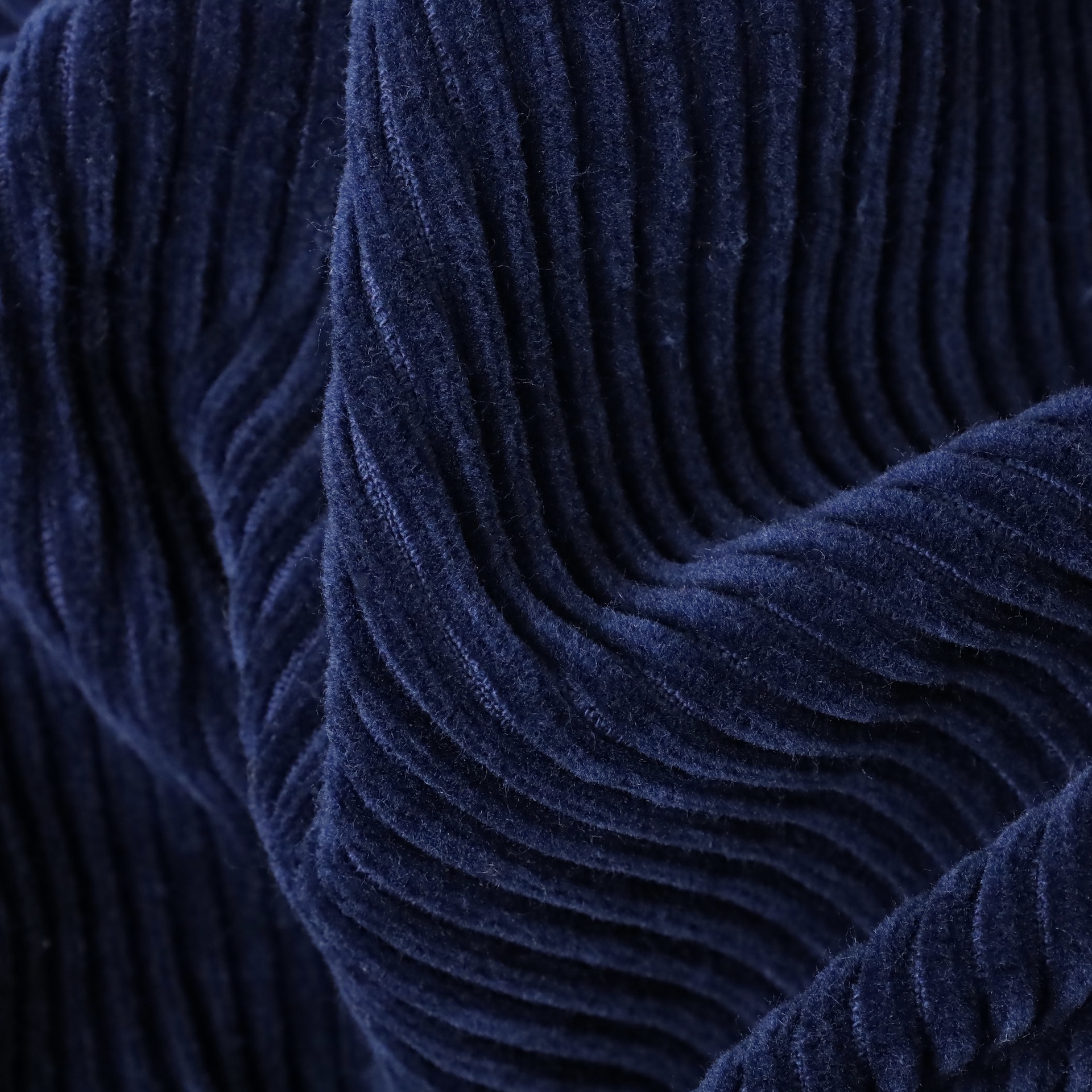
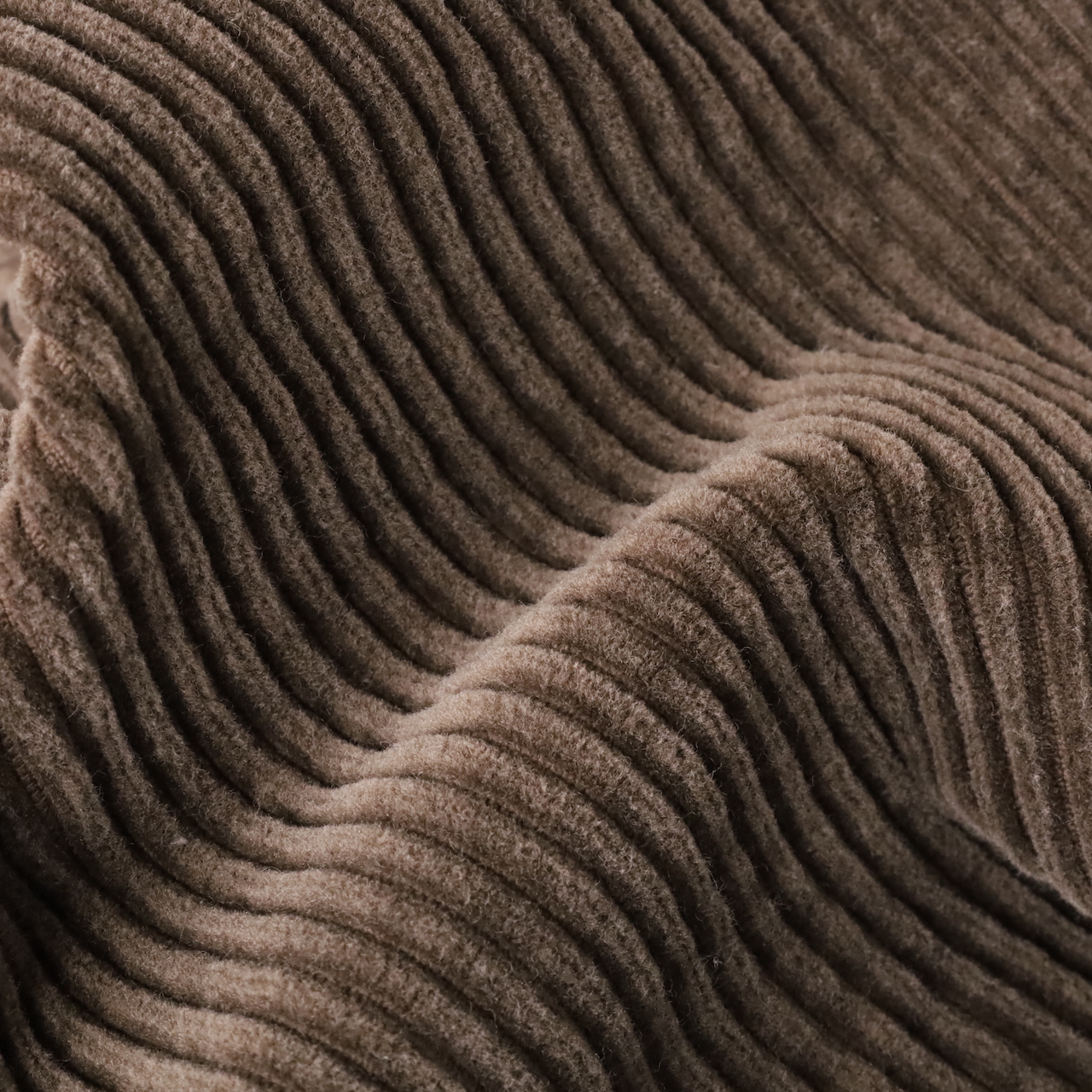
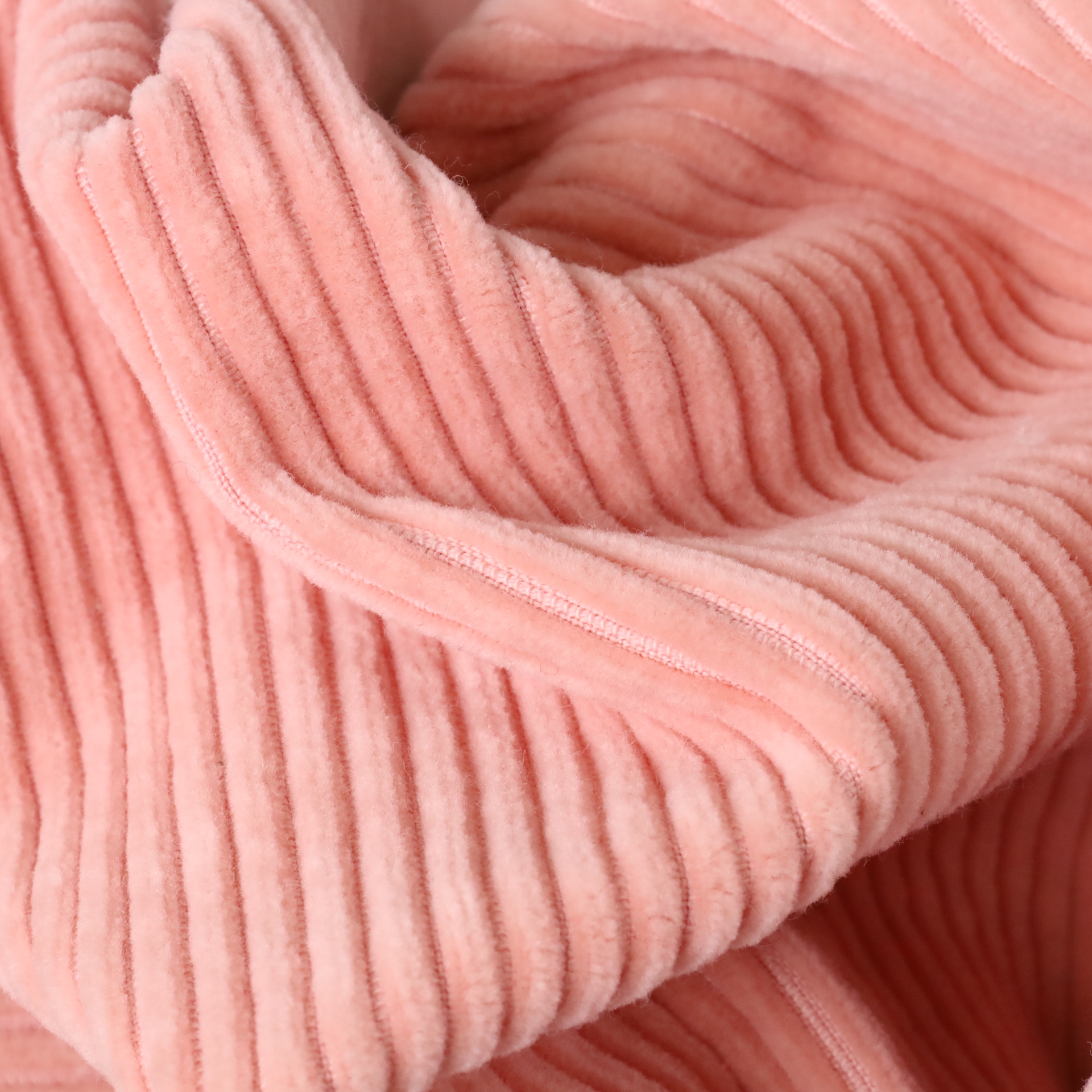
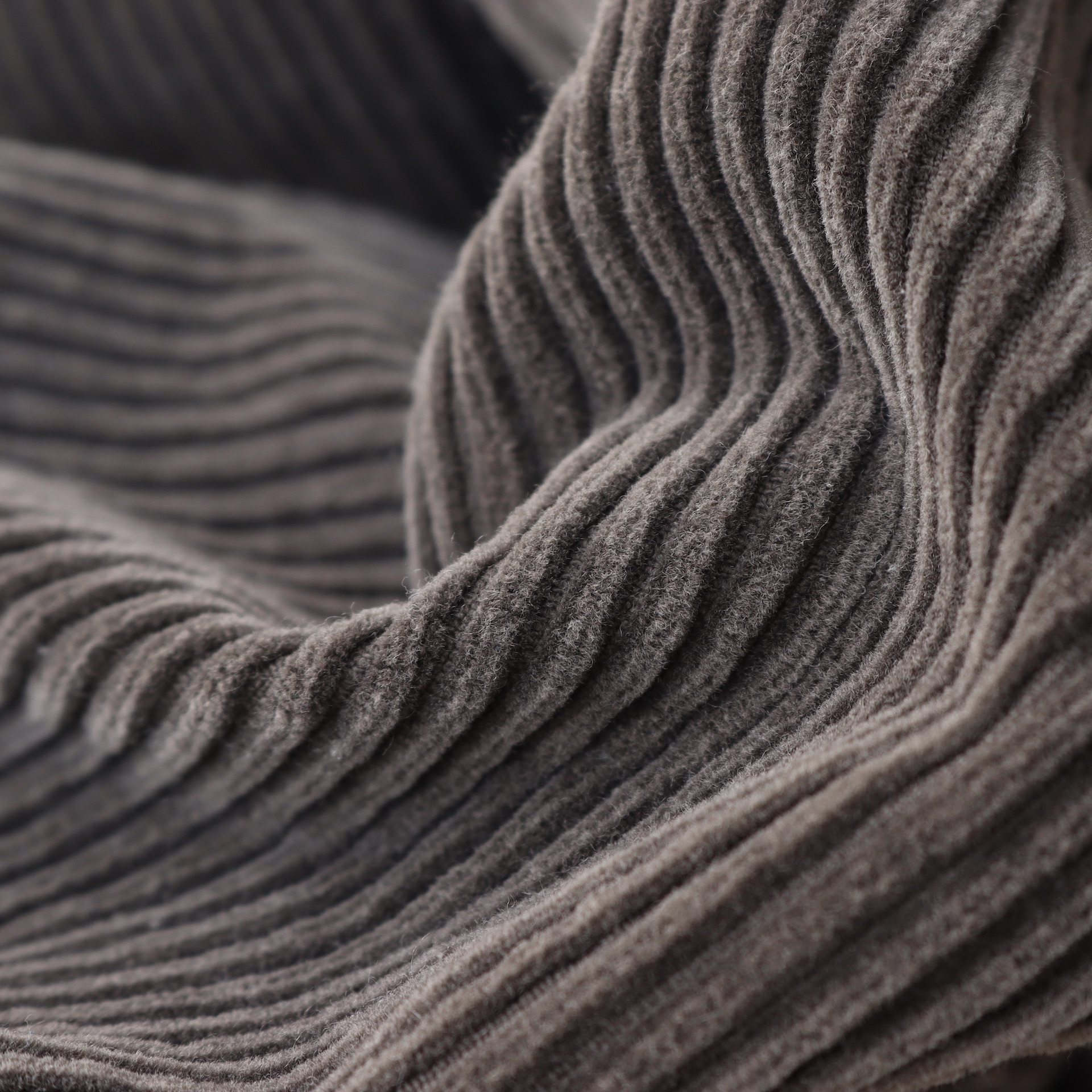
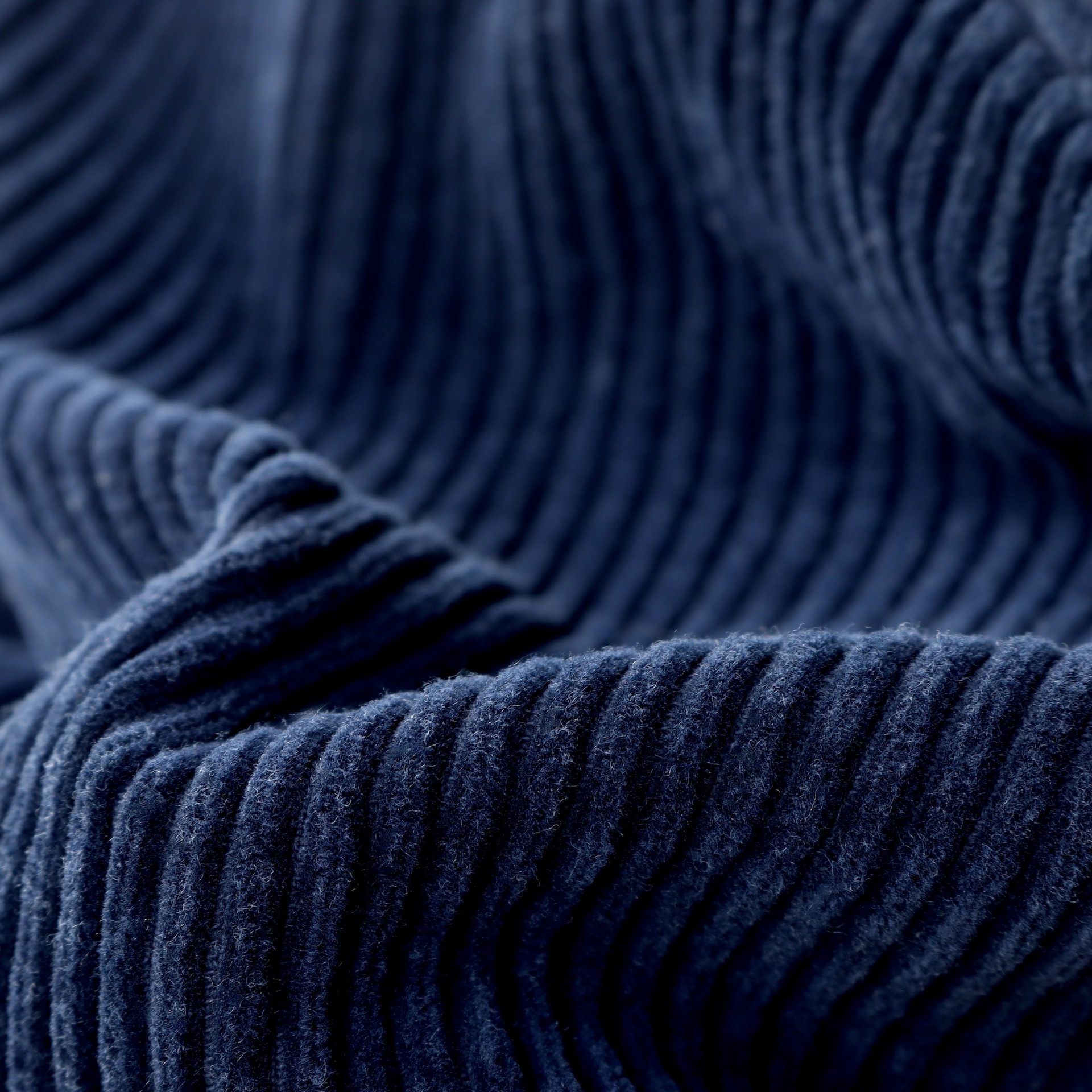
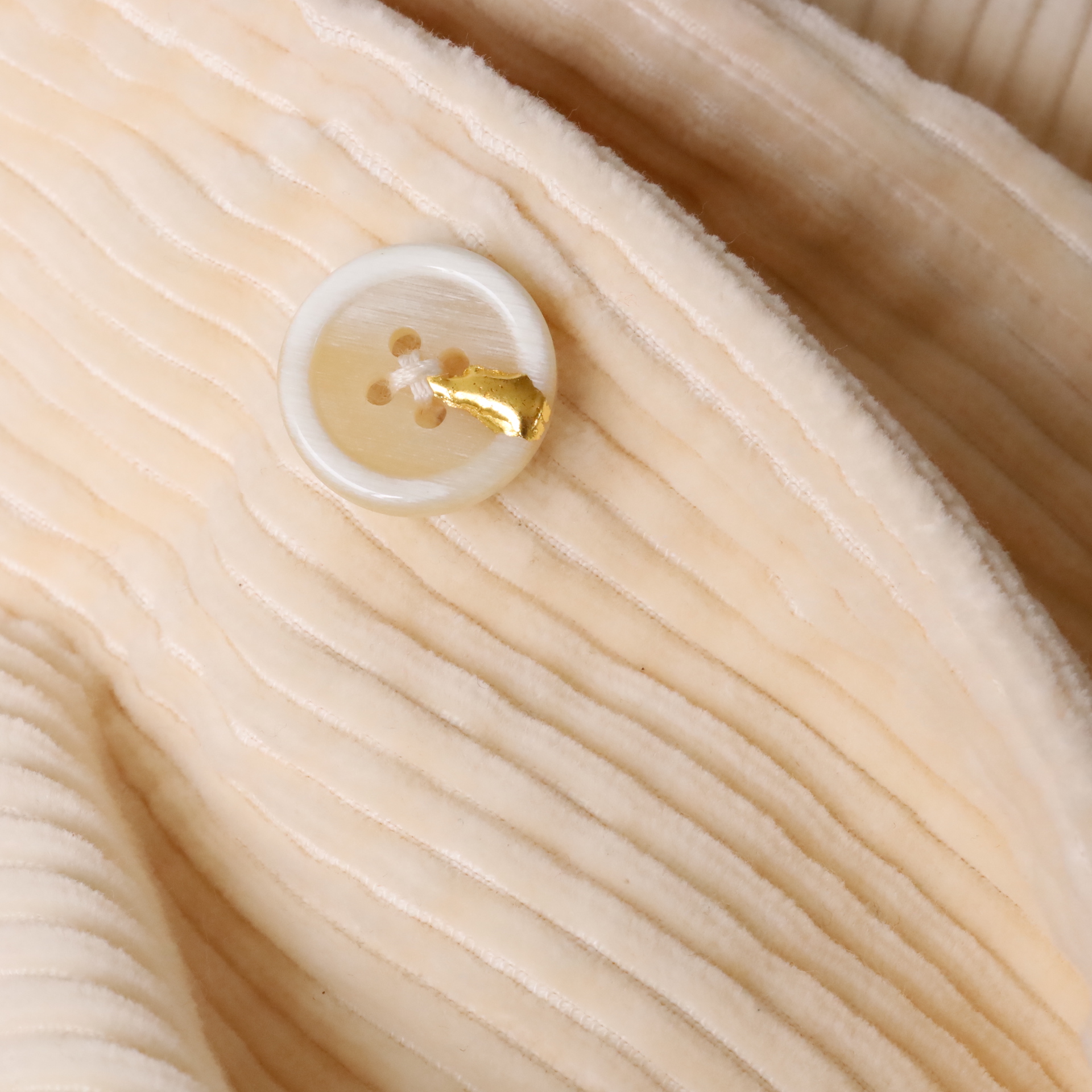
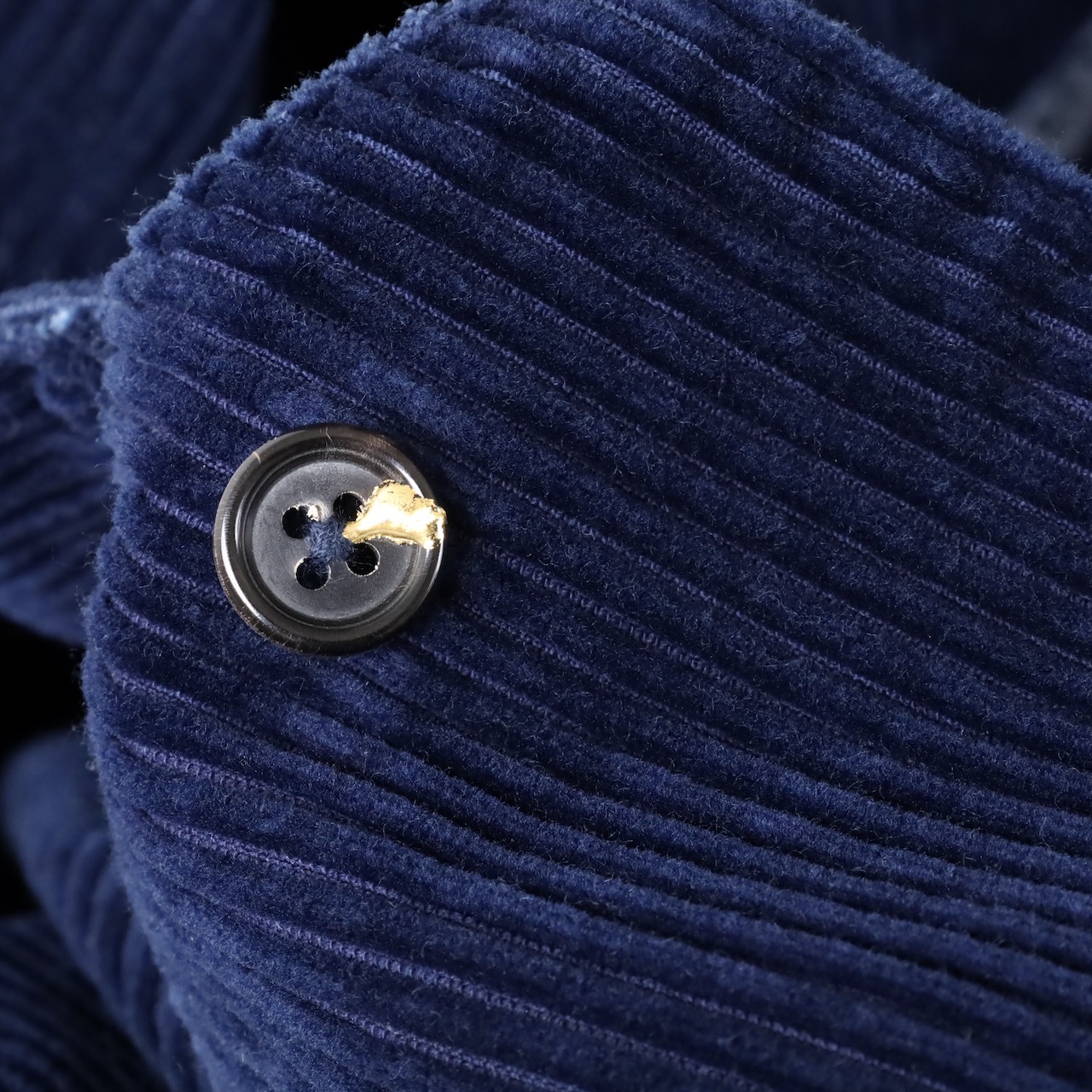
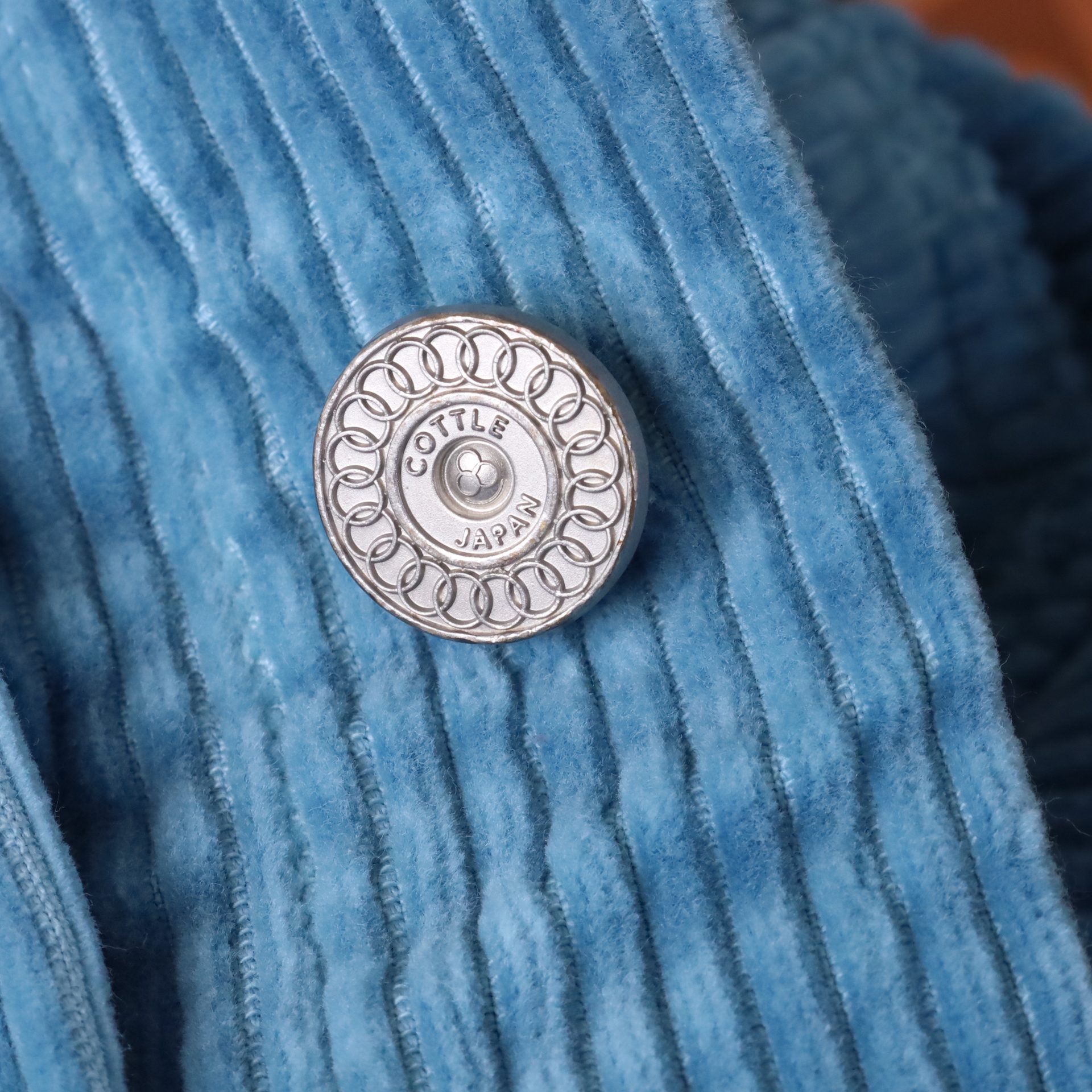
さらには、その生地をブランドオリジナルレシピでの天然染色、そして付属にまでもとても凝った仕様で一つひとつの洋服が構築されています。
shop talkでは、服に仕上げられたコレクションの魅力を書き切ることができません。
4月29日(祝・水)〜5月3日(日)では、
DEAR COTTLE FRIENDS ~ Open house
と題し、COTTLEのデザイナーと僕とが岡山県児島地域に位置するブランドのアトリエで実際にコレクションをご紹介いたします。
この5日間の期間は、ブランドのフルコレクションを並べ、お客様のオーダーを承らせていただきます。
また、ブランドの思想やものづくりを知っていただくことを目的としており、ご来場いただいた方に詳細にブランドのご紹介をさせていただくため、4月29日(祝・水)〜5月1日(金)は90分前後のアポイント制といたします。
5月2日(土)と3日(日)は、アポイント不要で開催いたします。
実際にCOTTLEの洋服が生産されるアトリエで、洋服に触れてその魅力を感じていただけましたら幸いです。
LE BERGER
shop talk & communications by Akihiko Fukuda
__________
The English translation is provided below:
This time, I would like to take a closer look at COTTLE’s “GOLDEN WHEAT FIELD CORDUROY” collection.
The fabric used in this collection is an original corduroy developed by COTTLE together with the Japanese weaving mill Kaneta Orimono.
Corduroy is a fabric everyone knows.
Long familiar as a staple for autumn and winter, it has been widely recognized for its ridged texture and its somewhat rustic, warm character.
Precisely because of that, many people likely carry a more or less shared image of what corduroy is.
A fabric with a bit of weight, a strong sense of seasonality, and a somewhat casual feel.
For most people, that is probably what corduroy represents.
And yet, the corduroy made by COTTLE does not fit within that established image.
It looks like corduroy, but the moment you touch it, that impression is quietly overturned.
It is light, soft, and smooth—qualities entirely unlike the weight, stiffness, and strong seasonality typically associated with conventional corduroy.
Although corduroy is generally understood as a fabric for autumn and winter, this one possesses a lightness that makes it wearable throughout the year, while still retaining a rich depth of expression on its surface.
To describe it simply as having a beautiful texture would not be enough.
This is a fabric that fundamentally reconfigures the very assumptions many people hold about what “corduroy” is.
Its singular character is not the result of finishing techniques or superficial embellishment.
Rather, it is a completely original fabric, conceived as a specification unlike anything else in the world: made from 100% cotton, yet using two different kinds of cotton, and developed through a design process that reaches all the way into the structure of the weave itself.
In other words, COTTLE’s corduroy is not an attempt to make an existing material look slightly new. It is an effort to preserve the familiar appearance of an authentic, widely recognized fabric while reconstructing its inner nature into something entirely different.
In fact, many people who have touched this fabric have said that it changed their impression of corduroy altogether.
There are even those who had never been drawn to corduroy before, yet find themselves reaching for this collection.
That seems to suggest that this is not merely a matter of personal preference, but rather evidence that this fabric stands at a point fundamentally different from conventional corduroy.
And within it is a philosophy of making that could only have been reached through the collaboration between COTTLE and Kaneta Orimono.
How was it possible to create such an unfamiliar texture within a material that feels so familiar?
To understand that background, we must first look at the fundamental structure of corduroy itself.
Though it is a fabric everyone knows, corduroy in fact has an unusually distinctive construction.
What symbolizes that distinctiveness most clearly are the ribs that appear across its surface.
Where many fabrics have a relatively flat surface, corduroy has a clearly pronounced relief.
Those three-dimensional ribs are not merely a visual characteristic.
They are also a defining sign that corduroy is made through a way of thinking and a production process fundamentally different from those of other woven fabrics.
So before going further, I would first like to organize the structure of corduroy itself, and from there unravel why COTTLE’s “GOLDEN WHEAT FIELD CORDUROY” possesses such an extraordinary texture.
[The Background of Japanese Corduroy]
The origins of corduroy lie in Europe.
Today, much of what circulates on the market consists of inexpensive corduroy made in China, while in Japan, Enshu is known as one of its representative production regions.
And the story of how corduroy took root in Japan is deeply suggestive.
It is said that when corduroy was first introduced to Japan, what arrived was neither a manufacturing method nor craftsmen to pass on the technique.
What came instead was a single piece of fabric from Germany.
In other words, Japanese corduroy production did not begin as a transfer of completed technology. It began as an intensely exploratory process of trial and error—using a single piece of fabric in front of them as a clue, and asking how it might be reproduced.
There was no recipe, no fixed machine settings, no definitive process to follow.
Under such circumstances, Japanese craftsmen studied the fabric, inferred its structure, and through repeated ingenuity, gradually developed it into a technique of their own.
What emerged at the end of that process was a form of corduroy that evolved independently in Japan, distinct from corduroy produced overseas.
In weaving mills in Enshu, this Japanese-made corduroy is referred to as “koruten.”
This difference in naming is not merely a matter of wording.
Even though it is still corduroy, it has a uniquely Japanese lineage, with processes and specifications that differ from those of corduroy made abroad.
And most importantly, what supports its texture is the sheer number of steps involved—clearly unlike those of other woven fabrics.
Corduroy is not complete at the moment it is woven.
Its characteristic ribs do not appear on the surface in their finished form from the beginning. They only emerge after a succession of additional processes.
That is precisely why it is said to require more than twice the labor of an ordinary fabric.
From here, I would like to follow, step by step, the key processes behind Japanese corduroy.
Behind a fabric that may seem so familiar at first glance lies a manufacturing background of remarkable singularity.
Its distinctiveness should gradually begin to come into view.
Cutting
To begin with, I would like to touch on the most distinctive feature of corduroy: its ribs.
That three-dimensional fullness is not complete the moment the fabric comes off the loom.
In fabric woven for corduroy, rows of pile yarn float on the surface, forming the parts that will later become the ribs.
Only by cutting open those raised yarns, one by one, does corduroy’s characteristic brushed surface finally begin to appear.
Guide needle
Guide needle and cutter
Each pile is cut with a single cutter.
Rows of cutters before the cutting process
The first key step in this process is what is known as cutting.
Here, a specialized paired tool—a guide needle and a cutter—is used to cut only the pile yarns that float on the surface of the fabric.
The guide needle is inserted by hand into each individual pile section, and the cutter is then run along its groove, severing only the necessary yarns without damaging the surrounding structure.
It may sound simple when described in words, but in practice it is an extraordinarily delicate operation, requiring the craftsperson to read the fine pile structure of the fabric and repeatedly apply the most suitable guide needle and cutter with painstaking care.
The ribs of corduroy are not created by weaving alone.
They must first be cut open. Only through that process does the fabric begin to acquire its distinctive expression.
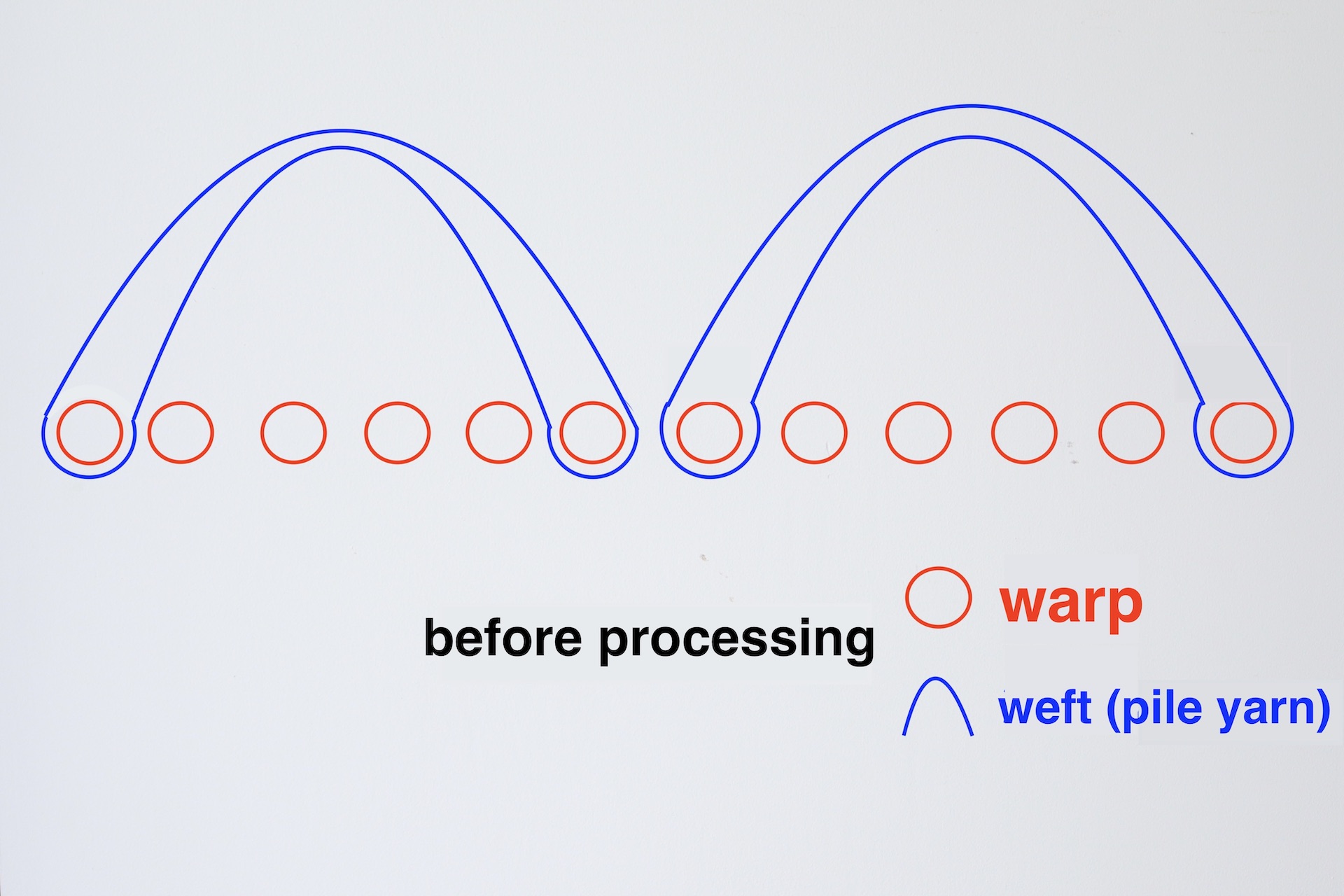
Structure before cutting
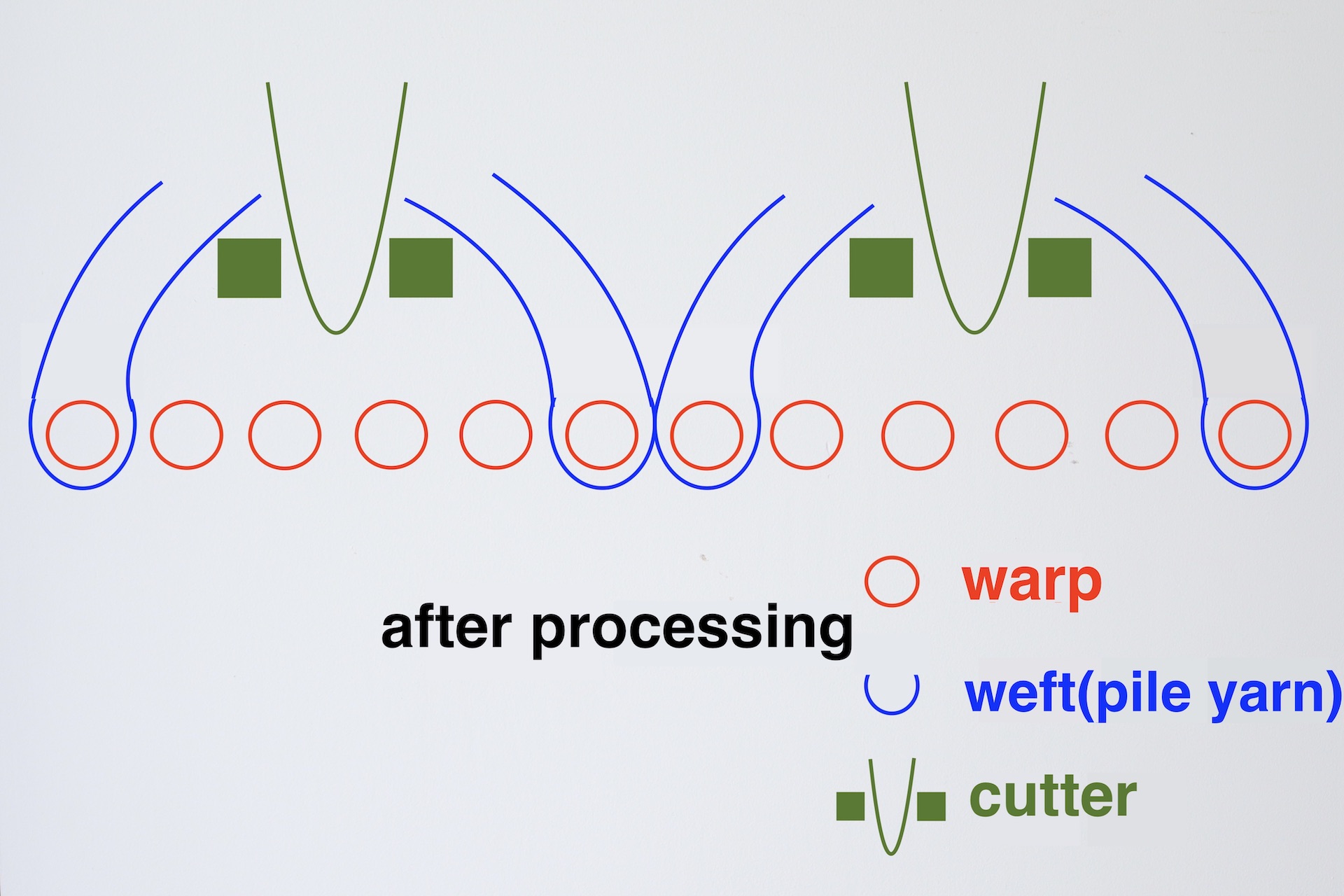
Structure after cutting
Desizing
Once the cutting process is complete, the fabric moves on to the finishing stage.
And it is precisely this finishing stage that forms one of the most essential foundations of the texture of Japanese corduroy.
What is especially noteworthy is that, as of today, this entire sequence of processes is carried out domestically by only one company: Iwata Sangyo.
The quality of Japanese corduroy is sustained by such rare and limited sites of production.
The first step is desizing.
This is the process of removing the sizing that was applied to the yarn before weaving, but in the case of corduroy, it is far more than a mere preliminary treatment.
The greige fabric, after cutting, is immersed in hot water at around 80 to 90 degrees Celsius, formed into a rope-like shape, and passed through a machine called a wince, where it is kneaded repeatedly in water.
This method is said to be unique to Japan.
The fabric is moved through a large volume of water as if it were being made to swim, and the sizing is removed slowly over time.
The total distance it travels is said to reach as much as 5,000 meters.
The fact that Enshu is blessed with abundant water resources is of decisive importance in a process like this.
To use water generously, to avoid forcing the fabric, and to knead it slowly and thoroughly—this gradual accumulation is what gives corduroy its distinctive fullness and softness.
It is easy to understand why Mr. Ota of Kaneta Orimono describes this step as the “core” of Japanese corduroy.
To that extent, desizing is a process that shapes the very foundation of the fabric’s texture.
Airing
The fabric, saturated with water during desizing and kneaded into a rope-like form, becomes twisted in the process.
Airing is the step used to return that twist to its original state without forcing it.
In this process, the fabric is slowly lifted to a great height and allowed to settle in a manner that is as close to natural as possible, using gravity and the force of air.
That height reaches as much as 30 meters.
Rather than applying abrupt tension, the aim is to draw out the fabric’s own capacity to recover, allowing it to gradually return to its proper condition.
There is something about the sight of it that recalls sun-drying in the open air.
Equipment capable of reaching such a height is extremely unusual, and is said to be found at almost no other dyeing mills.
And yet, it is precisely this kind of large-scale equipment, and this unwillingness to spare time in the process, that supports the quality of Japanese corduroy.
Kneaded during desizing, then restored through airing—
through this sequence, the fabric is not merely brought back into shape, but deepens in texture itself.
Drying
Once the twisted fabric has been restored, it moves on to the drying stage.
But here too, corduroy cannot be handled in the same way as ordinary fabrics.
Corduroy has thickness, and in addition it possesses the three-dimensional structure of ribs.
For that reason, it is difficult to achieve an even finish by simply placing it in a large dryer and drying it all at once.
If the ribs rise unevenly, the very expression of the corduroy begins to collapse.
For this reason, at Iwata Sangyo, moisture is removed while the fabric is kept straight and even, using as many as 32 rollers heated to over 100 degrees Celsius, along with countless cylinders.
It may be more accurate to describe this not simply as drying, but as a process of finishing the fabric while preserving and refining the expression of its surface.
For corduroy, the uniformity of the ribs is not merely a visual matter.
It is directly tied to the dignity and overall level of completion the fabric possesses.
That is precisely why even a stage as seemingly unassuming as drying requires its own dedicated method and equipment.
Singeing
Within this sequence, once the corduroy has passed through desizing, airing, and drying, it finally begins to approach the form most people imagine when they think of corduroy.
The ribs rise, and that distinctive surface expression starts to appear.
And yet, it is still not complete.
At this stage, the pile often still retains unwanted fuzz.
The process used to remove it and refine the surface is called singeing.
With ordinary fabrics, the surface is often singed with a burner.
But with corduroy, a distinctive method is used: the fabric is passed at high speed over a large heated iron bar.
This allows only the unwanted fuzz to be burned away precisely, while preserving the expression of the ribs.
At the actual production site, the burning of that excess fuzz creates the sight of flames running across the surface of the fabric.
It is a scene that seems to make the peculiar nature of corduroy visible in plain form.
However, because singeing leaves a scorched tint on the fabric, it is generally a process applied to corduroy that is intended to be dyed.
And here, COTTLE’s fabric introduces yet another unique condition.
COTTLE offers an undyed color called WHEAT ECRU.
With a specification that preserves the natural tone of the fiber itself, a finish premised on conventional singeing cannot be used.
In other words, COTTLE’s corduroy cannot be completed simply by following the standard production route of ordinary corduroy.
To reconcile both its color and its texture, a different set of decisions and refinements becomes necessary.
Air Tumbler
The final stage is the finishing process carried out with an air tumbler.
As the name suggests, this is a process in which the fabric is struck and loosened by the force of strong air, relaxing its stiffness while drawing out softness and fullness.
The wind speed is said to exceed 500 meters, and through that force of air, the fabric begins to take on a distinctive softness, as though it were swelling from within.
At the same time, the ribs are brought out even more clearly, and the expression of the corduroy is given its final form.
There are many different finishing methods, but this air tumbler is known as a technique unique to Enshu.
It works especially well with fabrics woven on shuttle looms, giving them a plump texture that seems to hold air within itself.
It does not simply make the surface appear soft; it is a finish that transforms the character of the fabric as a whole.
Seen in this way, corduroy is not merely a fabric with ribs.
It is a fabric whose expression is gradually drawn out through a succession of processes—cutting, kneading, soaking with water, restoring, refining, singeing, and finally finishing with air.
And yet, the distinctiveness of COTTLE’s corduroy does not lie only in being an extension of Japanese corduroy.
It lies in the fact that, on that very foundation, the fabric structure itself has been reconfigured.
[The Distinctiveness of COTTLE’s Corduroy]
Mr. Ota of Kaneta Orimono says that corduroy is a fabric with an extremely deep accumulation of established specifications, and that even within Japan, the development of an entirely new weave structure is exceptionally rare.
The reason is clear.
Corduroy requires a series of complex processes, including the cutting and raising described earlier, and bringing a new specification into production demands a level of output and continuity sufficient to justify it.
If it is produced only as a one-off project once every six months, the cost is simply difficult to balance.
In that sense, the very nature of COTTLE as a brand provides a crucial condition.
Rather than presenting fabrics as fleeting, twice-yearly collections, COTTLE develops collections as ongoing series centered on the fabric itself.
It is precisely because of that continuity that the brand is able to step into the development of an original corduroy specification—something that would ordinarily be difficult to sustain.
Kaneta Orimono, too, is a mill that refuses to settle for a situation in which existing standard fabrics continue to dominate circulation, and instead chooses to take on difficult developments.
It is where these two approaches meet that “GOLDEN WHEAT FIELD CORDUROY” begins.
What COTTLE set out to create was
a corduroy with authentic ribs—light, soft, yet endowed with luxurious luster and durability.
But that was far from easy to achieve.
In general, if one seeks lightness and softness in corduroy, durability and luster tend to be diminished.
Conversely, if one aims to enhance durability and bring out a lustrous appearance, the fabric must become denser, and with that come weight and stiffness.
Moreover, the ribs of corduroy do not hold simply because the pile is raised.
Those delicate ribs are maintained because the cut pile yarns support one another through friction.
To realize a fabric that preserves both the beauty of the ribs and its durability while also pursuing lightness and softness required a fundamental rethinking at the level of weave design itself.
Even so, this was not a design that could simply be conceived and then made to work.
In the earliest trials, the new structure failed to produce the beautifully rounded ribs they were aiming for, and the desired expression could not be achieved.
Then, in order to express both the delicacy of the pile and a sense of luxury, they chose to use soft, fine Ultimate Pima yarn. But when the density of the weft was increased to secure sufficient pile volume, a severe degree of weaving shrinkage began to occur.
Particularly on a shuttle loom, the structure tends to place stress on the selvedges during weaving.
As a result, when shrinkage caused the width of the fabric to change more than expected, excessive force was placed on both selvedges, making yarn breakage much more likely.
In other words, the closer they came to the texture they were aiming for, the more difficult the very act of weaving itself became.
And yet, after repeated rounds of prototyping, they eventually arrived at a completely original weave structure: one in which only the weft structure was made high-density, while the ground structure was intentionally designed at a lower density.
That concept was pursued just as rigorously in the selection of materials.
Although the fabric is made of 100% cotton, it is composed through the deliberate use of two different kinds of cotton.
Warp: Shankar cotton (Indian extra-long staple cotton)
Weft: Ultimate Pima cotton (one of the world’s finest cotton varieties)
Looking at the overall composition of the fabric, the warp yarns that make up the ground structure account for roughly 30%, while the weft accounts for around 70%.
In other words, this corduroy is not only newly conceived in the expression of its surface ribs; the design logic of the entire fabric has been rebuilt from the ground up.
And indispensable to turning that specification into a reality was the shuttle loom owned by Kaneta Orimono.
To begin with, corduroy woven on a shuttle loom is itself an extremely rare thing today.
What matters here, however, is not simply the fact that it is “woven slowly” or “woven with time.”
Speaking of shuttle looms, Mr. Ota says that the important point is not that a fabric becomes better simply because more time is spent on it, but that a shuttle loom is a way of making that can only exist through the taking of time.
This is an important idea for understanding COTTLE’s corduroy.
When one looks at the fabric itself, it becomes unmistakably clear that this is not merely something made with extra labor, but a fabric whose specification was built from zero in order to achieve a specific texture.
Time here is not value in itself.
It is employed as a method—one necessary to arrive at the texture being sought.
Here, for comparison, I would like to place a standard Japanese corduroy alongside COTTLE’s “GOLDEN WHEAT FIELD CORDUROY.”
Standard Japanese corduroy
This is a standard Japanese corduroy, widely recognized as a fabric for the autumn and winter seasons.
It has a moderate firmness and body, with a sense of weight, while also showing well-defined and delicate ribs.
One could say that it represents a fully formed classic image of what many people picture when they think of corduroy.
COTTLE’s Corduroy
By contrast, this is COTTLE’s “GOLDEN WHEAT FIELD CORDUROY.”
The ribs are finer, and the surface carries both a delicate fuzz and a subtle luster.
Even at first glance, it already conveys a softness and fullness quite unlike the heaviness typically associated with conventional corduroy.
And when you actually touch it, the difference becomes even more apparent.
It is not simply lighter—it offers an altogether different tactile experience, one defined by fullness and suppleness.
Ground structure of standard Japanese corduroy
Reverse side of standard Japanese corduroy
When you look at the ground structure of standard corduroy, the density of the weave becomes immediately apparent.
Not only the ribs on the surface, but even the ground structure itself is packed tightly and meticulously; when held up to the light from the reverse side, there are only a very few places where light passes through.
The tiny white points you can see are the few places where light is barely able to come through.
This kind of structure gives the fabric both high durability and a substantial, weighty character.
At the same time, it is also one of the reasons corduroy has come to be so strongly associated with autumn and winter.
Ground structure of COTTLE’s corduroy
Reverse side of COTTLE’s corduroy
By contrast, in COTTLE’s corduroy, while the ribs are dense and highly defined, the ground structure is given a clear sense of openness.
Through the combination of thick and fine yarns, when viewed against the light from the reverse side, one can see a pattern of uniform, delicate gaps.
This is not simply coarseness, but a deliberate openness built into the fabric’s design.
The fine, high-density ribs hold air and help retain warmth within the garment, while the small passages designed into the ground structure allow the air inside to circulate gently.
This fabric is not merely soft and light.
It is designed with the comfort of wearing in mind.
In that sense, COTTLE’s corduroy is not intended to deny the value of conventional corduroy.
Rather, it can be seen as a fabric that deeply understands the original appeal of corduroy, then reworks its structure to bring a new sense of comfort and beauty into the present.
That is why “GOLDEN WHEAT FIELD CORDUROY” appears authentic to the eye, yet feels almost like an entirely different fabric when touched.
It reimagines a form of corduroy that many people believe they already know, renewing it from the level of structure into something with new value.
That, precisely, is the essence of COTTLE’s fabric.
This has become rather long, but the brand’s official page provides a more detailed explanation of the concept.
If this has sparked your interest, please take a look at the brand page below.
Dictionary “GOLDEN WHEAT FIELD CORDUROY”
In addition, each garment is constructed from this fabric using the brand’s own original recipe for natural dyeing, along with meticulously considered details in every component and attachment.
Even in shop talk, it is impossible to fully capture the appeal of the collection once it has been made into clothing.
From April 29 to May 3 , we will be holding an event titled:
DEAR COTTLE FRIENDS ~ Open house
During this event, a COTTLE designer and I will personally introduce the collection at the brand’s atelier, located in the Kojima area of Okayama Prefecture.
Over the course of these five days, the brand’s full collection will be on display, and we will also be taking customer orders.
As the purpose of this event is to offer a deeper understanding of the brand’s philosophy and way of making, and to allow us to introduce the brand in detail to each visitor, the period from April 29 to May 1 will be by appointment only, with each session lasting around 90 minutes.
In particular, an interpreter will be present on April 29, so overseas visitors are welcome to attend with confidence.
On May 2 and May 3 , the event will be open with no appointment required.
We would be delighted if you could experience the appeal of COTTLE’s garments firsthand by touching them in the very atelier where they are produced.